
ADYC 2026: May 7-8

Welcome to the African Diaspora Youth Conference of 2026! Planning is currently underway and more information will be available soon.

Welcome to the African Diaspora Youth Conference 2026

A message from the Conference Chair
Welcome to the 22nd year of our annual (International) African Diaspora Youth Conference 2026 at the University of Windsor. A special welcome to our friends from Toronto, Greater Toronto Area and Metro Detroit. Our conference brings together children of the African Diaspora to reflect, connect, plan, network, set goals, etc. It is a meeting of the minds to chart out our future and to develop a constructive and productive education and career plan of action. Over the past 21 years, we have formed partnerships with the Toronto District School Board, Greater Essex County District School Board, and Windsor Essex Catholic District School Board and countless schools and Boards from the Greater Toronto area.
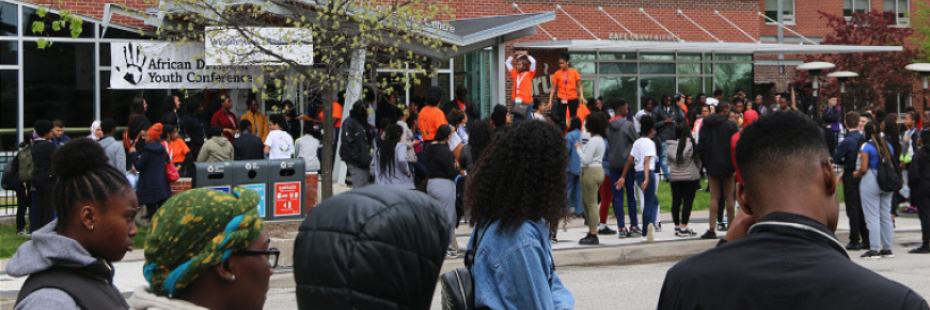
Our conference has had humble beginnings of just 50 students and in the past few years, as many as 300 student delegates. It all began in 2003 when a small group of professors, university personnel, university students, volunteers, teachers, principals and high school students got together on campus to create the first annual Diaspora Youth Conference. Over the years, our numbers have grown and we now have so many schools attending the conference. ‘Diaspora’ is now a big part of the high school experience for many students.
I invite you also to take full advantage of our conference and our campus environment. Please make new friends and find mentors who can help you to achieve your goals.
We have a dedicated group of university student volunteers who have been planning all year for your arrival on campus. We are so excited to have you here as our guests. Please feel free to come up to us and say, ‘Hello,’ or to ask us any questions. Let us know how we can help.
Finally, an important reminder; by attending the conference, you are entitled to a scholarship if you choose to come to the University of Windsor. It is the $1000 Diaspora Admission Scholarship.
Here’s to an amazing conference and best wishes for continued success!
Dr. Andrew M.A. Allen
Associate Professor and Conference Chair
What is the African Diaspora Youth Conference?
Di•as po• ra \n [Gk, dispersion] the breaking up and scattering of a people; people settled far from their ancestral homelands; the communities where these people live.
This conference is for secondary school students with interests in learning about the African Diaspora and how it has played a role in their development of self. Particular attention will be paid to how having knowledge of your history results in power.
The conference has become a life changing experience for many students. It provides an exceptional open forum where students can discuss with their peers the concerns they face as youth growing up in a North American society; where they can share the perspectives of their own diverse cultures. It is a place where they are given the opportunity to reflect on their own lives and learn with community people and university students who have been through similar situations and have excelled.
The conference has been welcomed and supported by the schools and leading members of the African-Canadian community. Interest in the conferences is coming from other cities. The organizers are faced with the challenge of funding to allow growth to take place and the need to keep intact the intensity of the learning experience.