Research Project: International Mobility for UWindsor Black teacher candidates
Funder:
Project Start Date: 01/10/2024
Project End Date: 12/31/2025
Project Team:
- Principal Investigator: Obianuju Juliet Bushi (University of Windsor, Windsor, Canada)
- Co-Investigators: Dr Ishmael Magare (Botswana Open University, Gaborone, Botswana); Malcolm Richards (University of the West of England, Bristol, United Kingdom)
History, Background and Context of Partnership
In response to three global conjunctures: COVID-19 pandemic, the murder of George Floyd and subsequent Movement for Black Lives protests, and increasing influence in policy of populist perspectives, there has been a pivot in teacher education towards online communication and the utilization of accessible digital technologies to enhance global learning and foster cultural understanding. Universities are keen to internationalise for social, cultural, political, academic, and economic reasons, seeking to produce “global-ready” graduates who have acquired the intercultural competencies to be able to address issues associated with global developments and challenges.
A wealth of research conducted in the last ten years has sheds light on the pervasive presence of anti-Black, anti-migrant, and institutional racism in Canadian and United Kingdom universities, deficit informed narratives in general curricula, and a significant gap in antiracist initiatives within student-/teacher education programs. In Western European and North American universities, there is significant evidence that suggests Black students-/teachers are disproportionately less likely to engage with university international mobility programmes, despite the benefits to recruitment, employment, and promotion opportunities in their professional roles. However, there is a paucity of research which seeks to examine this phenomenon within nations, or in comparisons between Global North and Global south universities, programmes, and students. The widespread adoption of online digital technologies for pedagogical interactions has expanded possibilities for the creation of global skills programmes which focus on international interconnectedness. Collaborative Online International Learning (COIL) is a form of virtual exchange, allowing students from different countries to use digital technology to collaborate on a meaningful project relevant to their studies.
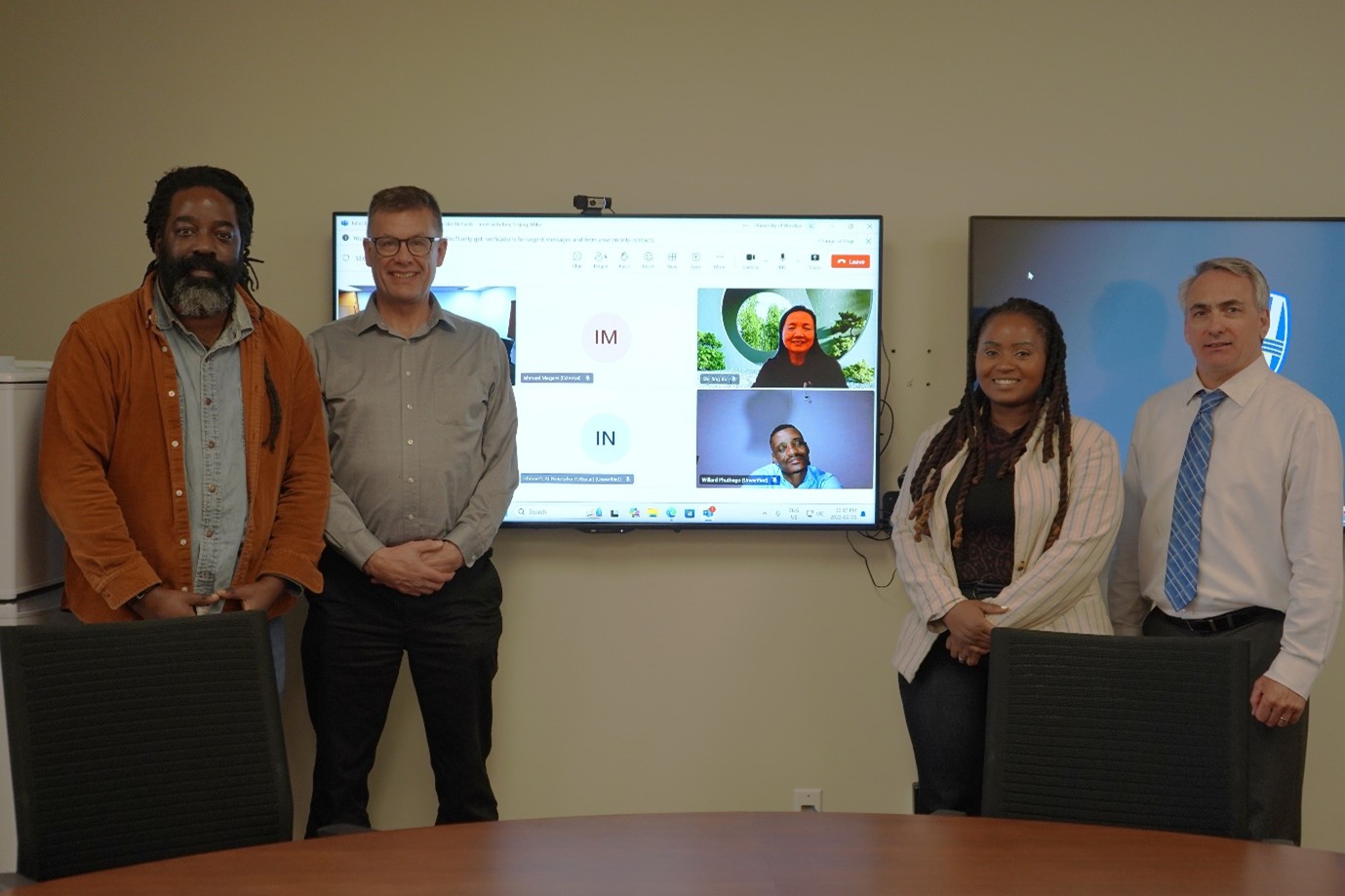
Led by Obianuju Juliet Bushi (University of Windsor, Windsor, Canada), our interdisciplinary team was formed in response to a successful Universities Canada international mobility grant application in November 2023. The research project focuses on understanding of access and availability to international mobility opportunities for Black student-/teachers enrolled in teacher-training programmes in three case study universities in Canada, the United Kingdom and Botswana. We were keen to develop a race-based data driven approach that will assist in identifying and mitigating barriers and challenges Black student-/teacher candidate experience while considering participating in global international mobility opportunities abroad.
Firstly, the project attempts to identify and examine social-cultural-economic-political factors of Black student-/teachers’ life that impact both awareness, access and engagement with opportunities of international mobility programmes within distinct international university contexts. Secondly, this project uses a series of facilitates dialogic workshops to provide collaborative opportunities for capacity building and training for university student advisors, with which to improve the quality of support for access to international mobility programmes, and the experiences of Black student-/teachers who engage with them.
Thirdly, the project facilitates a Collaborative Online International Learning (COIL) platform where participants can collaborate and develop interpersonal and intercultural competencies. Our pilot study would use accessible digital technology (e.g. Ms Teams) to provide Black student-/teacher candidates to connect with other student-/teacher candidates to discuss their experiences of accessibility and engagement with international mobility programmes, identifying strengths, weakness, opportunities, and threats, sharing best experiences, and highlighting relevance to skills and competency development. Fourthly, the project would develop a website and relevant materials which support outbound student-/teacher international mobility programme applications, produced through this project, which can assist all stakeholders in developing responses to these phenomena.
This study employs a participatory action research approach to investigate the phenomenon of Black teacher-student international mobility across three international university contexts: Botswana; Canada; and England (United Kingdom). The methodological framework applied is distinctive in its design, capturing both quantitative and qualitative dimensions of stakeholder experiences, motivations, and outcomes related to the theme of international mobility programmes, student-/teachers experience more broadly, with particular focus on the experiences of Black student-/teachers specifically. The data collection instruments for qualitative data were focus groups interviews, and reflective journals, along with quantitative data from digital surveys which assessed student awareness of international mobility programmes, skills and competences and cultural responsiveness. While taking place over three international geographies, participants also actively engaged as co-researchers, designing research questions, analysing data, and presenting findings to ensure the project addresses their perspectives and experiences authentically, where relevant and appropriate.
Study Design
The study was conducted over a single academic year (2024-25) to comprehensively examine the changes and developments in participants’ experiences over critical points in their educational experiences. The Participatory Action Research informed design enables opportunities for intervention – particularly for different stakeholders (students, mobility programme staff, academic staff, leadership), alongside capture of dynamic processes and the impact of contextual factors on international mobility. The mixed methods approach integrates quantitative surveys and qualitative interviews, providing a robust framework for triangulating data and enhancing the validity of findings. The project involved three phases:
- Program design
- Recruitment of teacher candidates
- Pre-departure orientation and training framework
- Building stakeholder networks
- Development of research tools to capture participants’ experiences and teaching practices.
- Data collection activities across three partner institutions (UWE Bristol; Botswana Open University; University of Windsor) includes digital surveys, and focus groups with student-/teacher candidates, academic staff, international mobility study abroad teams, and leadership.
- Host stakeholder network events to initiate a consistent support network and foster meaningful reflection on international mobility experiences.
- Project report, academic publications, conference presentations.
- Project website to reach a broader audience of stakeholders interested in culturally responsive teaching and international mobility.
- Resources will be developed to promote best practices in international mobility for Black student-/teacher candidates
Participants
The target population comprises a range of different stakeholders who study or work in universities in Botswana, Canada, and the United Kingdom. We apply our qualitative instruments to student-/teachers enrolled in teacher education programmes across the three case studies. Additionally, focus group interviews take place with international mobility programme managers, and teacher education department leaderships. Also, using a purposive sampling strategy, focus groups will be conducted with student-/teachers who meet specific criteria, including identifying as Black, and/or of African descent or part of the African diaspora, enrolled in a university program, and having either experienced or expressed interest in international mobility for educational purposes. An estimated sample size of 300 participants will be targeted, with the aim of 100 participants included from each country. Participants will be recruited through partnerships with educational institutions, professional organisations, and community networks.
Research outcomes
Through this project, we respond to institutional needs to expand global international mobility opportunities for Black student-/teacher candidates in higher education institutions. This is achieved by applying a series of research informed pedagogical activities enabling participants to develop essential intercultural skills, while also enabling exposure to diverse, competitive educational settings globally. This achieved by an innovative research team and institutional partnership, which is guided by shared commitments to equity, diversity, and inclusion within the field of teacher education, and a recognition that action is required to address social-cultural-economic-political barriers that consistently prevent Black student-/teacher candidates from participating in university international mobility programs. We are confident that this project will help bridge these gaps by developing innovative, sustainable, and culturally relevant training and mentorship pathways. We hope that this research produces a collaborative global competence community of teaching practioners whose outputs fosters collaboration, pedagogical resource sharing, mentorship and develop interpersonal and intercultural competencies beyond the duration of this ground-breaking pilot project.
Terminology
We use the term ‘Black’ throughout to refer to student-/teachers and participants who identify within the Canadian educational context as of African descent, or from the African diaspora. This includes participants who identify as African, Caribbean, Black Indigenous, Black-Canadian, and other self-identifiers.
Biographies
Obianuju Juliet Bushi is a lecturer in Education at the Faculty of Education at the University of Windsor, Windsor, in Canada. Her scholarship centres on Black voices, experiences and history. Juliet is interested in research that aims to dismantle anti-Black racism, improve education practices and policies, and enhance physical and health literacy.
Malcolm Richards is Senior Lecturer in Education for the School of Education at the University of the West of England, Bristol in the United Kingdom. His research focuses on critical and creative pedagogies and methodologies. Malcolm is interested in research which examines racial inequalities using comparative analysis across global South and global North educational contexts.
Dr Ishmael Magare is Head of Department at the School of Education at Botswana Open University, Gaborone, in Botswana. His scholarship and research use quantitative data analysis and focuses on instrument development and testing. Ishmael is interested in research which explores issues of health and well-being, climate change, and its effects on health and subjective well-being.
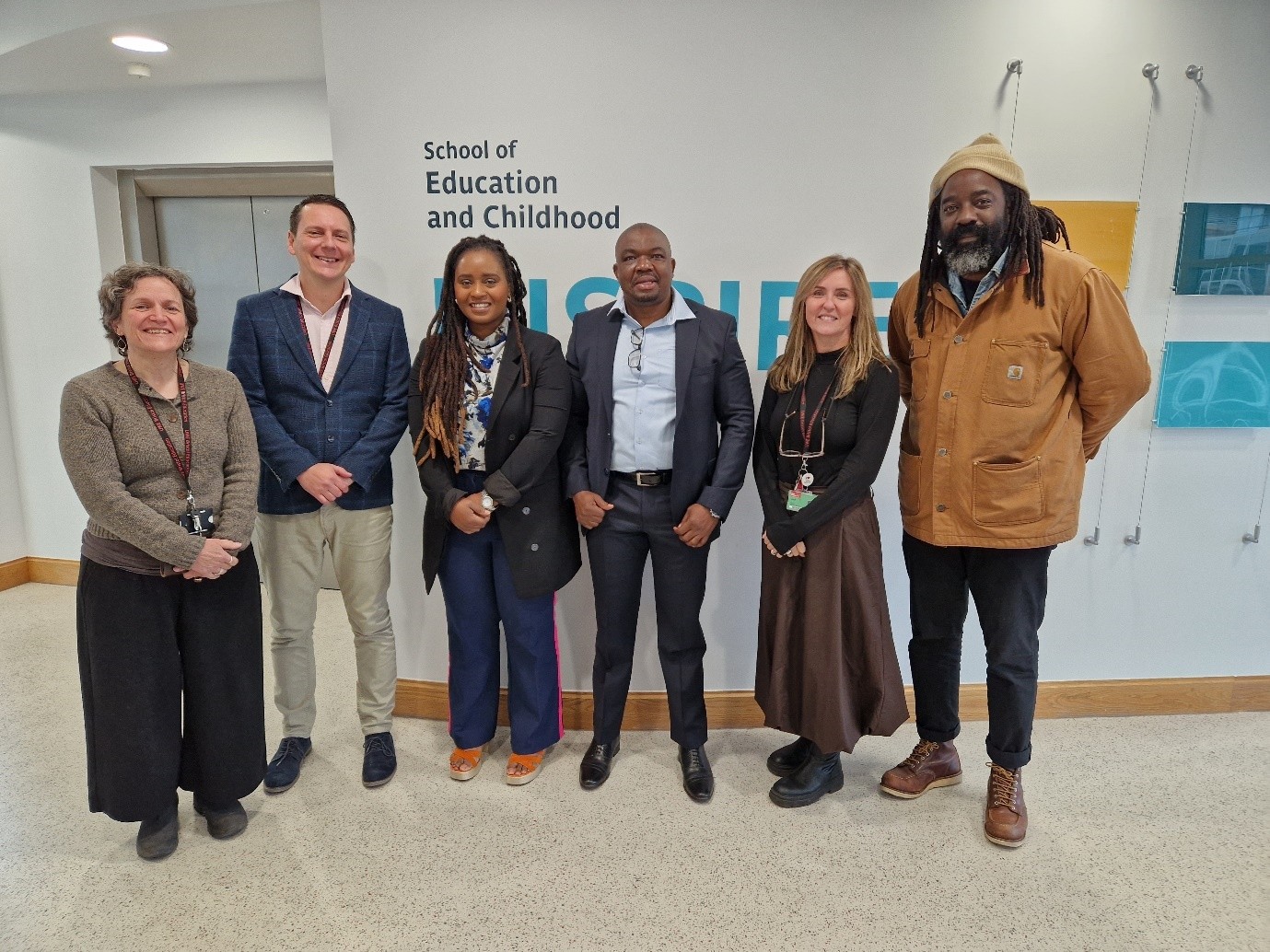
Visiting Researchers visit to University of the West of England - Bristol (UWE Bristol)
October 2024
Visiting Researchers visit to University of Windsor - Windsor (UWindsor)
February 2025