The social work doctoral candidate Beth Archer-Kuhn says before new policies are drafted, she recommends considering parental experiences of child custody. The social work doctoral candidate Beth Archer-Kuhn says before new policies are drafted, she recommends considering parental experiences of child custody.

Courts can improve support in child custody cases, says UWindsor researcher

As Canadian divorce courts increasingly rule in favour of parents sharing child custody, Beth Archer-Kuhn says the legal system is well positioned to facilitate better education and support to parents navigating the challenges of shared decision-making.

The social work doctoral candidate (BSW ‘86, MSW ’91), working with advisor Jill Grant, a social work associate professor, says before new policies are drafted, she recommends considering parental experiences of child custody. She says parents need help focusing on the needs of their children, and preventing the needs of the adult from taking precedence.

“The post separation period can be stressful for many parents, who are adjusting to their new family structure, and positive communication about the children can be a significant challenge,” says Archer-Kuhn.

Archer-Kuhn says she could not find any research focusing specifically on how parents perceive and experience child custody decision making. She says previous research into shared parenting has included interviews or surveys with judges, children, lawyers and social workers, but not parents.

“There’s a sense sometimes that parents don’t know what’s good for them, that they don’t understand their own experience,” says Archer-Kuhn. “But, when talking about making change to legislation, it’s important that everyone has a chance to be heard and voice their own experience.”

The study includes interviews with 18 parents who completed the Mandatory Information Program (MIP). MIP is an information session for those in Ontario who are seeking a divorce or change in motion regarding child custody.

Participants in Archer-Kuhn’s study reported the MIP session is a good start, but for some parents it contained an overwhelming amount of information, dealt out in too short a time period.

Another potential area for change, says Archer-Kuhn, comes from more narrowly defining family situations. MIP sessions, as well as research, only differentiate families into two categories, low and high conflict. Archer-Kuhn says families would benefit from having their unique situations acknowledged, especially families experiencing domestic violence.

“The research I came across, also did not differentiate family violence from other families,” says Archer-Kuhn. “When we talk about policies and interventions, we need to consider the heterogeneous needs of these families.”

A major difference between these groups, she says, is that power is generally balanced between parents in high conflict situations, but when domestic violence is part of the family experience, power is always imbalanced, so decision-making is far more challenging.

“When you more narrowly define the parental experience, it becomes clearer how to solve shared parenting debates,” says Archer-Kuhn. “But it must happen before custody is assigned if we are going to offer something of real use to high conflict families, and to families experiencing violence.”

Archer-Kuhn says all the parents she interviewed were clear about their desire - whether achievable or not - to share decision making and ensure both parents had contact with their children. However, they said communication can fall apart when one parent stops putting the child’s needs first, particularly in situations of domestic violence and in situations of high conflict.

She says parents can also feel isolated, when too many people are called in to negotiate decision making.

“When parents feel they are making decisions alone, they’ll often seek outside support through other family members, friends, lawyers, social workers, and this can lead to conflict because the more people involved in a situation, the less a parent may feel they are still a part of decision- making.”

Archer-Kuhn says her findings point toward parents needing more support when navigating child custody challenges.

“Some parents may learn how to communicate more positively if they are provided further information, and then it may be possible to have a presumption of shared parenting,” says Archer-Kuhn.

“But the courts need to consider the parent experience when discussing family law reform to include a legal and social service system, which differentiates parental experience and is reflected in policy and practice, including education and support.”

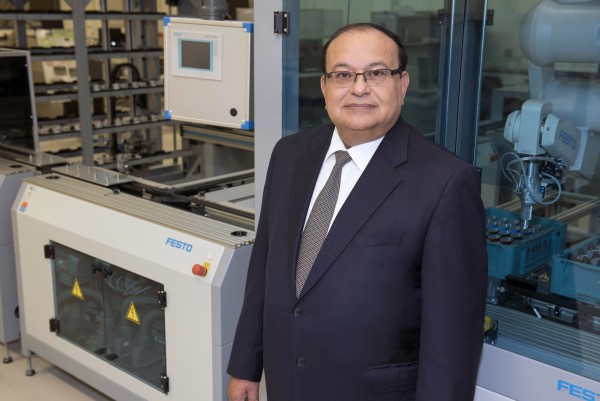
 

Professor Waguih ElMaraghy was recently selected as a fellow of the Society of Manufacturing Engineers’, one of only seven individuals to receive this honour.Professor Waguih ElMaraghy was recently selected as a fellow of the Society of Manufacturing Engineers’, one of only seven individuals to receive this honour.

Waguih ElMaraghy one of seven engineers admitted to 2015 SME College of Fellows

Professor of Industrial and Manufacturing Systems Engineering and Director of the Intelligent Manufacturing Systems Centre, Waguih ElMaraghy, was recently selected as a fellow of the Society of Manufacturing Engineers’ (SME) College of Fellows. Dr. ElMaraghy was one of only seven individuals to receive this honour.

Dr. ElMaraghy was recognized by the manufacturing community and his peers in appreciation of his commitment to the advancement of professionalism, knowledge and learning in the international manufacturing community.

Dr. ElMaraghy says he is delighted to have been elected this year to be amongst this very select group.

“This recognition is extended to the excellent outstanding research and educational programs we have at the University of Windsor, through the Faculty of Engineering and the Intelligent Manufacturing Systems Centre (IMSC).”

Founded in 1932, SME is an organization for individuals, students, educators and companies involved in all facets of manufacturing. SME is dedicated to advancing and educating the manufacturing industry. This is accomplished through a variety of tactics and outlets including events, media, membership, training and development, and an education foundation.

Read more…

The registration for the new Weight Watchers series' will take place today, Monday, August 17The registration for the new Weight Watchers' series will take place today, Monday, August 17.

New session of Weight Watchers starts in September

“It’s always a great time to start and commit to a healthier you,” says Weight Watchers at Work team leader on campus, Colleen Turnbull.

To begin this commitment, the campus community is invited to register for the Weight Watchers at Work program’s new series which will be starting on September 17.

Turnbull, who is also the Area Manager/At Work Manager for Weight Watchers in Windsor/ Essex County, says the program has helped members on campus lose more than 700 pounds combined since October 2013, and seven employees have become lifetime members and are enjoying the benefits of living a healthier life. 

New with this series are free online tools that Turnbull says have helped members, who combine their use with Weight Watchers meetings, to lose eight times more weight than those who have tried to lose weight on their own.

Registration for the new series will take place in person today, Monday August 17 and on Monday 24, from noon to 1 p.m. in Chrysler Hall North, room 2173. Registration can also be done by phone or online. Individuals who stop by today, will also be able to explore  the online tools and additional resources that can assist participants in their weight management journey,

The University’s Weight Watchers at Work program is coordinated by the Department of Human Resources as part of the University’s commitment to supporting employees in achieving health-enhancing personal lifestyle practices.

For more information visit the Human Resources website – Weight Watchers at Work page, or contact Oliga Tserakhava at 519-253-3000, ext. 2044, or oligat@uwindsor.ca.

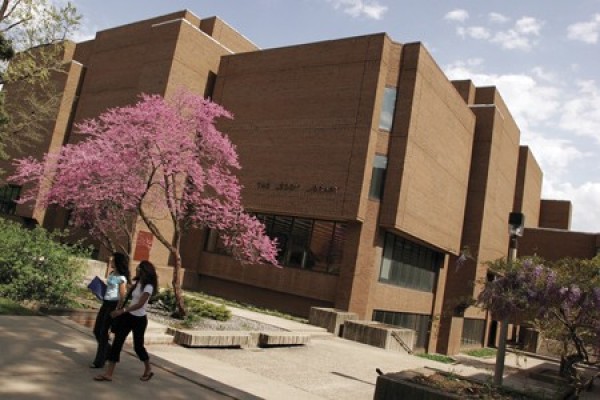
Leddy Library’s hours of operation for the Fall term are now online. Leddy Library’s hours of operation for the Fall term are now online.

Leddy library announces Fall hours

Leddy Library has announced its hours of operation for the Fall term, including exams hours and holiday breaks.

Starting September 8, to Monday November 30, library hours will be:

  • Sunday, 10 a.m. to 2 a.m.
  • Monday to Thursday, 8 a.m. to 2 a.m.
  • Friday 8 a.m. to  midnight
  • Saturday 10 a.m. to midnight

Regular hours will be in effect for Study Week, October 10 to 18, and the library will be closed on October 12 for Thanksgiving.

Exams hours, effective Tuesday December 1 to Saturday, December 5 are:

  • Tuesday to Thursday 8 a.m. to 4 a.m.
  • Friday 8 a.m. to 2 a.m.
  • Saturday 10 a.m. to 2 a.m.

From Sunday December 6 to Saturday December 19, Leddy Library will remain open 24-hours, five days a week, (Sunday 10 a.m. through Friday 2 a.m. and Saturday 10 a.m. to 2 a.m.).

  • Sunday, December 20, 10 a.m. to  4 a.m.
  • Monday, December 21, 8 a.m. to  4 a.m.
  • Tuesday, December  22, 8 a.m. – midnight

The library will be closed for the holiday break from December 23 to January 1, 2016. Holiday hours on Saturday January 2, and Sunday January 3, will be from 1 p.m. to 8 p.m.

View the schedule on Leddy Library’s web page.

Nurturing children’s love of nature focus of book of the week

How to Raise A Wild Child, by Scott D. Sampson, is the Campus Bookstore Book of the Week. The book is a tutorial for parents on helping children foster a love and knowledge of nature.

Though the book’s list price is $32.00, the Campus Bookstore will be selling it for $20.89 until July 26.

Marketing coordinator Martin Deck reminds patrons that the store will match the price of all books with those offered by amazon.ca and chapters.indigo.caRead more on the Campus Bookstore website