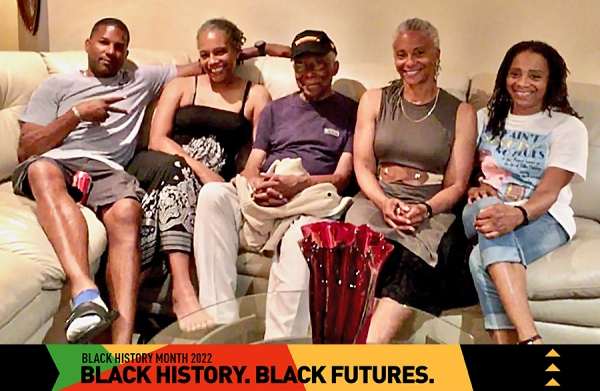
Brian, Leslie, Howard, Linda, and Cheri McCurdyThe McCurdy family are leaders in their professions (from left): Brian, Leslie, Howard, Linda, Cheri.

Pioneering professor left legacy of education and activism

Howard McCurdy dedicated his life to fighting injustice.

The late University of Windsor professor grew up hearing about his great-great-grandfather, Nasa McCurdy, an agent on the Underground Railroad, and he felt the sting of racism from a tender age. He was turned away by the Cub Scouts and told to start a Blacks-only troop. The bowling alley where he earned pocket money as a teen let him set pins there, but not bowl. He could order takeout from restaurants, but he wasn’t allowed inside.

These experiences set him on a lifelong path of demanding change.

“Dad always talked about our family history and activism,” said Leslie McCurdy, the eldest of Dr. McCurdy’s four children. A playwright and performing artist whose best-known works focus on Harriet Tubman, Viola Desmond, and Billie Holiday, Leslie uses the arts to follow her father’s example of keeping Black history alive.

“Each of us is a product of those who came before us,” said Leslie, named Windsor artist of the year in 2014 and performing artist of the year in 2000. Her father set the bar high for his children, just as his grandmother and mother did for him.

McCurdy died in February 2018 at the age of 85, leaving behind his wife of 41 years, Brenda McCurdy. He was a founding member of the New Democratic Party, credited with coming up with the party’s name. He served two terms as a city councillor in Windsor before being elected a Member of Parliament in the 1984 federal election. He was re-elected in 1988 in the renamed riding of Windsor-St. Clair and was a candidate for the party leadership.

He was the second Black man in Canadian history to be elected to the House of Commons, behind only Lincoln Alexander.

A microbiologist, McCurdy was the first Black person to hold a tenure-track position at any Canadian university. He served as the head of the biology department at the University of Windsor, joining the faculty in 1959 after earning a Bachelor of Science degree from Assumption University, UWindsor’s precursor, and a Master of Science and a doctoral degree from Michigan State University.

While at MSU, he founded a chapter of the National Association for the Advancement of Colored People.

During his time at UWindsor, he founded the Canadian College of Microbiologists and was the president of the Canadian Association of University Teachers. He authored 50 peer-reviewed articles published in scientific journals.

Some of Leslie’s fondest memories are of spending time with her dad in his lab on campus, she said. He had hoped she would become a doctor or scientist, but Leslie preferred dance, song, and drama. That didn’t diminish his pride. Scenes in the documentary, On the Money, which chronicles Leslie’s career of telling the stories of trailblazing Black women, show her father beaming.

McCurdy expected his children to earn university degrees and excel in their pursuits, Leslie said.

“My father was very demanding. But he didn’t demand half as much from others as he did from himself… He was one of the most hard-working people I’ve ever known.”

While he built his career, McCurdy simultaneously advanced the cause of Black people and other minorities. He co-founded the National Black Coalition of Canada, a local civil rights organization called the Guardian Club, and the Windsor and District Black Coalition.

“Everything he did wasn’t out of self-interest,” Leslie said. “He was dedicated, on principle, to making the world a better place.”

He was awarded the Canadian Centennial Medal, the Queen’s Silver Jubilee Medal, the J.S. Woodworth Award for Human Rights, and was made a member of the Order of Ontario and the Order of Canada.

Linda McCurdy (LLB 1994, JD 1997), named one of the 100 Accomplished Black Canadian Women for 2018, remembers returning to Windsor after living in Los Angeles and working alongside her father on anti-Black racism initiatives. In those days, her father was taking on the police over incidents of racial profiling. With his trademark tenacity, he not only demanded charges be dropped, but that public apologies be issued.

Later, McCurdy would help Linda in her law practice.

“I had the best researcher in the world,” she said of her father’s work on a case involving a defendant the Crown sought to have incarcerated indefinitely.

Yet, despite his achievements, racism still dogged McCurdy. When he was 75, he was violently arrested at the Ambassador Bridge as he returned home alone from Detroit one night. In media interviews at the time, McCurdy said the behaviour of the border officials typified racial profiling and excessive force. With Linda as his lawyer, McCurdy wanted to take the case to trial to expose what he believed was a pattern of behavior. The Crown instead dropped the charges.

When McCurdy built his home on Mount Carmel Drive, one of the first in the South Windsor development, his was the only Black family. Families who moved in later took up a petition to make it a Whites-only neighbourhood. Those were the days milk was delivered to the door. The McCurdys often found their milk poured out on the porch.

Despite divorcing their mother, Patricia Neely-McCurdy, McCurdy was present in his children’s lives. Linda, a hall of fame high-jumper who competed in two Commonwealth Games, had her father as a coach all through high school.

“He was there every day waiting for me in a three-piece suit.”

Later, when Linda had a child of her own, McCurdy spent time with his grandson every day, checking his homework and instilling the same high expectations and work ethic he demanded of himself.

“He was a strong male role model,” Linda said.

He attended the sporting events of all his grandchildren and taught his children the importance of family.

His children support one another and their lives are intertwined.

Linda, Leslie, and Cheri volunteer at Sister-to-Sister Think WISE (Women Inspiring Success and Excellence), a mentorship organization for Black high school students. The group holds recognition events, raises money to help with education expenses, and introduces students to professionals who can help them along their career paths.

Cheri and Linda founded local cheerleading club NorthStar Cheer. Cheri, also an accomplished vocalist, heads the organization and has coached teams to international titles.

Cheri tells the story of her father attending the Sun Bowl while she was a student at the University of Texas at El Paso. In addition to being a cheerleader at the Division 1 school, Cheri had been asked to sing the American national anthem at a Sun Bowl event.

“Someone came up to my dad and said, ‘You must be Cheryl McCurdy’s father.’ I got a kick out of that because for once it wasn’t someone coming up to me and saying, ‘You must be Howard McCurdy’s daughter.’”

Linda and Brian, the youngest McCurdy child and only son, drew on their past athletic careers and started a training facility in Windsor. After a successful high jump and football career at Northern Arizona University, Brian played in the Canadian Football League for the Toronto Argonauts, Hamilton Tiger Cats, and the Ottawa Rough Riders. He became an accomplished football coach, assisting Wayne State University’s team to a national championship and a high school team to a state championship.

When Brian was young and living with his mom 1½ hours away in Lansing, McCurdy would cross the border to pick up his son after school to get him to games and practices in Windsor.

“Despite how busy he was, he was always catering to us kids, and we were all very active,” Brian said.

Both Cheri and Brian followed their father’s footsteps into education. Cheri taught in UWindsor’s women’s studies department and is now an elementary teacher in Michigan. Brian, who holds a Master’s degree, is an instructor at St. Clair College and has taught a course at UWindsor entitled Race in Sport.

“My dad did what a good dad does,” said Brian. “He was proud of his family and we were proud of him.”

—Sarah Sacheli

Leslie McCurdy will perform her one-woman play, Things My Fore-Sisters Saw, in a Microsoft Teams Live event Wednesday, Feb. 16. Admission is free and the virtual curtain will rise at 1 p.m. Register here to receive the link to attend.
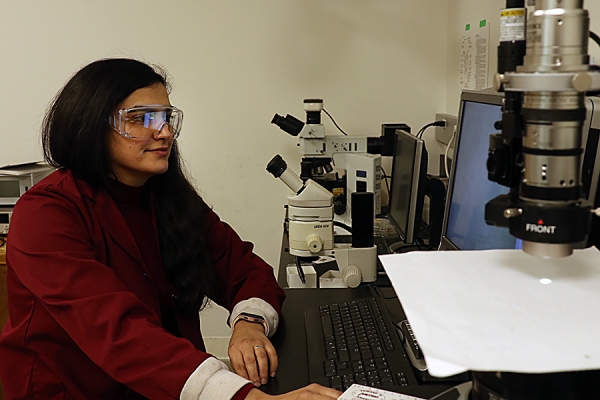
Fatemeh Motaghedi working on chemistry lab equipmentA scholarship that covered the difference in tuition fees between international and domestic students helped attract doctoral candidate Fatemeh Motaghedi to the University of Windsor from Iran.

Science scholarships attracting international doctoral students

A scholarship program launched in 2021 by the Faculty of Science has attracted 13 new international doctoral students, bringing global expertise to the University of Windsor.

The scholarship is equal to the difference between international and domestic tuition, effectively allowing select international PhD students to pay domestic tuition rates.

Fatemeh Motaghedi is a chemical engineer from Iran. She joined the doctoral program in the Department of Chemistry and Biochemistry specifically because of the new scholarship.

“The scholarship attracted me to the University of Windsor and I was really excited to get the chance to come,” says Motaghedi. “This is a great opportunity for International students.”

Motaghedi is supervised by professors Simon Rondeau-Gagné and Tricia Carmichael.

Dr. Rondeau-Gagné says the scholarship is a dynamic recruitment tool.

“It is difficult to attract international candidates and in order to be competitive the Faculty of Science really needed to have this scholarship,” he says.

“International students come from different fields with different experiences, and this allows us to get a unique perspective — a fresh start on our research.”

The program directly connects the recruitment of international and domestic doctoral students. The number of scholarships available to each department is equal to the number of domestic PhD students recruited in the previous fiscal year.

“We are so excited to open our doors to international PhD students,” says Dan Mennill, associate dean of science for graduate studies and research. “In the first year of this scholarship program, we saw a growth of 54 per cent in our international doctoral student numbers, and we achieved our highest number of international doctoral students in more than a decade.

“At the same time, our domestic doctoral student numbers grew by 16 per cent, to achieve our highest number of domestic doctoral students in eight years.”

Enough domestic students were recruited in 2021 that 14 international scholarships will be available in 2022 across six departments in the Faculty of Science.

“Outstanding doctoral students are a vital part of research, teaching, and mentoring in the Faculty of Science, and we are so excited that this scholarship program makes it possible to recruit international PhD students,” Dr. Mennill says.

Students will be eligible for this scholarship for up to four years of full-time enrolment in a doctoral program. Supervisors of incoming international PhD candidates in the Faculty of Science may request more information from their departmental graduate chair.

poster by artist Robert SmallThis poster by artist Robert Small is the centre of a prize package for winners of quizzes this month on Black history.

Prizes await quizzer able to determine truth

The Black History – Black Futures planning committee has prepared quizzes to run through the month of February, offering as prizes a poster created by Robert Small from his Legacy Collexion, along with swag from the University of Windsor Alumni Association.

To enter today’s contest, the fourth in the series, just send your answers to the following true-or-false questions. A winner will be selected at random from all correct responses received by noon Monday, Feb. 14.

  1. Prior to the abolition of slavery in the British Empire, freedom seekers crossed from Canada into Michigan to find liberty. True or false?
  2. Guest speakers at Windsor’s Emancipation Celebrations, which drew thousands to Jackson Park every August, included Eleanor Roosevelt, Mary MacLeod Bethune, Adam Clayton Powell, and Martin Luther King, Jr. True or false?
  3. Demonstrations and sit-in protests staged by students and faculty led the University of Windsor to be the first in Canada to divest from apartheid-era South Africa. True or false?

Contest is open to all readers of the DailyNews. Send an e-mail with your responses to abr@uwindsor.ca. One entry per contestant, please. Note: the decision of the judge in determining the most correct response is inviolable.

sign welcoming visitors to Mitchell’s BayA trio of UWindsor scientists will join ice fishers on Mitchell’s Bay in search of data to further understanding of Great Lakes ecosystems.

Researchers taking to the ice to uncover the mysteries of the Great Lakes in the winter

Among the people drilling through the ice on Mitchell’s Bay fishing for perch, walleye, and trout Tuesday will be a trio of UWindsor scientists after a different sort of catch.

Mike McKay, executive director of the Great Lakes Institute for Environmental Research, GLIER and School of the Environment professor Ken Drouillard, and GLIER field technician Aaron Newhook will be hitting the ice on Lake St. Clair to collect water samples, measure light penetration through the ice, and drop nets to collect plankton.

They are part of a binational effort involving researchers from more than a dozen universities and federal agencies in Canada and the United States on a mission to better understand the changing face of winter on the Great Lakes.

“Climate warming has resulted in a precipitous decline in ice cover on the Great Lakes over the past 50 years,” Dr. McKay said.

“This decline affects coastal communities through increased shoreline erosion and lake-effect snowfall and may also disrupt food webs within the lakes, since many organisms time lifecycle transitions to seasonal cues.”

The Great Lakes are the largest source of fresh water in the world. In the region, climate change has manifested itself as warmer air temperatures, changing precipitation patterns, and less ice and snow cover. While climate change most impacts the Great Lakes in the winter months, the field research tends to take place between May and October.

“The reality is winter remains a black box in our understanding of Great Lakes ecosystems,” said McKay. “To better predict the effect of declining ice cover on life in the lakes, we need to have a more comprehensive understanding of the winter season.”

The Winter Grab involves researchers from Ontario, Michigan, Ohio, Illinois, Minnesota, and New York, and will involve sampling from the western tip of Lake Superior to Lake Ontario’s Bay of Quinte and the St. Lawrence River.

One team will use a fan-driven airboat to glide over the ice. Other teams plan to use snowmobiles, sleds, or all-terrain vehicles. In areas where the ice isn’t safe or the water is open, scientists will take samples from piers.

McKay, Dr. Drouillard, and Newhook will be taking to the ice on foot. Working with Fisheries and Oceans Canada, McKay will also provide equipment to personnel aboard the Canadian Coast Guard ice breakers Griffon and Samuel Risley to collect samples from Lake Erie and Lake Huron.

On the U.S. side, McKay and Bowling Green State University professor George Bullerjahn, an adjunct professor at GLIER, are working with the U.S. Coast Guard cutter Neah Bay to collect additional samples from Lake Erie.

Participating teams will take their samples back to their own labs for processing before shipping them out to selected labs for detailed analysis.

“This will inform us of ‘who’ is present during winter and ‘what” they are doing,” McKay said. “We will focus on the lower food web, including bacteria, algae, and zooplankton as this group is most abundant and ultimately sustains a robust fishery at many locations.”

McKay has served as the Canadian co-ordinator of a similar binational Great Lakes research project called the HABs Grab, the warmer-weather version of the Winter Grab. In the HABs Grab, short for harmful algal blooms, researchers sampled 172 locations across Lake Erie’s western basin on a single day to provide a snapshot of the toxic algal bloom and identify environmental drivers behind the phenomenon.

The Winter Grab is led by Ted Ozersky, a lake biologist at the University of Minnesota Duluth who studies aquatic food webs, nutrient dynamics, invasive species, and climate change. Other American researchers involved are from the University of Michigan, Michigan Technological University, Central Michigan University, Bowling Green State University in Ohio, Oberlin College in Ohio, Wright State University in Ohio, Lake Superior State University in Michigan, Ohio State University, Clarkson University in New York, the University of Chicago in Illinois, and the National Oceanic and Atmospheric Administration’s Great Lakes Environmental Research Laboratory in Ann Arbor, MI.

Funding for the initiative comes from the Cooperative Institute for Great Lakes Research at the University of Michigan of which the University of Windsor is the sole Canadian consortium member.

In addition to the trio of UWindsor researchers, the Canadian arm of the project involves scientists from Lakehead University, Trent University, Fisheries and Oceans Canada (also known as the Department of Fisheries and Oceans, or DFO), and Environment and Climate Change Canada.

McKay said the project is an important one.

“Aside from the important data this initiative will generate, we are using the Winter Grab as an opportunity to increase awareness of the importance of winter to Great Lakes ecosystems and to reinforce the importance of binational collaboration to address the challenges faced by this shared resource.”

—Sarah Sacheli

Vasanthi VenkateshWindsor Law professor Vasanthi Venkatesh has won funding for a project to research how migrant farm workers experience systemic racism in Canada.

Law professor investigating systemic racism faced by migrant farm workers

Windsor Law professor Vasanthi Venkatesh has been awarded a Partnership Engage Grant by the Social Sciences and Humanities Research Council (SSHRC) to examine how migrant farm workers experience systemic racism in Canada.

Her research project, “Racial Difference by Law: Differential Racialization and Access to Justice in the Migrant Farm Worker Program,” received federal funding of nearly $25,000 to explore systemic racism faced by migrant farm workers and support advocacy efforts for legal and policy change.

Canada hosts more than 50,000 migrant farm workers every year. While most are from Central America and the Caribbean, they come from several countries in the Global South. According to researchers, farm employers are known to differentiate between migrant farm workers from different countries and place them in specific agricultural sectors based on racial and cultural stereotypes leading to differential discrimination and racialized labour segmentation.

“The research investigates how the law facilitates this phenomenon of differential racialization in a global agricultural political economy based on racial capitalism,” says Prof. Venkatesh.

Since 2002, Venkatesh’s partner organization on the project, Justicia for Migrant Workers (J4MW), has organized and advocated for migrant farm workers in Ontario who participate in Canada’s Temporary Foreign Workers Programs in agriculture. J4MW is a collective of migrant farm workers, community organizers, academics, and lawyers who advocate for the protection of and collaborations between migrant farm workers.

While representing hundreds of migrant farm workers during the COVID-19 pandemic, J4MW noticed a significant difference in worker claims based on their race and countries of origin. The national policies restricting movement and increased employer power during the pandemic had exacerbated racial segregation. The project is motivated by a felt need of advocates to understand this phenomenon better and will generate creative new legal and outreach strategies in the aftermath of the pandemic, Venkatesh says.

“While the scholarship notes the racism endured by migrant farm workers, a significant gap exists in understanding how racism is differentiated based on their countries of origin and how this differentiation impacts legal claims,” she says.

This community-driven research project will be the first of its kind in generating new, broad empirical evidence to show differentiated systemic racism in immigration laws for use in advocacy and improved justice outcomes for the large numbers of vulnerable migrant workers. Venkatesh expects to release a final report and an evidentiary repository for use in litigation and advocacy by Fall 2023.

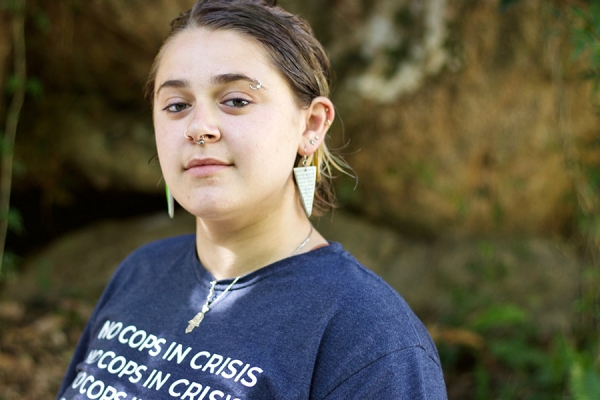
Stefanie Lyn Kaufman-MthimkhuluStefanie Lyn Kaufman-Mthimkhulu is one of two presenters for the free public event “Non-carceral Approaches to Mental Distress in the Post-secondary Context,” on Zoom on Tuesday, Feb. 15.

Event to examine caring approaches to mental distress

“How do we respond to folks with care and not cages?” asks Stefanie Lyn Kaufman-Mthimkhulu, one of the featured speakers for the free public event “Non-carceral Approaches to Mental Distress in the Post-secondary Context,” on Zoom on Tuesday, Feb. 15, at 10 a.m.

“The understanding that police do not make us safe is widening, and students are asking: what does make us safe?” says Kaufman-Mthimkhulu founding director of Project LETS and author of We Don’t Need Cops to Become Social Workers. “How should we deal with the things students usually call the cops or emergency services about?”

Therapist and community organizer Carly Boyce will discuss tools for suicide intervention in peer-based and professionalized environments that don’t rely on carceral systems.

The event is presented by Women’s and Gender Studies and Disability Studies in the School of Social Work, and the Student Mental Health Strategy Fund. Find more information, including a link to register to attend and biographical details of the speakers, on the event website.

AfroFest logoThe African diaspora festival AfroFest will open Tuesday, Feb. 15, with a panel of UWindsor alumnae discussing Black Canadian history.

Alumnae to discuss Black Canadian history

A conversation with three UWindsor alumnae will open the African diaspora festival AfroFest on Tuesday, Feb. 15.

The event, which begins at 5:30 p.m. on Microsoft Teams, will highlight the contributions and history of Black Canadians, touch upon the Canadian civil rights movement, and feature a group discussion on personal experiences of anti-Blackness.

Presenters include:

  • Shantelle Browning-Morgan (BA 2000, B.Ed 2001, M.Ed 2008) a secondary school teacher at Westview Freedom Academy, secretary of the Essex County Black Historical Research Society, a founder of the Black Staff Equity Alliance, and a member of Teachers for Global Awareness, Black Women of Forward Action, and Sister-to-Sister Think WISE (Women Inspiring Success and Excellence);
  • Cheryl Thompson (BA 2002), a professor in performance and the author of Uncle: Race, Nostalgia, and the Politics of Loyalty and Beauty in a Box: Detangling the Roots of Canada’s Black Beauty Culture; and
  • Irene Moore Davis (BA 1993), educator, historian, author, and activist, president of the Essex County Black Historical Research Society, chair of the Annual Buxton National Historic Site History and Genealogy Conference, programming chair at BookFest Windsor, a co-founder of Black Women of Forward Action, member of the transitional leadership team at Black Anglicans of Canada, and member of the Anglican Church of Canada's Dismantling Racism Task Force.

Attendance is free but requires registration in advance. Find more information and sign up here.

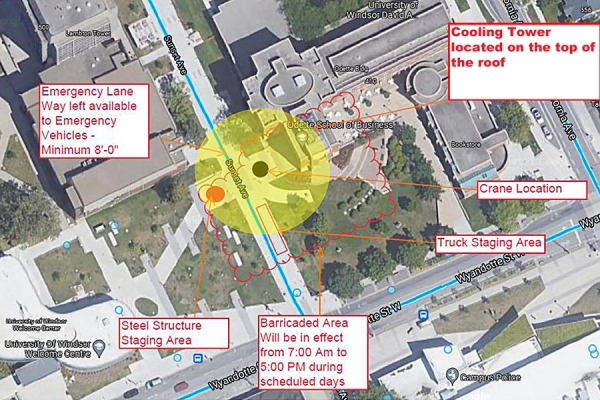
map showing location of blockageA crane will block access to the Odette Building on Friday, Feb. 18.

Installation of cooling equipment to close Odette Building

The Odette Building will be barred to entry on Friday, Feb. 18.

A construction crew will be on site to install cooling equipment to the roof of the building, which houses the Odette School of Business, from 7 a.m. to 7 p.m., depending on weather conditions.

No occupancy will be allowed in the building during this time. Emergency vehicles will maintain access to Turtle Island Walk. Find details on the Facility Services website.