Kim NelsonProfessor Kim Nelson outlines five principles of historical films in her new book on the genre, “Making History Move.”

Film professor explores principles of historical cinema in new book

Historical films, whether features or documentaries, are where most turn for their history, says professor Kim Nelson. As such they carry a lot of weight — so she has come up with five principles to analyze the formulation and effects of historical films.

In her new book Making History Move, Dr. Nelson, a filmmaker and film scholar, explores these principles, which she considers to be critical in the way audiences approach the genre.

“I’m interested in analyzing what’s important in historical films and thinking about how they excel or how they could improve,” she said.

“I started by reading historical philosophy and applying that to films. I wanted to contribute something quite different from what is out there. And despite being an arts person, I am drawn to structure and organization, and I’m interested in arguing based on principles.”

From there, she came up with the following five principles:

Narration

Nelson said this comes directly from the philosophy of history and literary theory with the basic idea that histories are always narratives.

“I argue in the book that rather than wringing our hands and saying narrative and stories don’t belong in history — there’s no getting around it,” she said. “Instead, I ask how do we work with the benefits and limitations of narrative?”

Evidence

Nelson explains that what separates history from fiction is that historical films need to be connected to evidence and facts.

“I look at how historical films reference to their evidence and call for historical films to show their evidence more.”

Reflectivity

This principle, Nelson said, explores the idea that it’s useful for the audience to experience a break in the illusion.

“Documentary films do this all the time,” she said. “And a lot of times, historical films mimic documentary aspects, like, for example, putting a date or place at the bottom of the screen or breaking up a linear a linear storyline.

“I describe a whole range of ways that historical films can break the illusion to remind the audience they're watching a film.”

Foreignness

In this chapter, Nelson investigates the importance of the past being the past.

“I think there are universals across humans in terms of what’s most important to us, and that’s always going to be the same. But I kind of argue that it is important not to make the past an enhanced version of the present. To me, the wonder of film is to slip into another world,” she explained.

Plurality

Nelson believes rather than exploring the same characters and situations, historical films should strive to look at things through another lens.

“Is it another film about Winston Churchill? Or is it telling us about a different person? Does it show a variety of sexes and genders, races, and classes? A lot of times, we see aristocrats and very powerful people. And that makes sense because they’re often in the middle of a historical complex. But we need to see films about people like us,” she said.

Historical films at the Oscars

Nelson’s book is timely with the Academy Awards airing this Sunday — and six of the 10 Best Picture nominees are set in the past.

Nelson said part of the reason historically based films tend to do so well at the Oscars is because of the pageantry and budget that goes into making them. With extravagant costumes and sets that are required to make a historical film believable, it’s often well-known directors with a good track record who can command big budgets.

“The other thing is you must have a big ego as a filmmaker to withstand the criticism because I think people critique and attack historical films in a much stronger way than other kinds of film. Because it speaks to them like ‘You’re talking about my past.’ Even if it’s not your country, it’s your sense of the world and how people work. Whereas with fiction, it’s just not as personal,” she said.

“With the Oscars, obviously, power and money are very important. So that would be a huge factor. And then the genre, I think, retains that prestige.”

As for her predictions, Nelson said she expects Oppenheimer to sweep this year and take home the Best Picture award. The film, she said, followed many of the principles lined out in her book.

“It’s so experimental in the way it switches from black and white and colour and moves across time. You as the audience member are kind of jostled and I think that’s a very responsible way to do history because it doesn’t go together in this linear way, it’s all broken up. To me, this mimics history,” she said.

“I think Christopher Nolan is a great director for doing historical film because he’s always played with time and space and meaning, which is a fantastic perspective to bring to history.”

In addition to her book, Nelson also hosts a podcast called Moving Histories where she and other film professors Robert Burgoyne and John Trafton have in-depth discussions on historical films, including those gunning for an Oscar this year.

Nelson’s book, Making History Move, will be available in bookstores and online March 15.
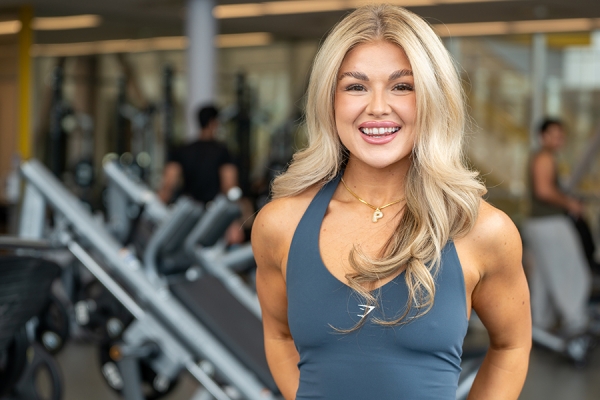
Paige Johnston in gymSocial media influencer Paige Johnston is the founder of Push Collective and a brand ambassador for Gymshark, Reign Energy drinks, and Beam supplements.

Alumna building fitness empire one Instagram follower at a time

Paige Johnston learned long ago that perfection is an illusion.

It’s a message the UWindsor alumna shares with her more than 142,000 Instagram followers and with clients from around the world who come to her for online fitness training.

Johnston (BHK 2018, MHK 2020) is the founder of Push Collective, a personal fitness business she runs from her Windsor home. She is also a brand ambassador for Gymshark — the holy grail for influencers in the fitness space — and for Reign Energy drinks and Beam supplements. She creates content for these brands from the gyms where she works out and other locales on both sides of the Detroit River.

“I never thought I’d be doing this,” said Johnston, who completed her Master’s in the Faculty of Human Kinetics’ Sport Management program intent on becoming a teacher. After graduation, she taught in the sports and recreation management program at Lambton College while continuing to post her workouts on social media.

It didn’t take long for the trajectory of her career to take an unexpected and wonderful turn.

Her first Instagram account, @paigejohnston­_fit, garnered 100,000 followers in the first year. The brand deals quickly followed.

Johnston spun her personal training business into a second account, pushcollective. People from around the world started contacting her for one-on-one and group sessions online. Her clientele, mostly women, started buying her services from as far away as Bali and Peru.

“I always wonder, how did you find me?”

The answer: through the power of social media.

Johnston does more than design workouts for her clients. She offers lifestyle advice. She talks about nutrition but frames the discussion in a way that does not categorize foods as “good or bad.”

“It’s about choosing moderation, and long-term results,” she said. “It’s about living a healthy lifestyle. I never say this is the only way to live — to never go out for dinner, to never have dessert, to never travel…. You have to look at everything — mind, body, and soul.”

She says she applies what she learned from her kinesiology professors to her everyday work. And she practises what she preaches.

Back in 2018, she made a conscious effort to start living a healthier lifestyle. She started working out regularly and paying more attention to her nutrition and other daily habits. She lost 50 pounds over the course of a year and felt better.

On her Instagram account, you’ll find photos of her from her pre-workout days juxtaposed with photos of herself now. Hashtags such as #confidence and #sustainableweightloss suggest these are not your usual before-and-after shots.

She features her husband James Caron (BHK 2018, MHK 2020) in many of her posts. He’s a fitness buff, too. She jokes that her dachshund, Puck, is the only couch potato in her household.

When they are not in the gym or being social media darlings, the couple loves to travel.

“I love experiencing new cultures, new energies, and new places,” Johnston said. She was in St. Lucia in December and plans to travel to Africa to do volunteer work later this year.

Push Collective has grown so much, Johnston is looking to hire additional coaches. In the coming year she wants to find coaches who specialize in hormonal health and muscle building.

She thinks back to her initial career plans with astonishment at what she is now.

“I was always searching for that impact piece,” she said. “I guess I’ve found it.”

Kathyani ParasramKathyani Parasram has discovered how biological timing is born in fruit flies.

Researcher discovers birth of biological timing in the body

University of Windsor graduate Kathyani Parasram (PhD 2023) has discovered how biological timing is born in fruit flies, shedding light on when circadian rhythms turn on in animals and providing a path for future research in other species.

The circadian rhythm is a molecular timekeeper that runs on a 24-hour cycle, present from cyanobacteria to mammals. Best known from sleep-wake cycles, humans in fact have daily rhythms in feeding-fasting, heartbeat and blood pressure, immune system activity, metabolism, the release of hormones, and indeed most of the functions of the organs in our bodies.

“Circadian rhythms are evolutionarily conserved in all animals, and they are present in nearly all cells in the body due to a genetic timer called the circadian clock,” says Dr. Parasram.

“For many years, researchers have asked when during development circadian timing starts – we know for instance that in newborn babies, circadian rhythms are absent for many months, keeping parents awake at all hours for the first year. Most of past work has been focused on the brain and behaviours.”

But how does a clock emerge in the cells of the body? To answer this question, Parasram looked at the clock of a simple animal: Drosophila melanogaster, the common fruit fly. This animal is a favorite in research because – even though it looks quite different – the cells in the fly are evolutionarily related to those in all animals.

“Using single cell sequencing and Drosophila genetics, we determined that the circadian clock is completely absent during most of the life cycle stages of the fly,” says Parasram.

“The genes that control circadian rhythms do not get turned on until the insect hatches from its pupal case as an adult. In response to hormones released as the insect hatches the clock turns on quickly, and then the environment synchronizes the clocks in the cells to match day-night cycles.”

Her research was done in Phillip Karpowicz’s lab in the Department of Biomedical Sciences and recently published in the journal Nature Communications. Collaborators from Brian Deveale’s UWindsor lab and Edan Foley’s lab at the University of Alberta were co-authors.

This work shows that circadian rhythms in the body of insects, the most abundant type of animal on Earth, are born surprisingly late during adulthood, with implications for everything from insect ecology to pest control.

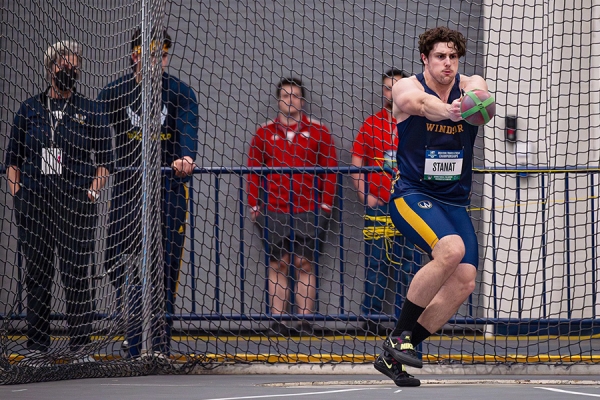
A.J. Stanat competing in weight throwLancer A.J. Stanat finished first in men’s weight throw at the Ontario University Athletics championships and was named the league’s male field athlete of the year. He will compete in the weight throw and shot put at the national tournament in Winnipeg. Photo by Connor Sykes.

Track and field action available through national broadcaster

Lancer fans can catch track and field athletes at the national championship tournament on CBC and Radio-Canada digital platforms through Saturday.

Find direct links to coverage of every event on the U Sports website.

Windsor’s men and women both placed third overall in the team standings at the Ontario University Athletics championships, Feb. 23 and 24 at the Lancer Centre.

Medallists included:

  • gold for A.J. Stanat men’s weight throw and shot put and Ben Tilson in the men’s 600m,
  • silver for Noah Waldmann in the men’s 600m, Nojah Parker in the men’s pole vault, and Mandy Brunet in women’s triple jump, and
  • bronze for Owen McNeill in the men’s long jump and triple jump, Grace Elford in women’s pole vault, Jacob Fitzpatrick in the men’s 3000m, Caleb Keeling in the men’s high jump, and Harley Martin in the women’s weight throw.

The Western Mustangs swept the provincial titles for the first time in their program history, while the Guelph Gryphons placed second on both sides of the competition.

co-op officesRising Star awards showcase the experiences of co-op and internship students.

National co-op month brings recognition for star students

Each year in March, the University of Windsor’s Co-operative Education and Workplace Partnerships office joins universities across Canada to celebrate National Co-op and Work-Integrated Learning Month, helping to promote the transformative power of work-integrated learning and blending academic study with real-world experiences.

“As we embark on work-integrated learning month, we are thrilled to showcase the experiences of co-op and internship students who are shining in their respective fields and working alongside employers from diverse industries,” says Kristen Morris, director of co-operative education and workplace partnerships.

“Work-integrated learning not only enriches students’ learning journeys but also fosters a deeper understanding of their field, enhancing employability and facilitating connections with industry professionals. Through this immersive approach, learners are better equipped to meet the demands on today’s dynamic workforce.”

She holds up as examples the fall 2023 co-op and internship rising star award winners who have exemplified innovation and excellence in their work-terms, each with a unique story to share:

  • Sharjeel Mustafa, computer science
    Data science co-op at Swift Medical
  • Chloe Crawford, engineering
    Manufacturing excellence specialist at Diageo
  • Kelsey Marrese, business administration
    Marketing co-op at Peak Processing Solutions
  • Jace Jacobs, business administration
    Communications co-op at Windsor-Detroit Bridge Authority
  • Maira Malik, engineering
    Process engineer co-op at Ford Motor Company

The co-op office will celebrate the success of co-op and internship students through March in DailyNews and on social media, delving deeper into the rising star award winners’ stories, the lessons they’ve learned and the impact they’ve made on their respective industries through their work-integrated learning experiences. Follow along on Instagram and LinkedIn.

man working on computerThe University of Windsor has mandated cybersecurity training for all employees.

Mandatory training to strengthen cybersecurity measures

In a bid to fortify its digital defenses, the University of Windsor has mandated cybersecurity training for all employees as outlined in the Cybersecurity Action Plan. This move comes in response to the escalating and persistent threats in the cyber landscape and aligns with best practices at other institutions.

“Cybersecurity is not just an IT issue, but a risk that affects every individual and department in our institution,” says Marcin Pulcer, associate vice-president, Information Technology Services. “This training is a critical step in ensuring that we are all equipped with the knowledge to protect ourselves and the University from cyber threats.”

The training is a valuable opportunity to learn how to safeguard oneself and share in the responsibility of protecting the University from cyberattacks. With cybercrime now the third-largest economy globally, the threat is imminent. In 2022, the global cost of cybercrime was a staggering $8.44 trillion US, and it’s anticipated to skyrocket to over $23 trillion by 2027.

The web-based cybersecurity training consists of two sections: training modules and a quiz that tests the knowledge and understanding of fundamental cybersecurity practices. IT Services will soon email each employee to provide more information and access to the training.

The cybersecurity training needs to be completed by faculty members, post-doctoral fellows, professor adjuncts, sessional instructors, staff, and student employees.

The University remains committed to protecting its technology and data, and this initiative is a testament to that commitment, says Pulcer: “Our collective effort to take cybersecurity precautions will significantly contribute to the University’s resilience against cyber threats.”

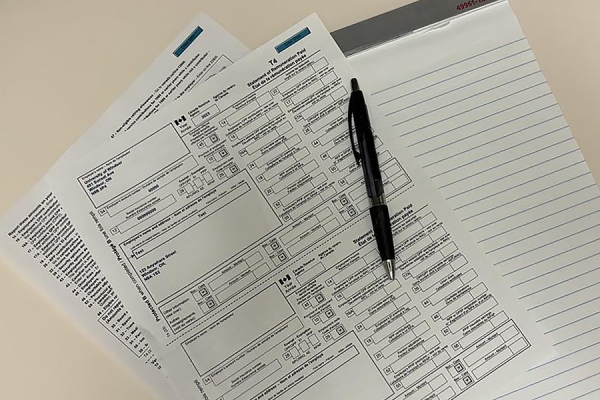
T4 slipsThe MyUWinfo employee portal will be inaccessible from about 9:30 p.m. Friday to 1 p.m. Saturday.

Maintenance downtime to restrict access to T4s

Scheduled maintenance will take the MyUWinfo employee portal, which holds employee T4 slips, offline from 9:30 p.m. tonight until 1 p.m. Saturday, March 9.

The downtime is necessary to move UWindsor applications to a new server, enhancing security. The maintenance is scheduled for the weekend to minimize disruption. Other applications such as VIP – all modules, My Attendance, Required Training Site, and Flexible Work Arrangement Request Application will be offline during maintenance.

Brightspace, UWinsite Student, eCV, and eGAS will remain online, but the data integration for those applications will be restored on Monday.

Employees are advised to plan accordingly due to the unavailability of T4s during this period. More information about the maintenance can be found on the IT Services website.

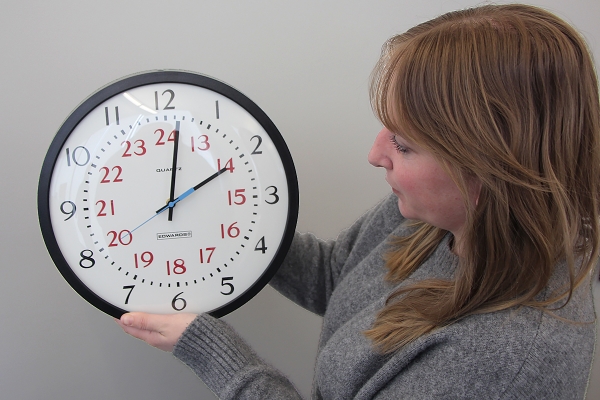
Lindsay Charlton setting a clockSet clocks and other timepieces forward one hour Sunday for the start of Daylight Saving Time, as demonstrated by Lindsay Charlton of the public affairs office.

Time to spring forward Sunday

Turn your clocks ahead an hour this weekend — Daylight Saving Time will commence Sunday, March 10.

When the clock is about to reach 2 a.m., turn it ahead to 3 a.m. If that’s past your bedtime, you can just set timepieces forward before you retire Saturday evening.

Standard time will return Nov. 3. Note: many electronic devices are programmed to adjust themselves automatically.