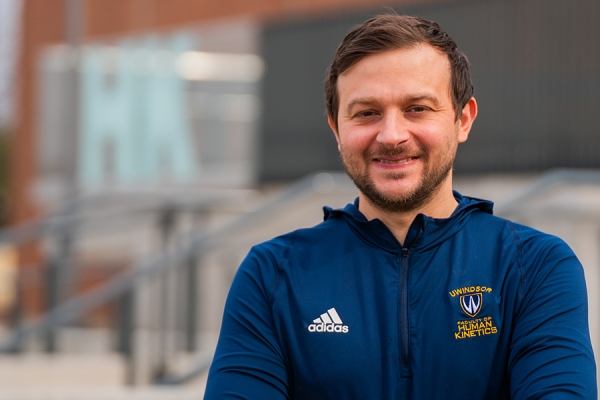
Francesco BiondiIn a recent article in the Conversation, kinesiology professor Francesco Biondi says human error may have contributed to the Key Bridge disaster.

About 20 per cent of drivers caught distracted, new study finds

With summer fast approaching, it’s not just the temperature that’s rising — so are the risks on the road. A new study suggests drivers are more likely to be distracted this time of year.

Francesco Biondi, a professor in the Department of Kinesiology and an expert in driver behaviour, led a study with Windsor Police Service examining rates of distracted and aggressive driving in school zones and business improvement areas (BIAs) around the city.

We designed and adopted a mixed-method approach, using both quantitative and qualitative data collection, to get a better idea of how prevalent driver distraction is in Windsor, especially in areas that exhibit a greater prevalence of vulnerable road users,” Dr. Biondi explained.

Researchers conducted roadside observations in summer and fall 2024 and winter 2025, tracking driver behaviour in these higher-risk areas. They also examined how factors such as school zone size and traffic volume influenced distraction rates.

According to Biondi, the study found that approximately 20 per cent of drivers engaged in distracted driving, with noticeably higher rates recorded during the summer months.

Previous research by Biondi points to some of the most dangerous types of distracted driving: talking on a cellphone, texting and using a vehicle’s touchscreen.

He also noted that drivers of larger vehicles, such as SUVs, were more likely to engage in risky or unlawful driving habits — a trend that aligns with recent studies showing the greater risks posed by larger vehicles on the road.

“Our research clearly shows that the perceived safety of larger vehicles like SUVs is a dangerous misconception. While some drivers may feel more protected behind the wheel of a larger vehicle, the data undeniably demonstrate an increased risk of harm to road users,” Biondi said.

“This project exemplifies the University's commitment to collaborating with our community to address real-world challenges. It's a powerful demonstration of how scientific research can directly improve the lives of people in our region.”

Barry Horrobin, director of planning and physical resources at Windsor Police Service

Barry Horrobin, director of planning and physical resources at Windsor Police Service

The study was supported by a grant of nearly $25,000 from the Social Sciences and Humanities Research Council of Canada. Windsor police contributed staff consultative time and perspective to the project, while the university provided about $14,000 in equipment and technological support.

Barry Horrobin, director of planning and physical resources at Windsor Police Service, says the study’s results clearly show the impact distracted driving is having in Windsor, particularly in areas with a higher concentration of vulnerable users, increasing the risk of harm.

While most people already know distracted driving is a problem, Horrobin says the data offers a clearer picture of when, where and how it’s happening.

“The Windsor Police Service sees great value in our partnership with the University of Windsor to carry out this important study that correlates with community safety. The study’s results offer a more detailed lens into behaviours of drivers on our roadways that impact the safety and well-being of everyone and will be helpful in further guiding us in how we will continue to address this important issue,” Horrobin said.

This is the first study of its kind in Windsor, and its findings are expected to help inform efforts to reduce distracted and aggressive driving across the region.

Aerial photo of University of Windsor campusStrategic investments in healthcare, education, and STEM announced in the 2025 Ontario Budget will directly benefit students, faculty, and communities across the province.

Thank You, Ontario: Supporting Students, Strengthening the Future

On behalf of the University of Windsor, we are grateful to the Government of Ontario for its 2025 Budget and strong commitment to strengthening postsecondary education across the province.

We are especially encouraged by targeted investments that will make a real difference for our students, faculty, staff, and for our region:

  • Expanding nursing education to address healthcare needs
  • Strengthening teacher training pathways to support and improve student outcomes
  • Increasing capacity in high-demand STEM fields

We are also pleased to see an increase in our operating grant funding for our STEM enrolment growth. These strategic investments reflect a clear recognition of the vital role Ontario’s universities play in preparing students for the careers of tomorrow, while addressing today’s most pressing workforce challenges.

Thank you, Premier Doug Ford and the Government of Ontario, for your partnership and support of higher education.

Together, we are helping educate the future workforce of Ontario and enhancing the innovation ecosystem.

— Dr. Rob Gordon, President and Vice Chancellor, UWindsor

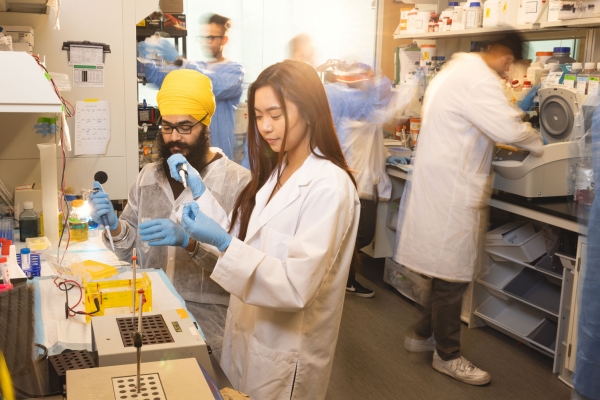
BioMed students at University of WindsorBioMed students at a lab in the University of Windsor.

Schulich medical students embark on transformative health research projects in Windsor-Essex

Thirteen future physicians are tackling pressing health challenges — from cancer care to vaccine hesitancy — through hands-on research projects grounded in the Windsor-Essex community. 

Supported by the Schulich-UWindsor Opportunities for Research Excellence Program (SWORP), these innovative projects give first- and second-year medical students early exposure to research while fostering interdisciplinary collaboration with University of Windsor faculty and clinical leaders. 

“SWORP nurtures a culture of inquiry and community impact,” said Shanthi Johnson, Vice-President, Research and Innovation at the University of Windsor. “Through mentorship and meaningful engagement, students are addressing complex health issues and building skills that will shape their future contributions to evidence-informed healthcare.” 

Now in its 11th year, SWORP has funded more than 80 student-led projects, with this year’s cohort receiving a combined $50,000 in research support. Each project is backed by a $5,000 grant co-funded by the Schulich School of Medicine & Dentistry and the University of Windsor’s Office of the Vice-President, Research and Innovation. 

This year, five students are working under the guidance of full-time UWindsor faculty members, while eight are paired with clinical professors — practising physicians based in Windsor-Essex. The WE-SPARK Health Institute plays a critical role in helping build regional research capacity and fostering stronger academic-healthcare partnerships. 

2025 SWORP Grant Recipients and Projects 

  • Eva VieiraAutomated Matching of HER2 Positive Breast Cancer and Sarcoma Patients in Ontario Using Artificial Intelligence, supervisor: Dr. Caroline Hamm, Clinical Professor, UWindsor; Windsor Regional Hospital 
  • Frank MazzaAssessing the Triaging and Diagnostic Accuracy of ChatGPT in Neurosurgical Cases, supervisor: Dr. Abdul Naeem, Clinical Professor, UWindsor; Windsor Regional Hospital 
  • Gracie Sun, Reyad Elzaanoun, Michael NakhlaUnderstanding Risk Factors for Vaccine Hesitancy Among People Experiencing Homelessness, supervisor: Dr. Jennifer Bondy, Clinical Professor, UWindsor; Family Medicine 
  • Hayden HartwickAssessing Differences in Youth Hockey Helmet Fit Between Female and Male Players, supervisor: Dr. David Andrews, University of Windsor – Kinesiology 
  • Hyun RyuShaping Fair Chances: Mental Wellness and Employment Prospects for Individuals with Criminal Records, supervisor: Dr. Kemi Anazodo, University of Windsor – Odette School of Business 
  • Ida-Ehosa OlayeEffects of Acute Insufficient Sleep on Cerebrovascular and Respiratory Function, supervisor: Dr. Anthony Bain, University of Windsor – Kinesiology 
  • Isha SuriEnhancing Patient and Caregiver Engagement During Care Transitions in Southwestern Ontario, supervisor: Dr. Paula van Wyk, University of Windsor – Kinesiology 
  • Kendra Prasad, Jocelyn VealsDeveloping a Multidisciplinary Program for the Prevention of Venous Thrombosis in Ambulatory Cancer Patients, supervisor: Dr. Andrea Cervi, Clinical Professor, UWindsor; Windsor Regional Hospital 
  • Naziha AliThe Impact of “Race Corrections” in Spirometry Based on Racial Identification, supervisor: Prof. Adriana Duquette, University of Windsor – Kinesiology 
  • Rachel-Ann DixonSuboptimal Prenatal Care and Pregnancy Outcomes: A Retrospective Study at Erie Shores HealthCare, supervisor: Dr. Kenneth Ogah, Clinical Professor, UWindsor; Erie Shores HealthCare 
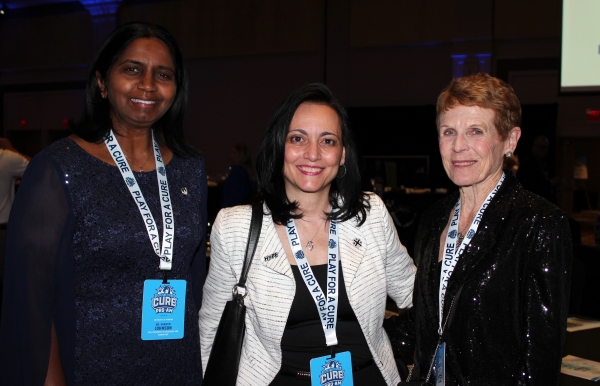
Play for a Cure Pro-Am Hockey Tournament raised over $418,000 for local cancer research, of which WE-SPARK Health Institute received $230,000Play for a Cure Pro-Am Hockey Tournament raised over $418,000 for local cancer research, of which WE-SPARK Health Institute received $230,000

Charity hockey tournament raises $230K for local cancer research

Funds raised at a charity hockey event will in part go straight to WE-SPARK Health Institute to support cancer researchers at the University of Windsor and across Windsor-Essex.

This year’s Play for a Cure Pro-Am Hockey Tournament raised over $418,000 for local cancer research, of which WE-SPARK Health Institute received $230,000 to support the following three new cancer research grants:

  • Cancer Research Igniting Discovery Grant worth $30,000 
  • Cancer Research Incentive grant of $50,000 
  • Cancer Research Program Lead valued at $150,000 over three years 

Researchers will benefit with the seed funding to advance innovative cancer research and elevate their projects for national funding. Support for a Cancer Research Program Lead will help recognize research excellence and lead the growth of the WE-SPARK cancer research program across our region.  

“We are so grateful for the amazing collaboration with Play for a Cure and the Cancer Research Collaboration Fund,” said Dr. Dora Cavallo-Medved, Interim Director of the WE-SPARK Health Institute. 

“Together we are building and expanding cancer research across our community, training the next generation of researchers and improving patient outcomes. They are true community champions and partners in cancer research.” 

This is not the first time research money has flowed in thanks to the super star hockey event. Over the last give years, Play for a Cure has supported WE-SPARK with a total of $420,000. 

“Today’s announcement is a testament to what our community can achieve when we rally around a common cause,” said Play for a Cure organizer, Jeff Casey, said to CTV News Windsor.

“This funding not only honours the spirit of the Play for a Cure event, but it ensures that the money raised here will have a direct local impact.” 

The celebration of sport, science, and community kicked off with a cancer symposium hosted by Jennifer Jones, past President of Rotary International, and featured keynote speaker Dr. André Veillette, Executive Director of the Terry Fox Research Institute’s 

Marathon of Hope Cancer Centre Network.  Also included in the hockey tournament was a draft party, and the all-star game followed by Girls Skill for a Cure session — an event led by some of the greatest women’s hockey players in Canadian history. 

The events featured NHL alumni, sports celebrities and UWindsor and Windsor Regional Hospital cancer researchers.  

To date, Play for a Cure has raised nearly $2 million for cancer research – with every dollar staying in the Windsor-Essex community to support local scientists, patients, and programs.

A family of geese on the University of Windsor campus. A family of geese on the University of Windsor campus.

Campus facilities closed for statutory holiday Monday

The University of Windsor, including campus libraries, the CAW Student Centre and Marketplace, and the Toldo Lancer Centre, will be closed Monday, May 19, for Victoria Day.  

Freshwater Restoration Ecology Lab A new era of storytelling: The University of Windsor is evolving how it shares the impactful work of its students, faculty, and staff—on campus and beyond.

Evolving How We Share Our Stories

There is incredible work happening every day across the University of Windsor.

In labs, classrooms, studios, office spaces, and field sites—our students, faculty, staff, and partners are shaping the future.

These stories define who we are.

To tell these stories strategically and to amplify the University’s reach to broader and far-reaching audiences, stay tuned for new, updated platforms to deliver news to our campus, local community, and region. In the meantime, while we take a brief pause, please stay tuned to @uwindsor on Facebook, Instagram, LinkedIn, and X.

This summer, we will introduce a refreshed storytelling platform that reflects our vibrant campus and community.

As part of this transition, DailyNews will pause starting May 26 for approximately four to eight weeks.

While its daily format may change, our commitment to celebrating and sharing the university’s impact will continue—through social media, institutional emails, and a new platform launching later this summer.

Any previous email addresses used to submit stories or announcements will no longer be monitored. All future submissions should be made through TDX.

Applications now open for 2026 MEXT Research Student Scholarship

The Ministry of Education, Culture, Sports, Science and Technology (MEXT) of the Government of Japan is now accepting applications for the 2026 MEXT Research Student Scholarship. 

The undergraduate scholarship is currently accepting applications until May 30, 2025. Opportunities for university graduates interested in research in Japan are available through May 23, 2025.  

This prestigious scholarship provides funding for full tuition fees, a monthly allowance, and roundtrip travel between Japan and Canada.  

Selected candidates will be invited for an interview and language examination (English and Japanese) in person at the Consulate General of Japan in Toronto in early to mid-July. Japanese fluency is not mandatory for all programs; requirements vary by university and study field. 

For further details, please visit the Consulate-General website