research

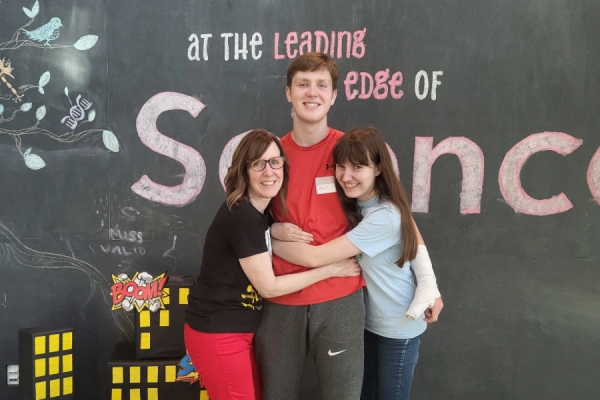
Karen Metcalfe, Blake and Mckenna Lumley in the CORe atrium at the University of Windsor.Karen Metcalfe, Blake and Mckenna Lumley in the CORe atrium at the University of Windsor.

Dramatic arts student and brain tumour survivor drives research support

Fifteen years ago, everything changed for Mckenna Lumley. 

At just four years old, Lumley was diagnosed with a juvenile benign pilocytic astrocytoma (JPA), a rare childhood brain tumour. 

Her family started to notice something was off when she was in the bath and unable to move her head back. This limited mobility progressed into her screaming due to neck pain and vomiting. While doctors were convinced Lumley was suffering from a flu bug, her mother, WE-SPARK assistant director Karen Metcalfe, knew something more was going on. 
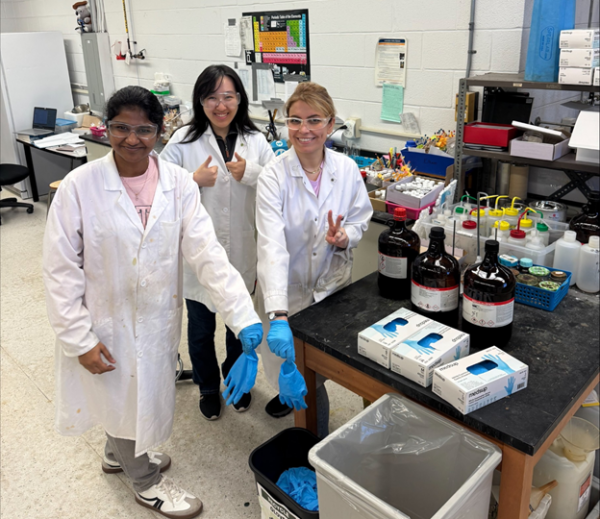
Pavithra Prasad (MSc student), Vivian Peng (going into 4th year undergrad), and Elham Pourian (PhD candidate), properly disposing of lab gloves for recycling in the Chemistry and Biochemistry Department.Pavithra Prasad (MSc student), Vivian Peng (going into 4th year undergrad), and Elham Pourian (PhD candidate), properly disposing of lab gloves for recycling in the Chemistry and Biochemistry Department.

Reducing lab waste through innovation and community action

To support sustainability and reduce the volume of laboratory waste sent to landfills, the University of Windsor has launched a new initiative aimed at recycling uncontaminated personal protective equipment (PPE) from labs across campus.

Gloves, masks, gowns, and hairnets that are free of contaminants are collected and sent to a specialized facility, where the materials are repurposed into new plastic products. 

This process not only reduces reliance on virgin materials but also supports the development of a more circular, sustainable economy.

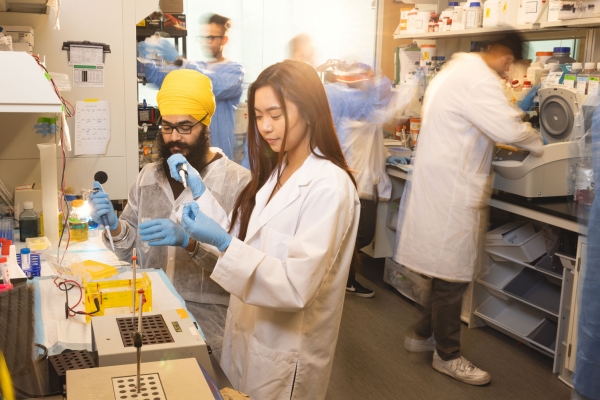
BioMed students at University of WindsorBioMed students at a lab in the University of Windsor.

Schulich medical students embark on transformative health research projects in Windsor-Essex

Thirteen future physicians are tackling pressing health challenges — from cancer care to vaccine hesitancy — through hands-on research projects grounded in the Windsor-Essex community. 

Supported by the Schulich-UWindsor Opportunities for Research Excellence Program (SWORP), these innovative projects give first- and second-year medical students early exposure to research while fostering interdisciplinary collaboration with University of Windsor faculty and clinical leaders. 

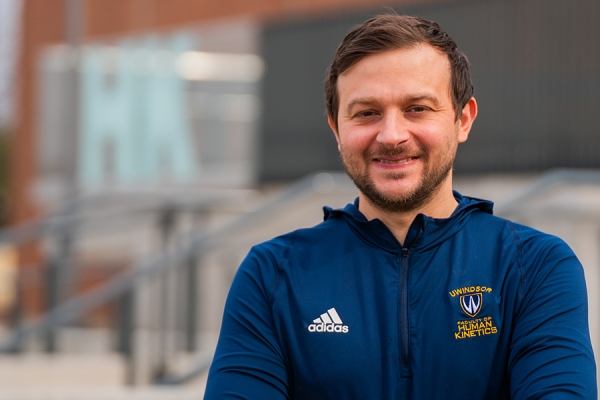
Francesco BiondiIn a recent article in the Conversation, kinesiology professor Francesco Biondi says human error may have contributed to the Key Bridge disaster.

About 20 per cent of drivers caught distracted, new study finds

With summer fast approaching, it’s not just the temperature that’s rising — so are the risks on the road. A new study suggests drivers are more likely to be distracted this time of year.

Francesco Biondi, a professor in the Department of Kinesiology and an expert in driver behaviour, led a study with Windsor Police Service examining rates of distracted and aggressive driving in school zones and business improvement areas (BIAs) around the city.

Cody Dey, a UWindsor post-doctoral researcher, says about 10 per cent of Arctic species have never been the subject of a published study.Cody Dey, a UWindsor post-doctoral researcher, says about 10 per cent of Arctic species have never been the subject of a published study.

UWindsor researcher finds Arctic species critically understudied

The focused scope of research in Canada’s Arctic potentially leaves dozens of species at risk, says a UWindsor post-doctoral researcher.

Cody Dey, currently studying in the Process-Driven Predictive Ecology Lab at the Great Lakes Institute for Environmental Research, said conserving Arctic wildlife poses a challenge because 10 per cent of birds, fish and mammal species have never been the subject of a published study.

University of Windsor professors Phillip Karpowicz and Christina Semeniuk received the Early Researcher Awards from the Ministry of Research, Innovation and Science.University of Windsor professors Phillip Karpowicz and Christina Semeniuk received the Early Researcher Awards from the Ministry of Research, Innovation and Science.

Science professors honoured with Early Researcher Awards

Two University of Windsor professors are among this year's recipients of the Early Researcher Awards, a provincial program that helps institutions build research teams.

Biology professor Phillip Karpowicz and Great Lakes Institute for Environmental Research professor Christina Semeniuk were both awarded $150,000 over five years from the Ministry of Research, Innovation and Science.

Researchers from around the world will converge on Windsor this week for the 2017 Canada-China Water Science Workshop hosted by UWindsor's Great Lakes Institute for Environmental Research.Researchers from around the world will converge on Windsor this week for the 2017 Canada-China Water Science Workshop hosted by UWindsor's Great Lakes Institute for Environmental Research.

Researchers converge on Windsor for 2017 Canada-China Water Science Workshop

Buried beneath the surface of China’s plateau lakes could lie the solutions to some of the challenges currently facing the Great Lakes.

It’s one of the topics that will be discussed in Windsor this week at the 2017 Canada-China Water Science Workshop hosted by the University of Windsor’s Great Lakes Institute for Environmental Research.