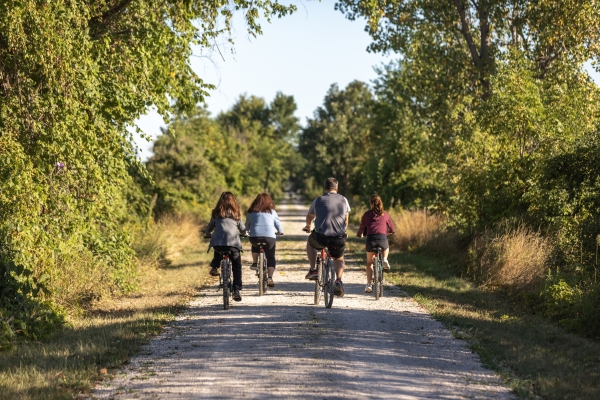
 Riders cruise along the Chrysler Canada Greenway, part of a growing network of trails that will soon span two nations. A new report co-authored by UWindsor visiting scholar John Hartig explores how the upcoming Gordie Howe International Bridge can spark cross-border trail tourism and strengthen ties between Windsor and Detroit. (Photo by Tourism Windsor Essex Pelee Island)
Jun 11th, 2025
By Sara Elliott
With every turn of their pedals across the Gordie Howe International Bridge next year, cyclists will be forging new paths — linking two cities, two countries and a shared story of place and possibility.
A new report, co-authored by University of Windsor visiting scholar John Hartig, explores how the region can harness this opportunity to grow cross-border trail tourism and build connections through shared experiences.