
students pose in Lancer gearUWindsor grads and friends will attend events October 1 to 4 for the Alumni Weekend.

Grads and friends to gather for Alumni Weekend

The Alumni Sports Hall of Fame Induction and Awards Ceremony, Sunday at 1 p.m. in Ambassador Auditorium, will cap a weekend’s worth of activities celebrating the worldwide community of UWindsor graduates.

A team achievement award will recognize the 1978-79 varsity squad for men’s basketball and sport achievement awards will go to:

  • Jack Costello (BA 1963, BPE 1967) a long-time coach of men’s hockey and later athletic director at St. Clair College;
  • Denis Landry (BPE 1971), a champion coach of cross-country at the University of Ottawa; and
  • Scot McFadden (BA 1973, MA 1975), sports psychologist who won a Stanley Cup ring for his work with the Dallas Stars.

Profiles of inductees Kelley (Park) Cavanagh, Chris Church, Ryan McKenzie and Sean Moriarty will appear later this week in DailyNews.

Admission to the awards is free; RSVP by phoning 519-971-3618 or e-mailing alumni@uwindsor.ca.

Alumni Weekend will open with Spirit Day on Thursday, October 1, with the campus community encouraged to don their blue and gold apparel and invited to a “Grab ’N’ Go” breakfast from 9:30 to 10:30 a.m. at the corner of Wyandotte Street and Sunset Avenue.

On Friday, the public is invited to a reception marking the opening of the Welcome Centre. From 5 to 7 p.m., enjoy entertainment and small bites from Windsor and Essex County. Register to attend.

Saturday’s highlight is a tailgate party with complimentary barbecue at 11:30 a.m. leading into the Lancer football game against the McMaster Marauders.

Check out a full list of planned activities on the Alumni Weekend event page.
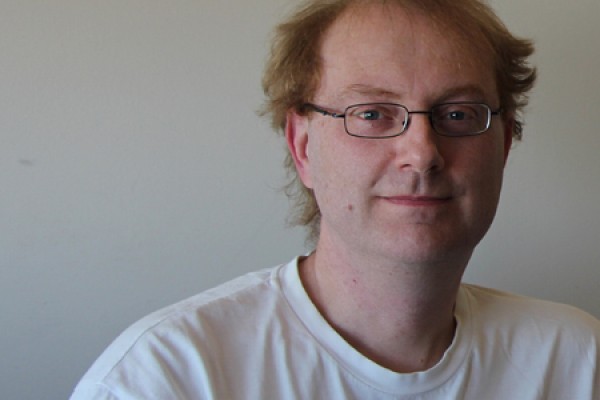
Robin GrasNatural selection best explains the evolution of species, according to an artificial ecosystem developed by computer science professor Robin Gras.

UWindsor researchers successfully simulate evolution of species

A team of UWindsor researchers have successfully proven that natural selection best explains species evolution.

Robin Gras, an associate professor in the School of Computer Science, and Canada Research Chair in Learning and Simulation for Theoretical Biology; post-doctoral student Abbas Golestani; and research contributors Andrew Hendry and Melania Cristescu of McGill University, have developed an ecosystem simulation platform they have dubbed “EcoSim,” a mathematical algorithm to study how a complex population of more than a million predator and prey individuals interacts to evolve species.

Dr. Gras says the origin of species is difficult to study in nature.

“Previous models have proved impossible to replicate, since there are so many forces that influence speciation,” he says. “EcoSim successfully created a large-scale population—one that would take thousands of years to study in nature.”

Gras and his team coded EcoSim so each artificial individual possesses a proper genome, or DNA sequence containing true physical traits and behaviours. The simulator can observe hunger, fear, curiosity and reproduction.

“This is a proper system that evolves, where the genome is coded so two parents combine and pass on their genomes, with some mutations, to their offspring,” says Gras. “This behavioural model determines how prey consumes resources and how predators consume prey.”

Once the artificial system is programmed, it is left alone to create generation after generation, while the researchers observe.

Gras says EcoSim also shows how brains can evolve, specifically how predator pressure can speed up the evolution of a prey’s brain.

“We plugged in all kinds of things that do happen in nature, that affect evolution, and found that the only needed, and strongest force was natural selection,” he says. “It is the only solution that emulates our world. This is the first time we can show, with a complex artificial system, without external bias, that natural selections and species automatically emerge. We didn’t force it. Species seem to be a direct and natural consequence of natural selection.”

The paper, Speciation without Pre-Defined Fitness Functions, was published in the September 2015 edition of the science journal PLOSone.

Student guests help prepare dessert for their holiday hosts.Student guests help prepare dessert for their holiday hosts.

Host program to open local homes to international students

International students come to Canada hoping to learn about its cultures and people, says Brunilda Gjini. That’s why she is excited to help organize the Host for the Holidays program.

A project of the International Students Centre, it matches international students with local families willing to open their homes for a Thanksgiving meal.

“This is a chance for us to learn about some Canadian traditions,” says Gjini, a native of Albania who arrived in Windsor in January to begin studies in business and economics. “We all came to Canada because we love it.”

She is looking for at least 60 host homes and says the holiday is a perfect opportunity to demonstrate the welcoming culture Canada is famous for.

“You are giving someone a feeling that they have a family for the day,” Gjini says. “That is a wonderful feeling to share.”

The program is now accepting applications from prospective hosts and will open to guests after October 1. Organizers will match hosts with guests based on a number of factors—dietary preferences, tolerance for pets, timing of the meal, and even convenience of transportation.

Thanksgiving weekend runs October 10 to 12. Find more information, including online applications, on the program website, www.uwindsor.ca/host.

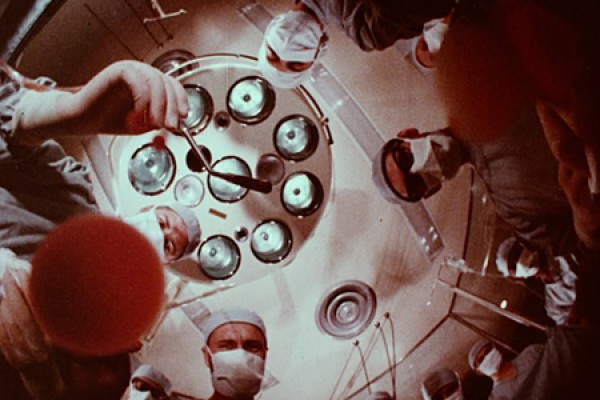
heart's eye view of surgeryOpen heart surgery at the Royal Victoria Hospital, from the film shown at the Expo 67 Meditheatre, Robert Cordier’s “Miracles de la médecine moderne/Miracles in Modern Medicine.”

History prof unearths avant-garde 1960s medical film

A University of Windsor researcher has re-discovered a graphic medical film that was such a shock for viewers at the 1967 Montreal World Exhibition (Expo 67), a reported 200 people a day fainted while watching it. Medical historian Steven Palmer helped restore the movie and will co-present Miracles in Modern Medicine in Montreal this week for its first public screening since 1967.

Dr. Palmer says it is difficult for a contemporary audience to grasp the stir this movie caused, since people are now bombarded with graphic images on television and movies. In 1967 only medical trainees had visual media access to things like open-heart surgery or brain surgery, two of the close-up procedures featured in the film that was shot in Montreal hospitals in 1966.

"Even a live birth, which opens the film, is something only midwives or obstetricians would see in a training setting,” says Palmer. “People keeled over in droves when the general public finally got a look at this kind of thing, which of course just made the film that much more popular—line-ups stretched for hours, and 2.5 million visitors saw the film over the six months of Expo 67.”

While the film ran at Expo 67, he says, actors simultaneously re-enacted elements of the film with props comprised of real, state-of-the-art hospital equipment.

Palmer, Canada Research Chair in History of International Health, is currently completing a study of health and medicine at the 1967 Montreal World Exhibition. He discovered Miracles in Modern Medicine in the audio-visual collection of Library and Archives Canada.

“As a historian, you’re always trying to improve your archival strategies, always worried you might miss something big,” says Palmer. “I feel like this was a reward for going the extra mile in the archive, and of course this film is a real treasure that belongs to the people of Canada and I’m very proud to help bring it back to light.”

Montreal doctors who designed Expo 67’s health pavilion hired two New-York based artists to make the film: Robert Cordier, a theatre director, and John Palmer, a Warhol Factory cinematographer. Palmer says the filmmakers were two of the most important, creative figures in avant-garde art in the 1960s.

“This film is a major statement in medical cinema that just disappeared after the last day of Expo in late October 1967,” says Palmer. “I worked with the director Cordier, who is now 82, to restore the film and bring it back to the public.”

Cordier and Palmer will attend a major conference on the history of the hospital at McGill University, screening the 20-minute film Thursday at a special event on health and medicine at Expo 67.

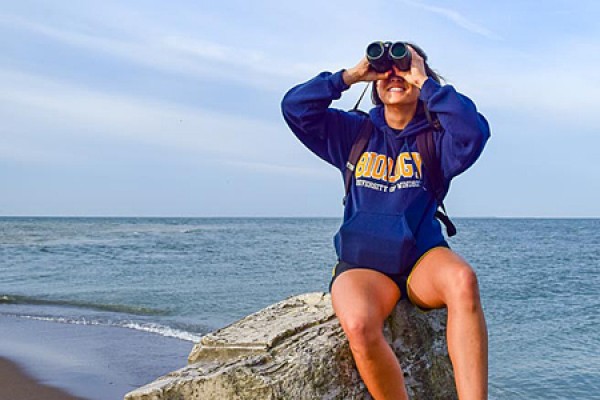
Sarah WongFourth-year biology student Sarah Wong observes birds flying by during a field trip Saturday to Point Pelee.

Things looking up for biology students observing migrations

A trip Saturday to Point Pelee National Park and Holiday Beach Conservation Area was one of the most memorable experiences of his undergraduate education, says biology student Ilias Berberi.

He was one of 72 students in professor Dan Mennill’s third-year course in ornithology to take part in the field trip, which focused both on bird identification, and on different research techniques for studying migratory birds.

There is no substitute for watching the fall migration in the wild, Dr. Mennill said.

“We spent the morning at the tip of Point Pelee, watching hawks, falcons, and vultures traveling south through the Great Lakes,” he said. “In the afternoon, the volunteers at the Holiday Beach Migration Observatory taught our undergraduate students about techniques for capturing migratory hawks and songbirds, and about the importance of censusing migrants.”

Berberi said it was exciting to apply knowledge gained in class to the field.

 “The field trip helped show me that research is definitely a career I want to pursue,” said the fourth-year biology major. “Plus, looking up to see the sky full of migrating birds is a sight that everyone should experience!”

Milan Radulj, a fourth-year student of behaviour, cognition and neuroscience, said he had a great time.

“I found it really interesting to learn of the conservation efforts to protect birds that are not only seen by locals, but also the many thousands of people who see those birds along their migration routes,” he said. “It is refreshing to have a course that stimulates my interests both inside and outside of the classroom!”

The trip also gave students a new appreciation for the migration hot-spots on Lake Erie’s north shore.

“Our trip made me realize how privileged we are to have a world-renowned migration spot right in our backyard,” said Sarah Wong. “We’re so fortunate to be able to observe such a diversity of fascinating bird species.”

Photos of the students’ outdoor learning adventure can be found on Mennill’s website: www.uwindsor.ca/dmennill.

Share the joy of graduation as a Convocation volunteer

Convocation is the culmination of students’ University of Windsor experience and the celebration of their academic success.

UWindsor faculty and staff members are invited to help make the occasion memorable for graduates and their guests by joining the Volunteer at Convocation initiative. A joint project of the Department of Human Resources and the Office of the Registrar, it recruits employees to welcome guests, usher them to their seats and answer any questions.

Fall Convocation will be held in two sessions on Saturday, October 17, in the St. Denis Centre. The application deadline is October 2. Find more information, including a sign up form, at www.uwindsor.ca/convocation/volunteer.

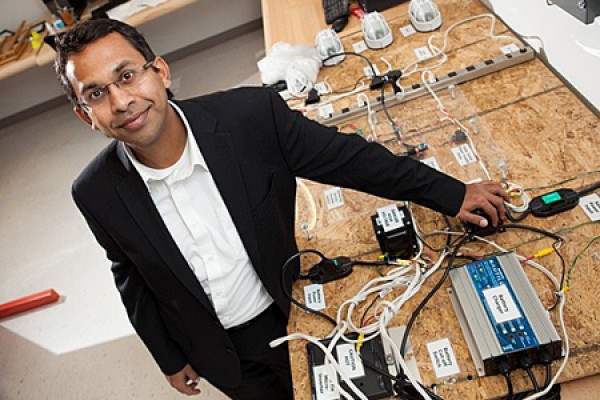
Bala VenkateshRyerson professor Bala Venkatesh will speak to “Energy Storage: Why it’s critical to our energy future,” Thursday on the UWindsor campus.

Speaker to address issues of energy storage

Energy storage is critical to our energy future, says Bala Venkatesh, academic director of the Toronto-based Centre for Urban Energy. Find out why in his free public presentation on the topic Thursday, October 1, at 1 p.m. in room 1102, Centre for Engineering Innovation.

A professor at Ryerson University, Dr. Venkatesh is an expert in power systems and energy storage. In his lecture, he will explain a variety of emerging storage technologies and discuss how Canada will play a significant role in their development.

 His appearance at UWindsor is part of the Centre for Energy and Water Advancement Distinguished Speakers Series.

Presentation to offer legal perspective on international trade

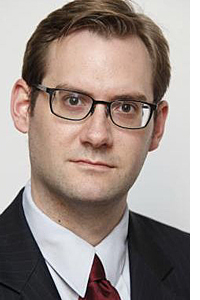
Peter KucherepaA presentation organized by the Cross Border Institute will explain how contracts can mitigate the risk of engaging in international trade, Wednesday in the Joyce Entrepreneurship Centre.
Barrister and solicitor Peter Kucherepa will discuss “How contracts are the foundations of international transactions.”

A senior policy advisor at the Department of Foreign Affairs Trade and Development Canada and director of the Forum for International Trade Training, he provides strategic policy advice on emerging non-tariff commercial barriers with Canada’s biggest trading partner, the United States.

The event will open at 1 p.m. with a networking session before the 1:30 p.m. start to the formal program. Attendance if free but registration is encouraged; e-mail info@cbinstitute.ca.

Life is good: the bookBrothers Bert and John Jacobs share their optimistic philosophy in “Life is Good: the Book.”

Book of the week extols virtues of living

The Campus Bookstore has designated the inspirational volume Life is Good: the Book as its book of the week.

Authors Bert and John Jacobs launched the company Life is Good in 1989, designing, creating and marketing t-shirts with inspirational mottos and innovative graphics. They have since expanded their product lines, and sold millions of t-shirts and other items.

This book tells their story and explains their philosophy “in ten superpowers.” Regularly priced at $25, Life is Good: the Book will sell at the Campus Bookstore for only $15.67 until October 4.

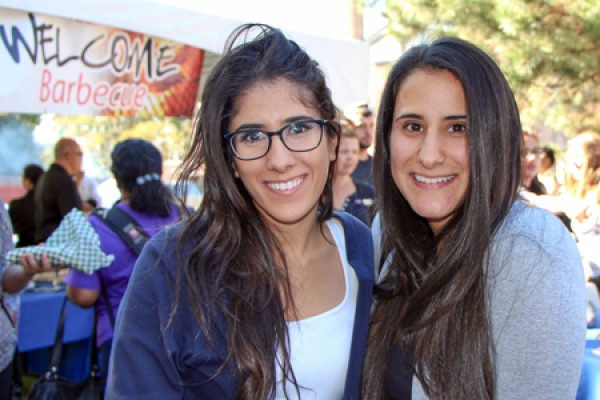
people partying before "welcome barbecue" bannerStudents, staff and faculty enjoyed the barbecue celebrating the semester’s start held Tuesday by the Organization of Part-time University Students.

Free barbecue draws welcome crowd

Hundreds of students, faculty, staff and officials joined the Organization of Part-time University Students (OPUS) for its annual barbecue, September 22 outside the CAW Student Centre.

“There was a tremendous turnout,” said OPUS staffer Steve Jancev. “Special thanks to Food and Catering Services, our volunteers and the UWindsor Photography Club for their support.”

Attendees received free student discount cards from the Canadian Federation of Students, information materials and other giveaways from Campus Dental Centre, Green Shield, OPIRG-Windsor and Campus Ministry. They also enjoyed lively music provided by a DJ sponsored by CUPE Local 1001.

Jancev also expressed gratitude to high-ranking administrators who turned out, including UWindsor president Alan Wildeman, provost Douglas Kneale, and Michael Khan, dean of human kinetics.