UWindsor chemist Simon Rondeau-Gagné hits play and what follows looks like a magic trick.
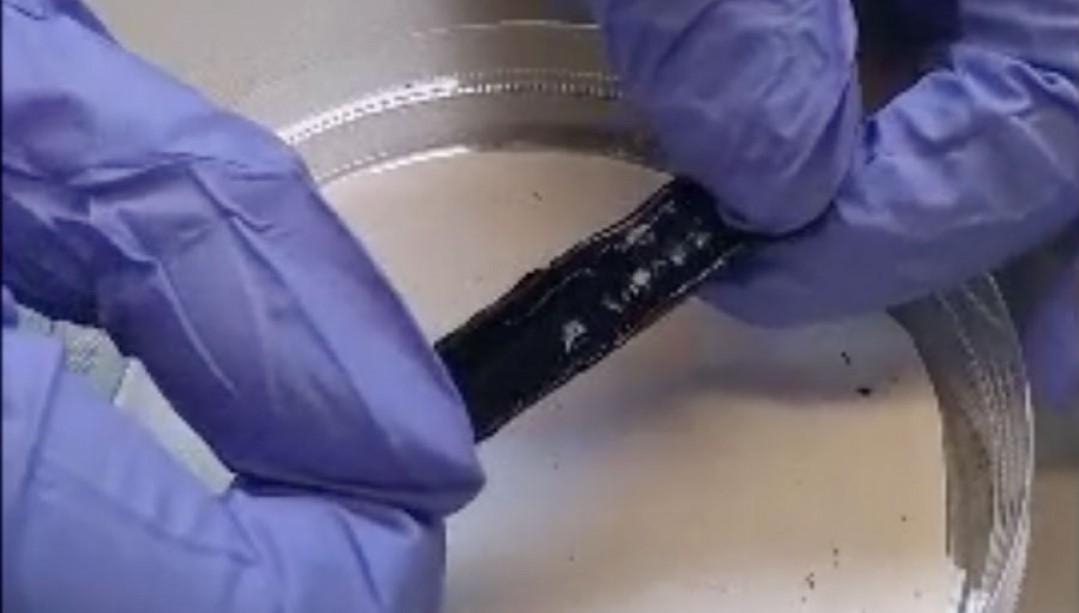
A video shows Master’s student Julia Pignanelli manipulating a rectangle of jelly-like material in her fingers, stretching it to eight times its normal length before letting it revert to its original form. She then puts it down and slices it in two with a utility knife. She positions the two pieces so they touch and, voilà, the material is whole again.
It’s no optical illusion or sleight of hand, Dr. Rondeau-Gagné assures: “It’s chemistry.”
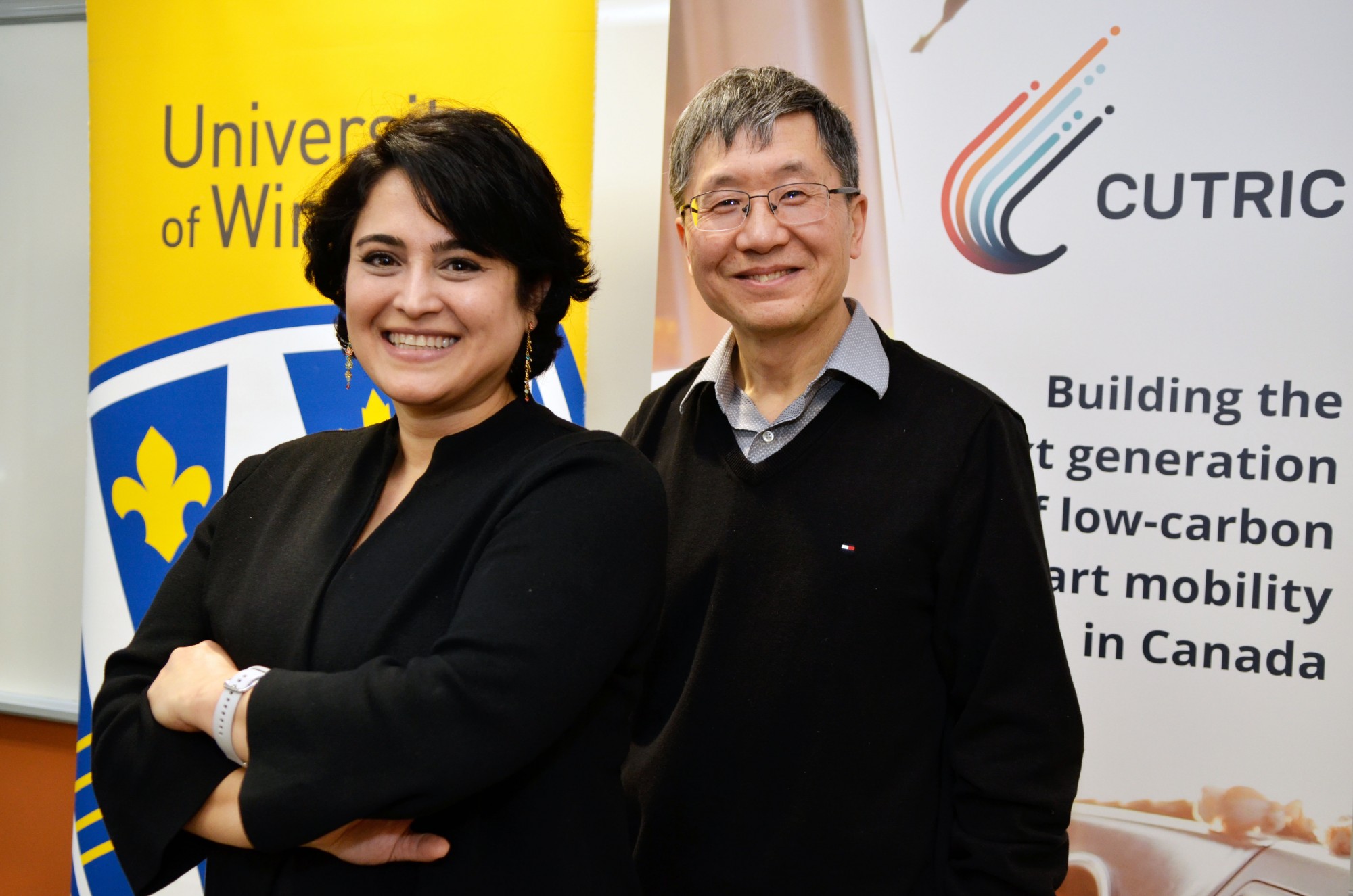
The self-healing elastomer is the latest technology developed by Pignanelli, Rondeau-Gagné and engineering professor Jalal Ahamed. They recently obtained a provisional patent on the invention.
It’s similar to the silicone-based material used in contact lenses, but with special properties. It not only heals itself, but once cut, the material at the location of the damage is stronger than it was originally. The healing at first took 24 hours, but through further experimentation, the team has cut that time down to just two hours.