
What is the RLP?
The Teacher Education Reciprocal Learning Program (RLP) was developed in 2010 between the University of Windsor and Southwest University (SWU) China, and in partnership with the Greater-Essex County District School Board.
The program is a foundational component of Drs. Shijing Xu & Michael Connelly’s (2013-2025) SSHRC Partnership Grant Project entitled “Reciprocal Learning in Teacher Education and School Education between Canada and China”. The goals of the RLP are to provide an exceptional experience with international engagement, to broaden teacher candidates’ horizons for a society of increasing diversity, and to foster international collaboration among faculty members who are interested in cross-cultural studies and multicultural education (Xu, 2011).
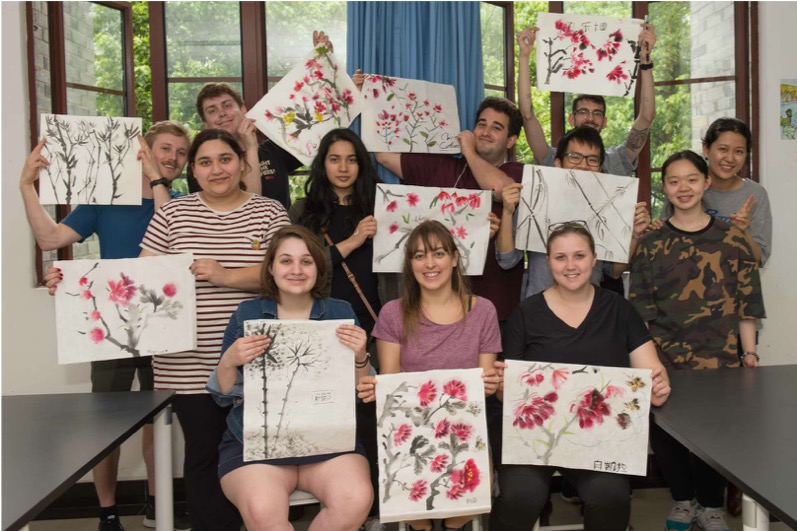
Program Goals
- Foster intercultural communication and dialogue connected to Canada’s culturally diverse classrooms.
- Critically explore educational issues in both Canada and China.
- Engage in reciprocal learning to share and appreciate pedagogical practices across cultures.
- Deepen understanding of the relationship between self, school, and society.
- Develop global competence in sustainability and social responsibility.
- Gain basic knowledge of Chinese language, philosophy, and culture.
- Learn culturally responsive strategies to support English Language Learners in diverse classrooms.
The Reciprocal Learning Program (RLP) has been one of the most valuable courses for understanding education through a socio-cultural lens. The opportunity to study a West-to-East educational exchange fostered a deep sense of humility, openness, and cultural awareness, that allowed me to appreciate how culture and education influence each other. I highly recommend this course for anyone looking to engage in meaningful discussions and reflect on how education can be transformed with others.
– Anna Fan
Why should we choose the RLP?
Through the RLP, you will:
- Develop a critical understanding of how education systems in Canada, China, and other countries address shared and unique challenges.
- Gain hands-on experience working across cultures—an essential skill in today’s multicultural classrooms.
- Participate in school observations, co-teaching, and professional workshops that strengthen your ability to work across languages and cultures.
- Enhance your ability to integrate environmental sustainability and global citizenship into your teaching practice.
- Build a toolkit of culturally responsive teaching strategies and classroom resources.
- Take home practical lesson ideas and instructional strategies that can be applied in future teaching contexts.
- Grow your confidence in international collaboration and adapting to new educational environments.
- Develop strong communication, teamwork, and problem-solving skills through learning and living in a new cultural setting.
- Expand your professional network by forming lasting connections with educators, researchers, and peers in Canada, China, and beyond, supporting future study, career development, and collaborative opportunities.
What You’ll Experience?
1. Coursework at University of Windsor
- Weekly academic discussions and cultural workshops and language lessons: Learn practical language basics and explore cultural traditions, from Chinese calligraphy to international customs.
- Pair and group presentations: Share research and insights on comparative education, school education, multiculturalism, global competence, and more. (e.g., Kindergarten and Elementary Education in China and in Canada, Secondary School Education in China and Canada, Higher Education in China and Canada, and Teacher Education in China and in Canada)
- Environmental education projects: Develop lesson plans that integrate environmental sustainability and global issues into your teaching practice.
- Portfolio and reflections: Keep a record of your progress, submit weekly reflections, and create newsletters to document your growth.
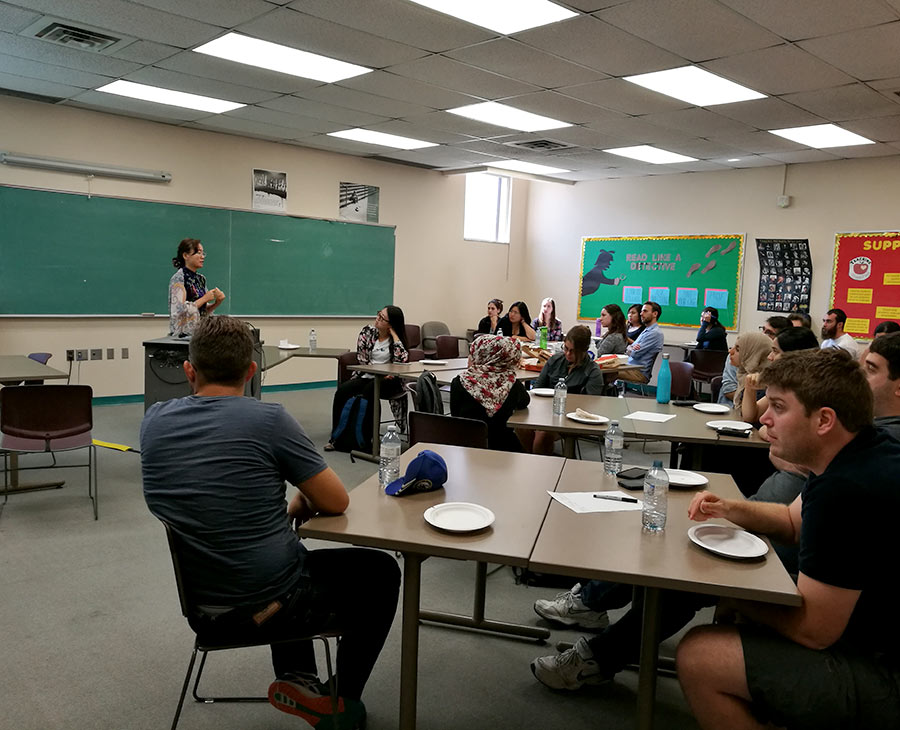
Dr. Shijing Xu teaching the teacher candidates.
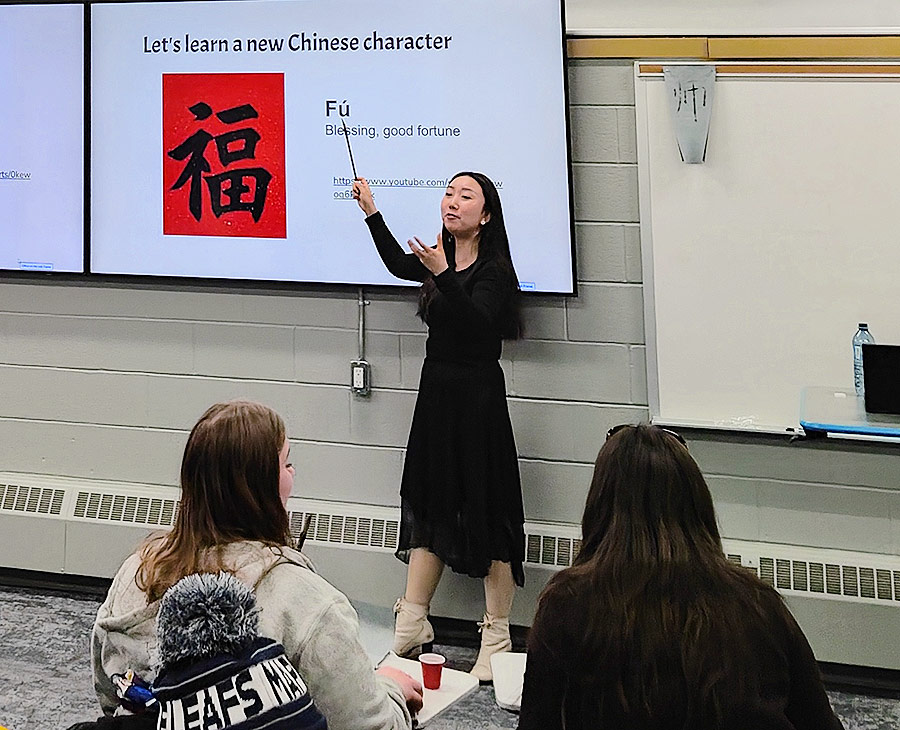
Dr. Yuhan Deng teaching the teacher candidates.
2. International Internship (supported by $6,000 Mitacs Globalink Research Award)
In fall semester, applicants will be guided to:
Since September 2014, Dr. Xu, along with her research team, has worked with the Mitacs Globalink program, which provides Canadian students with Mitacs Globalink Research Awards [External Link] ($6,000 each applicant) to participate in research-oriented international internships in China. This funding has served to assist teacher candidates in financing their trip to China. partner schools, and local teachers. Since 2015, 7 cohorts of University of Windsor teacher candidates have received this award and completed their 12-week internship to China where they were exposed to a fruitful learning and research experience at Southwest University and Chongqing schools. During the exchange, students are enabled by auditing pre-service education courses, attending seminars and workshops, participating in cultural events and field trips, and observing classes with teaching opportunities in local schools.
- Prepare a Research Proposal with a clear project plan, objectives, and timeline
- Assign a home supervisor at University of Windsor
- Find a host supervisor in an international partner university
- Complete pre-departure orientation
- Submit online application
- In winter semester, applicants will be guided to: Apply for Chinese visa
- Learn Mandarin and Chinese culture
- Complete a 12-week international internship in China (April to July)
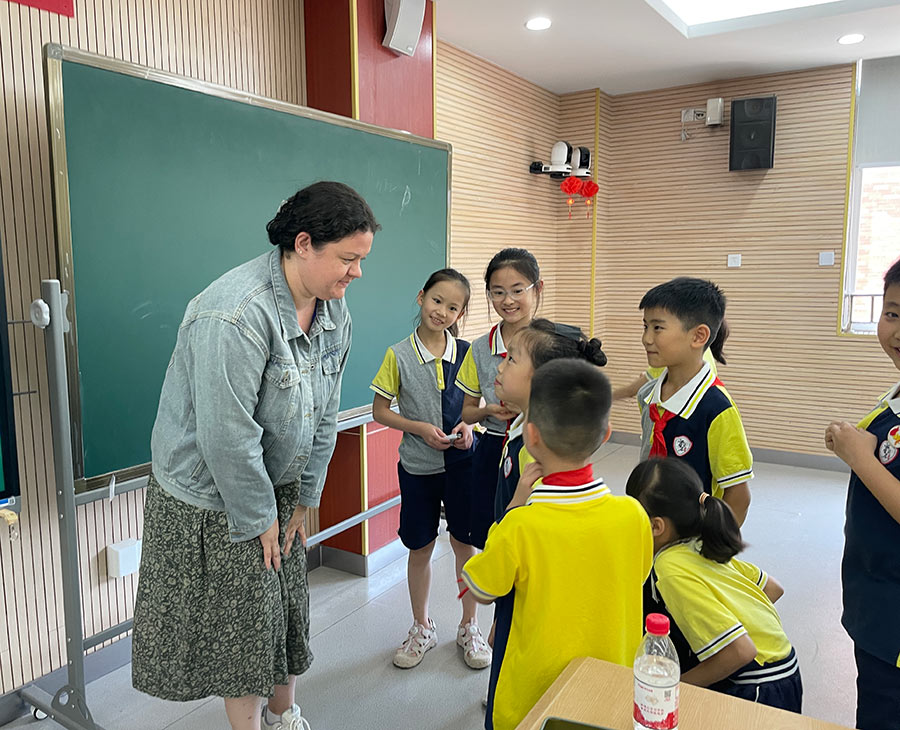
UW teacher candidate was communicating with Chinese students in Chongqing, China
3. Academic and Research involvement
In addition to completing Mitacs-funded international internship in China, teacher candidates will have opportunities to present their findings at both international and domestic conferences. New candidates joining the program will also be encouraged and supported to attend the Graduate Education Research Conference (GERC) and the 3rd Annual Conference of the Chinese Society of Education (CSE) at the University of Windsor in 2026 to further disseminate their work and connect with scholars and practitioners in the field.
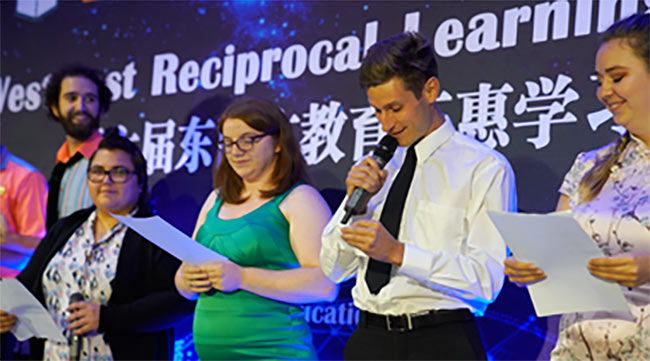
Taylor Pare was presenting at the sixth Annual International Conference on West-East Reciprocal Learning in Education, Canada
4. Local Community Engagement
Since 2013, Dr. Shijing Xu, working with Dr. Clara Howitt at the Greater Essex County District School Board, and professors at Southwest University, has established nine sister school pairings between Windsor GECDSB and Chongqing schools. Teacher candidates who participate in the RLP will have opportunities to get involved in sister school networks between Canada and China.
Below are the Windsor schools that have participated in the Sister School Network between 2013 and 2019.
- Eastwood Public School (K-8)
- Glenwood Public School (K-8)
- Prince Edward Public School (K-8)
- Queen Victoria Public School (K-8)
- Talbot Trail Public School (K-8)
- Tecumseh Vista Academy (K-12)
- Vincent Massey Secondary School (9-12)
- Walkerville Collegiate Institute (9-12)
- West Gate Public School (K-8)
In addition, a Windsor and Beijing sister school network has been established between Kingsville Public School (K-8), Centennial Central Public School and the Primary School Affiliated with China Agricultural University in Beijing (1-6).
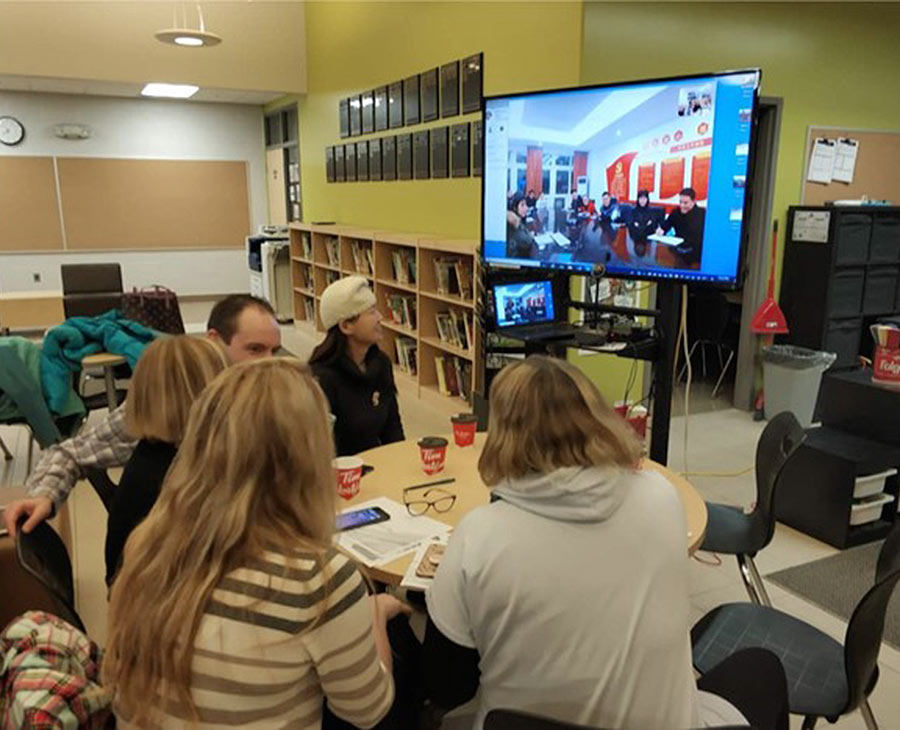
Monthly Skype meeting between Canadian and Chinese sister schools
How did teacher candidates like the RLP?
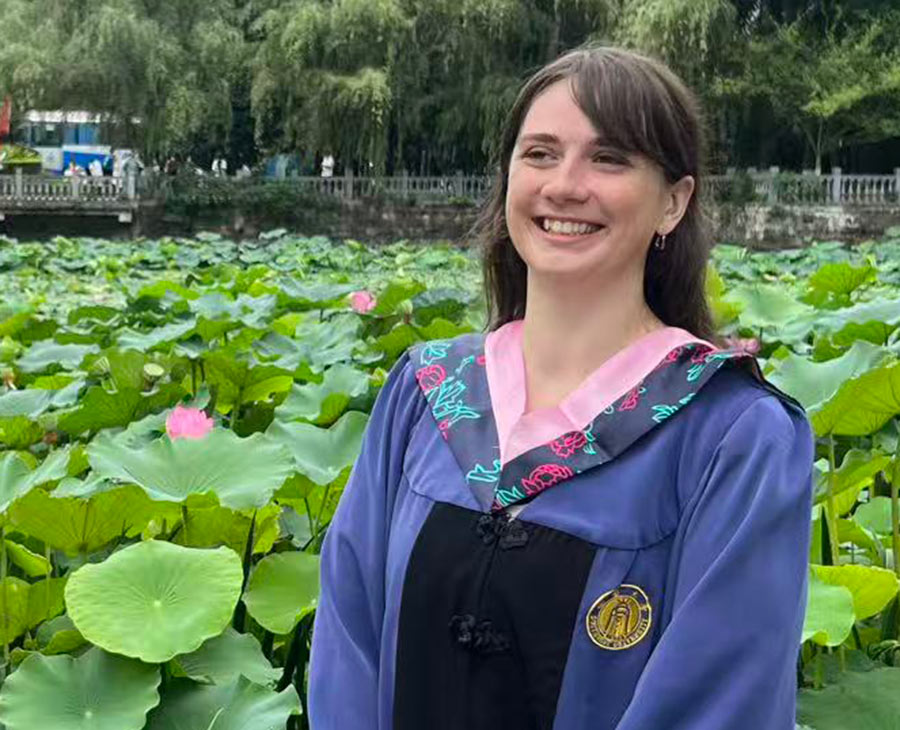
The RLP program shaped me into an amazing educator, colleague, and friend through the experiences of communication with other professionals, my peers, and the students I had the pleasure to teach and learn from too. There’s not only teaching and through the reciprocal program I learned the importance of culture sharing and how to appreciate, love and embrace other cultures and I feel like it’s made me a much more Open minded and approachable person in my life back here in Toronto. It’s an incredible opportunity and I never regret seizing it, it May seem like a long time but in the end, you’ll always want to stay longer and miss everyone you met and everything you were experiencing!
– Carson Cornelisse
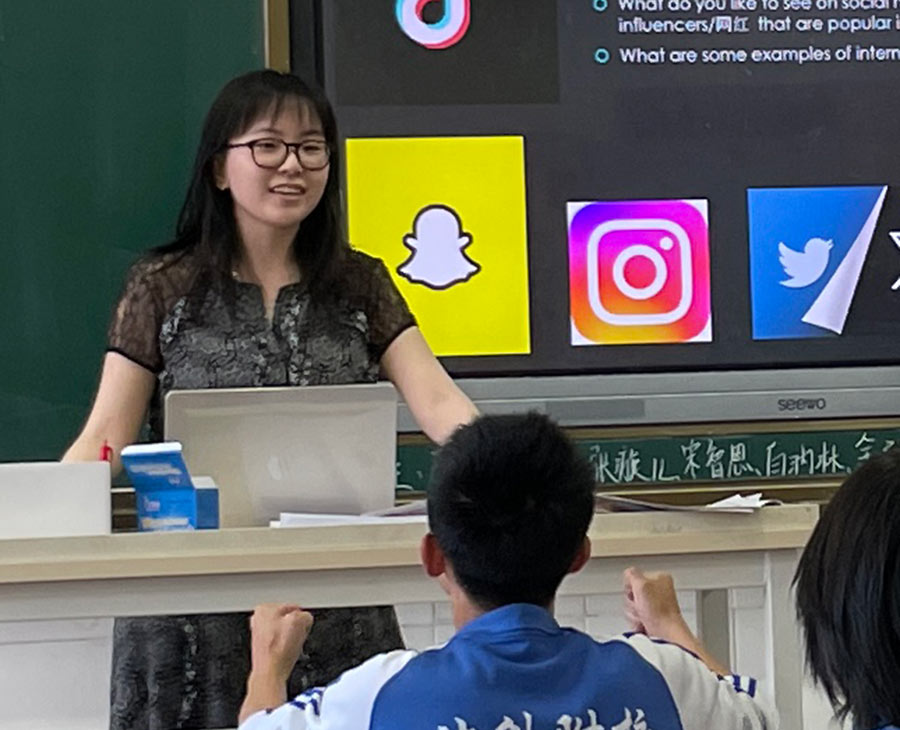
My RLP experience was unforgettable as I applied what I learnt while at the University of Windsor to new educational contexts. This program allowed me to explore new cities, engage in-depth with Chinese culture and learn more about China’s education system.
– Jennifer Ou
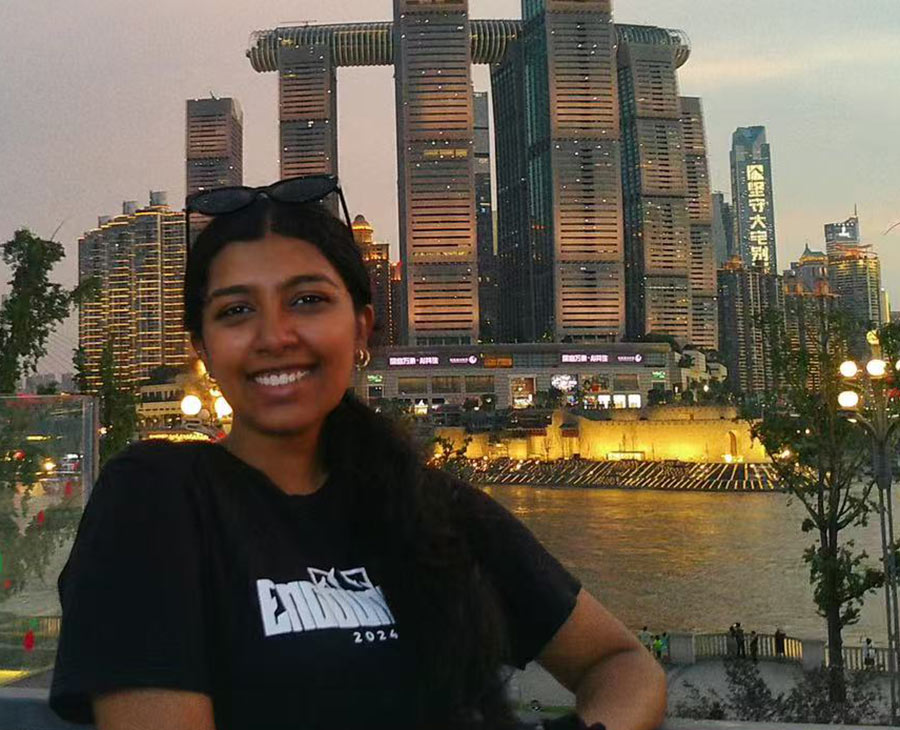
Teaching in China has been a standout part of my experience, allowing me to broaden my teaching methods and immerse myself in its rich educational culture.
– Judith Vijayasenan
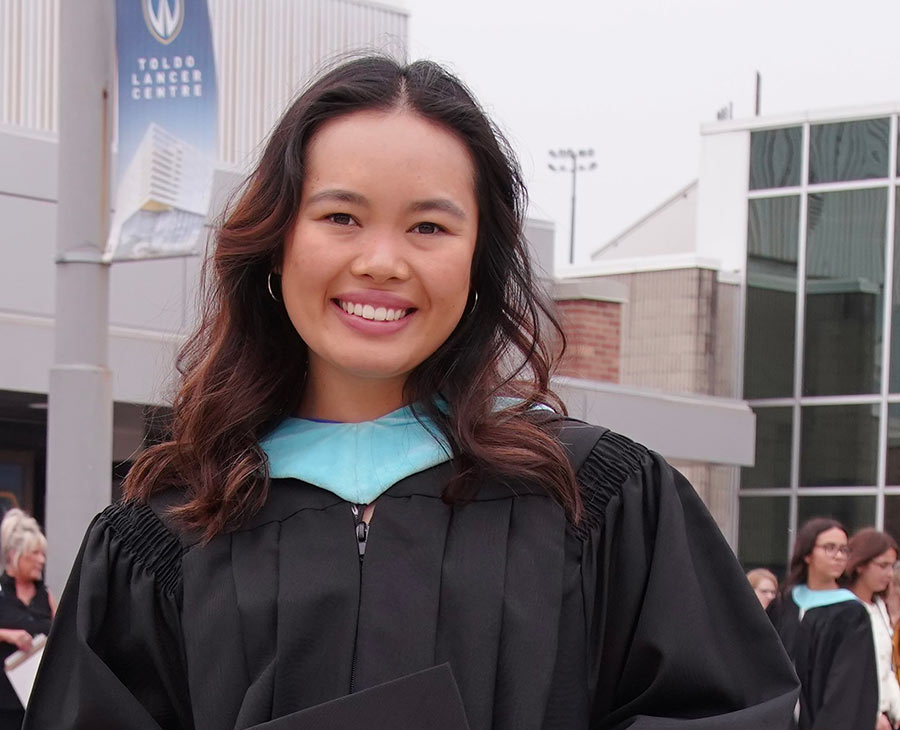
The Reciprocal Learning Program (RLP) has been one of the most valuable courses for understanding education through a socio-cultural lens. The opportunity to study a West-to-East educational exchange fostered a deep sense of humility, openness, and cultural awareness, that allowed me to appreciate how culture and education influence each other. I highly recommend this course for anyone looking to engage in meaningful discussions and reflect on how education can be transformed with others.
– Anna Fan
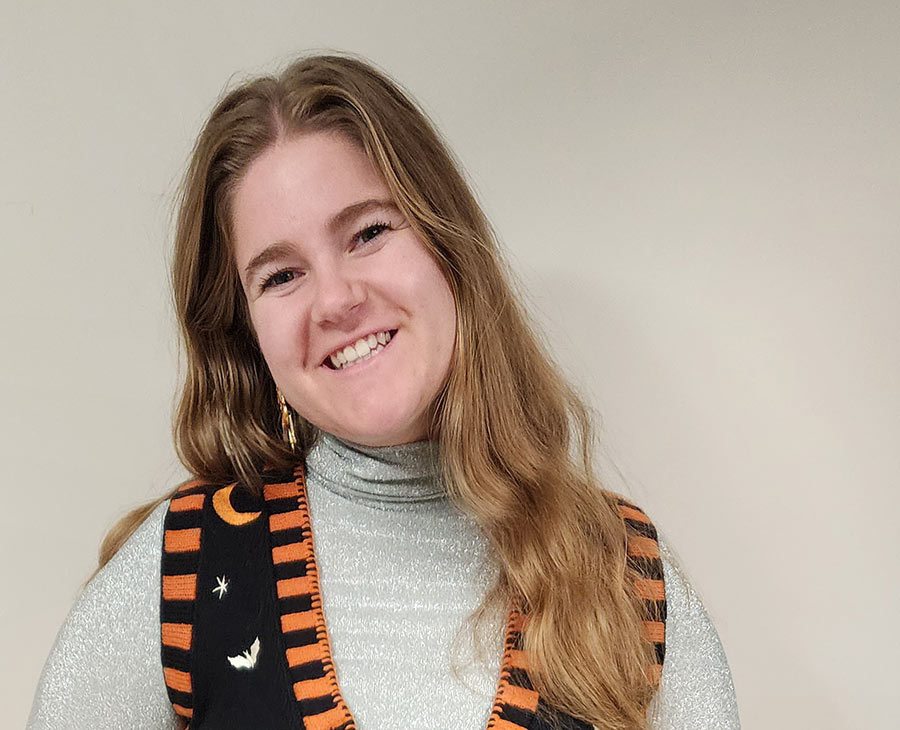
I found this course to be one of the most interesting and important courses since it works towards shaping our educational background, as well as highlighting what we believe in terms of culture and diversity.
– Sana Hiuser