

Director
Greg Feldman, Professor of Political Science
Purpose
Located in the Faculty of Arts, Humanities, and Social Sciences, the mission of the Centre for Pluralism and Democracy (CPD) is to provide a space for research and discussion about movements worldwide that preserve and recreate pluralist democracy and, conversely, about global trends that silence political opposition, centralize executive authority, and promote racism and cultural chauvinism. The centre supports faculty research, student research training, university discussion, community engagement, and public outreach on these matters.
CPD organizes a multi-disciplinary research-driven conversation aimed at understanding the unprecedented times in which we live. We are witnessing fundamental changes to the US-led post-World War II liberal international order, and, no less important, the effects of staggering economic inequalities that have arisen ever since the neo-liberal and post-Fordist turns began in the 1980s.
However, the deep insecurity in today’s world cannot be explained solely in terms of politics and economics. Equally important are how people interpret culture and history to attribute meaning to the conflicts, challenges, and stark polarization so characteristic of today’s global world. Racism, anti-immigrant sentiments, and hostility toward the LGBTQ+ community have increased in tandem with more visible expressions of “civilizational” defense, of the “manosphere”, and of the virtues of monarchical, networked city-states led by CEOs as proffered by today’s “tech-bro” elite.
Social relationships – kinship networks, local organizations, union allegiances, etc. – have frayed under these pressures and transformed into strangely anonymous connections organized through social media algorithms that themselves inspire movements across the political spectrum. These changing relationships are inseparable from a global epidemic of loneliness as recognized by the World Health Organization and long understood as a key condition of political extremism.
Any serious understanding of these matters, demand Indigenous and decolonial perspectives. Anti-racist activists and scholars have argued for at least a century that what Europeans decried about Hitler and Stalin – most notably genocide and systemic oppression of people through categorization – they inflicted on peoples of color during five hundred years of colonization. Hence, the famous activist and statesman from Martinique, Aimé Césaire, asserted that Europeans “…tolerated that Nazism before it was inflicted on them, that they absolved it, shut their eyes to it, legitimized it, because, until then, it had been applied only to non-European peoples…” Known as the “boomerang” effect, Europeans learned much of their totalitarian tendencies through colonial expansion.
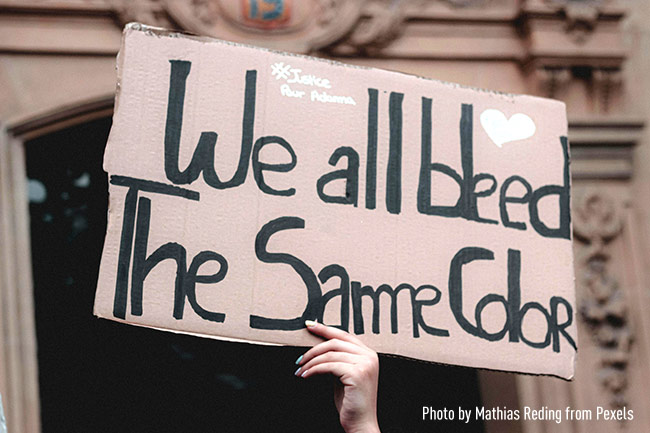
Conversely, it is well known that Indigenous societies worldwide have successfully relied on council-style democratic politics in which people, regarded as both equal and different, reach consensus through persuasion, reasoned argument, and compromise. Their experiences are similar to what Western activists call direct democracy (as opposed to representative democracy) and anarchy (meaning government without rule – not chaos). Indigenous and decolonial experiences thus play a central role in critiquing “modern” political practices and imagining more inclusive futures.
Student Journal
The Centre is home to the student-centred Journal for Pluralism and Democracy. Please follow this link for submission details.
Advisory Board Members
- Carlo Handy Charles is an Assistant Professor of Sociology at the University of Windsor, a Visiting Scholar in the Department of Sociology at the University of Michigan–Ann Arbor, and a fellow at the French Collaborative Institute on Migration (CNRS, Paris). His research and public engagement examine the intersection of international migration, race and ethnicity, gender and sexuality, social inequalities, and health, with particular attention to Black and LGBTQ+ migrant communities. He is currently completing his first book, Cross-border Intimacies, under contract with the University of Chicago Press, and co-editing the special issue, “Queer and Trans Migrants in Transnational Social Spaces," for Gender, Place & Culture.
- Elena Maltseva is an Associate Professor of Political Science at the University of Windsor. Her research focuses on left-wing politics, welfare reforms and social policy, labour issues, and education in post-Soviet states. She also leads a new research project examining the rise of middle powers in the Global South.
- Steven Palmer is a Professor of History at the University of Windsor, where he was a Canada Research Chair in the History of International Health from 2006-2016. He is a historian of Latin America, with a focus on international health and expertise on the modern histories of Costa Rica and Cuba. Recently he has focussed on avant-garde art and the medicine in post-WWII North America. His most recent co-edited collection is Expo 67 and Its World: Staging the Nation in the Crucible of Globalization (McGill-Queen's, 2022). In Fall 2025 he designed a new graduate seminar for the MA program on the history of dictatorship and democracy in the modern world.
- Cheran Rudhramoorthy is an academic, poet, playwright and journalist. He is Professor of Sociology at the University of Windsor in Canada. His teaching and research areas are Genocide, Colonialism, Globalization and international migration, critical multiculturalism and Cultural Studies. He was a visiting professor in the department of Asian Studies at Cornell University.
- Jason Sandhar is Assistant Professor in Eighteenth-Century British and Global Literature with the Department of English and Creative Writing at the University of Windsor. His book, Indian Literature Across Species, is forthcoming with Routledge.
- Miriam Wright is a Professor of History at University of Windsor. A social historian of twentieth-century Canada, her recent work focuses on the history of Chinese immigration to Newfoundland, and sports and race in southwestern Ontario. She has also been engaged with public history in her research and teaching.
- Greg Feldman (ex officio) is a political anthropologist and Professor of Political Science at the University of Windsor. He is interested in critical perspectives on sovereignty, populist politics, political action, fascism and totalitarianism, migration, and security. He is the editor of Today’s Totalitarianism, a web-based forum discussing the global trends toward the centralization of executive power, the silencing of political opposition, and the promotion of cultural chauvinism.
- Hugh Gusterson is Professor of Anthropology and Public Policy at the University of British Columbia. He works on militarization, nuclear weapons, drug policy, neoliberalism, the polygraph, and the anthropology of Science. His public writing has appeared in the Guardian, the Washington Post, Nature, Science, the Bulletin of Atomic Scientists, and Sapiens.
- Kalyani Devaki Menon is a Professor in the Department of Religious Studies at DePaul University. Her research focuses on religious politics in contemporary India. She is the author of two books, Everyday Nationalism: Women of the Hindu Right in India (Pennsylvania 2010) and Making Place for Muslims in Contemporary India(Cornell 2022).
- Petra Rethmann is professor of Anthropology at McMaster University. She is currently working on two book-length projects. The first one examines the cultural politics of left-wing collectives and movements that emerged in West Germany in the 1980s. The second project involves a critical interrogation of the South African anti-apartheid struggle, examined from a perspective of the future that never came into being.
- Sindre Bangstad is a social anthropologist and research professor at KIFO (Institute For Church Religion and Worldview Research) in Oslo, Norway. The author of ten monographs and edited volumes, he was awarded the 2019 Anthropology in the Media Award (AIME) by the American Anthropological Association (AAA). He was a 2022-23 Distinguished Visiting Professor at Princeton University.
- Helena Zeweri is Assistant Professor of Anthropology at The University of British Columbia. Helena’s book, Between Care and Criminality (2024) examines how border control logics unfold in in Australia’s social welfare policies. More recent work examines imperial and border violence during the Global War on Terror.
- Raghuraman S. Trichur is Professor of Cultural Anthropology at California State University, Sacramento, where he contributes to the administration of the Black Honors College. His research focuses on critical analysis of political, economic and cultural transformations in South Asia with emphasis on postcolonial nation-building, globalization, and the rise of majoritarianism.
- Dr. Lynda Dematteo is a political anthropologist and Researcher at Centre National de la Recherche Scientifique in France and co-chair of Political Studies at L’École des Hautes Études en Sciences Sociales. She is an expert on ethnonational discourse with respect to globalization in France, Italy, and the US.
- Cris Shore is emeritus professor of Anthropology at Goldsmiths University, London, and Chair of the UK ASA. His research over four decades has pioneered anthropological approaches to policy, power and organisations including studies of political parties, the EU, corruption and higher education reform. Current projects include 1) marketization, managerialism, metrics, and university futures; and 2) the authoritarian playbook and populist nationalism in Britain.
- Nancy Ries is Professor Emerita of Anthropology at Colgate University. Social and cultural transformation in Russia: poverty, crime, corruption, elites, mafia; comparative anthropology of post-socialism; violence and war in comparative perspective; social theory of weaponry.
- Julia Eckert is professor of political anthropology, University of Bern. Her research focusses on legal change; democracy; and citizenship. She is currently leading a research project on the making of a majoritarian legal order in India, examining the relationship between law, democracy, and fascism. She is co-editor of Anthropological Theory.