

View the 2026-2027 Course Catalogue Here
Academic Courses:
To register, click on the images below:
June 1, 8, 15, 22, 29, July 6
Mondays 6:00 pm - 9:00 pm EST
Instructor: Rev Dr Jennifer Boyes-Garbin
This course explores the concepts associated with theological reflection or reflective belief while developing the learner's practice individually and in a group setting. Learners will engage with five different perspectives (hermeneutical spiral) which influence opinion, behaviour, and personal theology, exploring how meaning is made for people of faith in everyday life. Learners will practice reflecting on everyday ministry/care situations, using questioning, problem solving, and critical thinking. At the heart of our learning is the understanding that the task of the ministry must be undergirded by critical thinking, self awareness, and self-reflection. Such an approach centers our common humanity and the realtionships we share with one another, ourselves, and God. Learners will gain extnesive practice reflecting theologically on common questions, occurences, problems, and scenarios, through accessing fice distinct perspectives on the hermeneutical spiral: doctrine/the Church, personal experience, culture (voices from marginalized communities), scripture, and the life and ministry of Jesus.
October 24, 31, November 7, 14, 21, 28
Saturdays 10:00 am - 1:30 pm EST
Instructor: The Rev'd Chris Brouillard-Coyle
Who is God? Who am I? How does one’s gender and identity influence how we understand ourselves, God, others, and the world as a whole? This course explores how identity shapes and forms theology by creating opportunities to engage with alternative perspectives and stories on God and humanity. It invites participants to reflect on their own identity and theological standpoint and how this influences the ways in which they choose to embody their faith and engage in relationships with diverse individuals. It illustrates how this reflection provides a foundation for understanding possibilities for allyship and advocacy alongside those with diverse identities using experiences, stories, and encounters of those who are gender diverse as a particular example.
November 1 - December 6, 2025
Saturdays, 10:00 am - 1:00 pm EST
*Offered through Huron UC and Canterbury conjointly
Instructor: Rev Dr Jennifer Boyes-Garbin
This course examines the practice of contemplative prayer from the Early Church through to modern times, with the intent of reflecting on, strengthening and growing our relationships with God, self, and others. Grounding our study in theological and scriptural understandings of prayer, we will explore the idea that the act of contemplation leads to greater daily embodiment of the Gospel and experiences of the Divine that we encounter in private moments of prayer. Through practicum, lecture, reflection, discussion, and readings taken from a wide sampling of authors and practitioners of contemplative prayer, we will consider how this practice encourages us to be more fully engaged as anti-racist, embodied, and self-reflective Christ followers, open to continual spiritual growth and deepening relationship with the Divine.

June 13 and 27, July 11, 2026
10:00 am - 4:30 pm EST
Artificial Intelligence is shaping human culture, relationships, and even religious imagination. In three intensive days, we will explore theological questions raised by AI: Is a chatbot my neighbour (Ammon & Reed)? Could a robot bear the image of God ( Dorobantu; Burdett)? What might incarnation, sin, and salvation mean in an algorithmic age (Herzfeld; Weissenbacher)? And how should the Church respond to both the promise and perils of AI (COMECE; CEC; Pope Francis)?
April 18, May 2 and 16, 2026
Saturdays, 10:00 am - 4:30 pm EST
Instructor: Estensei Staats Pangowish
Moana Jackson, a Māori lawyer, said the age of discovery is described more accurately as the age of genocide. This course examines the doctrine as the foundation of all systemic racism and stereotypes that Indigenous people face today in the colonial state of Canada. We will examine together the doctrine of discovery, the historical legal and religious principle that justified the colonization of non-Christian lands by European powers, asserting that Christian nations had the right to claim lands inhabited by non-Christians. We will review how the doctrine has been used and repudiated by the Papal office but, how even repudiating the doctrine does not end the oppression of Indigenous people on Turtle Island commonly referred to as Canada and the United States. Join us in this journey of self-awareness, self-reflection, and deep learning about how the doctrine still lingers in our church systems and in our daily lives.
Micro-Credentials:
TBA
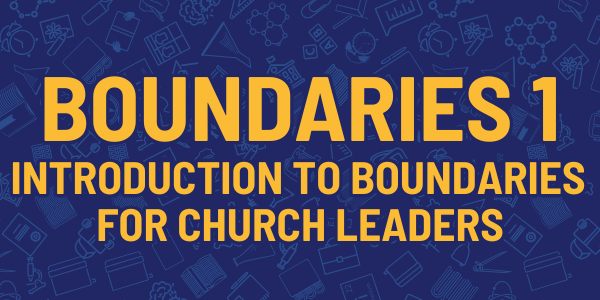
Our ministry is guided by the respect we have for our congregants & by their having entrusted us with their spiritual well-being. When we do not respect their separateness or use their vulnerabilities to satisfy our personal needs, we have violated boundaries & betrayed a sacred trust. Healthy boundaries are a gift. They are helpful guidelines that give shape to our relationships. In ministry situations boundaries clarify who is the congregant and who is the mentor, not in a hierarchical way, but in a manner that prevents the unhealthy merging of individuals. Boundaries create safe spaces & help to build trust over time. (From Faithtrust Institute)
February 26, 2026
12:00 pm - 4:00 pm EST
Instructor: Rev Jean-Daniel Ó Donncada
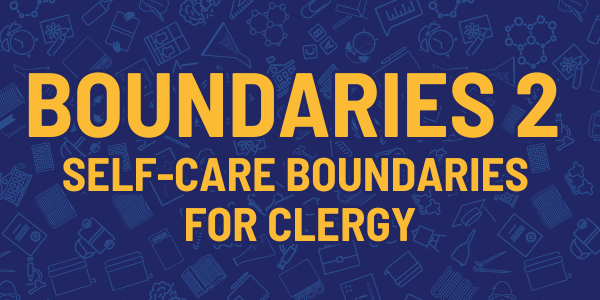
Boundaries to keep parishioners safe are essential and rightly emphasized in introductory boundary courses. This course is a supplemental course for those in placements and ministry to identify when, cope with, and move forward in instances of parishioners, colleagues, and leaders monopolizing time, misusing power, manipulating through donations or compensation, and bullying, to empower clergy to stay healthy and strengthen their ministry for and with ALL people to whom they are called to serve.
TBA
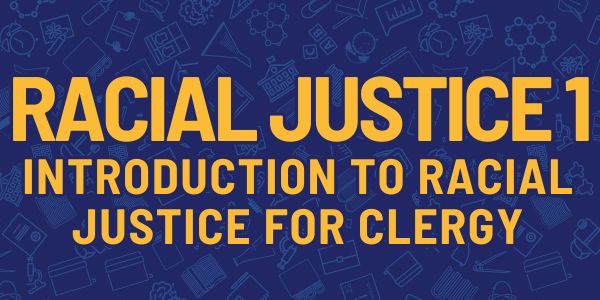
This one-day introductory course on racial justice offers a foundational understanding of key concepts and frameworks essential to recognizing and addressing racial inequity. We will explore the historical roots of systemic racism, the difference between individual bias & institutional discrimination, and the impact of privilege and power in shaping societal outcomes. The course will also introduce tools for allyship, anti-racist practices, and strategies for fostering inclusive environments. Through interactive discussions and reflective exercises, attendees will gain the awareness and language needed to begin engaging in racial justice work personally and professionally in the church and beyond.
TBA
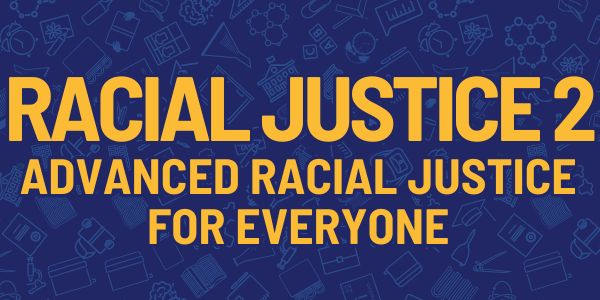
In this one day course we will review concepts that are key to racial justice and look at how we can apply that knowledge to serving our respective communities through our own unique gifts and dreams. The first part of the day we will review concepts such as power, intersectionality, identity/positionality, how the various levels of oppression function, and allyship. The second half of the day we will reflect on our personal gifts, skills, and dreams and how these relate to our unique calling to serve others and work towards justice. We will work in groups in order to share, brainstorm and receive feedback and discern next steps.
Feb 21 and 28, 2026
12:00 pm - 4:00 pm EST
This course critically explores the complex ways oppression manifests within religious and faith spaces. Through an intersectional lens, we will examine how power dynamics & social hierarchies shape participation, leadership, & belonging in spiritual spaces. The course will unpack various forms of oppression—including ideological, institutional, cultural, and historical.
Topics include the exclusion of women & LGBTQ+ individuals from leadership, the marginalization of disabled people in worship. We will also engage with theologies that reinforce inequality, address and challenge dominant narratives that silence diverse voices.
By the end of the course, we will gain tools to identify & disrupt oppressive structures in faith communities and envision what true diversity, inclusion, and liberation could look like in worship, leadership, and theology.
March 21, 2026
10:00 am - 4:00 pm EST
This course explores the foundational concepts of allyship that underpin meaningful support for marginalized com-munities. We’ll define allyship & distinguish it from related roles—accomplice & co-conspirator—so you can understand where you are on the spectrum of solidarity.
What You’ll Learn
- How allyship differs from accompliceship & co-conspiratorial action
- Common pitfalls in practicing allyship, including performative gestures and saviorism
- The art and ethics of apology: when, how, and why to own mistakes
- Appreciation versus appropriation: celebrating culture without exploitation
- Concrete, everyday actions that deepen your allyship
By the end of this course, you will have a clear roadmap for stepping into allyship with humility, integrity, and purpose—transforming awareness into authentic, lasting change.
Lay Reader Courses
The Essex Deanery Lay Leadership Training Classes: Lay Leadership Courses for 2025 and early 2026
These clases will be held in person at Canterbury College. Classes run from 10:00am - 2:30pm with 30 minutes for lunch.
We have partnered with Canterbury College for the courses, and they are providing us with the technology support to run the classes by zoom.
Please join us for one or all of the following classes:
Sat Sept 20, 2025 Church History
Sat Nov 15, 2025 Liturgy
Sat Jan 17, 2026 Preaching
Sat Mar 21, 2026 Preaching
Please contact Rev. Elise Chambers if you would like to attend: elisechambers@diohuron.org. If you have a class you would like offered that would be benficial for the laity or one you would like to facilitate, please contact Rev Kimberly Mayer: kimmyer@diohuron.org or Rev Elise Chambers: elisechambers@diohuron.org.