
According to the University of Windsor Senate Policy on Course Modalities, “hybrid” refers to:
An instructional method where the curriculum is designed intentionally to integrate the affordances of in-person and online learning experiences. In-person teaching time in the hybrid method is reduced, but not eliminated, with the balance of learning being facilitated asynchronously or synchronously through digital/web-based technologies, or offline learning opportunities. Typically, 50%-80% of the total course learning hours are completed in online and asynchronous formats in hybrid courses.
Hybrid Teaching Examples
Instructors can structure their hybrid courses to teach creatively and flexibly. The Policy includes the following examples of how to combine online and in-person teaching:
- Lecture online, tutorials in person
- Lecture online, labs or studios in person
- Lecture online, peer mentoring groups in person
- Initial classes in person, followed by online classes, and/or additional in-person class(es)
- Initial introductory classes online, followed by in-person classes
- Flipped classroom: content delivery asynchronously online, active engagement synchronously
Hybrid teaching examples 1, 2, and 3 deliver lectures online to teach many students, even large-enrollment courses, and to teach smaller groups of students in high quality discussions, demonstrations, experiential learning, collaborative learning, and other active learning activities. Instructors can also observe their students when they are learning (or not learning) key course concepts and provide immediate feedback or clarifications to encourage progress.
We recommend that instructors record online lectures to offer students accessible, equitable learning experiences. If you have concerns about recordings, we will help you navigate human rights and accommodations in collaboration with other units on campus (e.g., OHREA, Office of Student Rights and Responsibilities). Digital technologies do make it easy to make lectures accessible. You can click “record” from a Microsoft Teams meeting, and the software will automatically caption and transcribe the lectures, and students in your class will be able to watch, pause, and rewatch the recording.
Hybrid teaching examples 4 and 5 enable instructors to deliver initial classes in their preferred course modality. For instance, instructors may introduce the course content, orient students to the course technology, and establish an inclusive course climate in person first before teaching online classes, especially when teaching sensitive or polarizing course material.
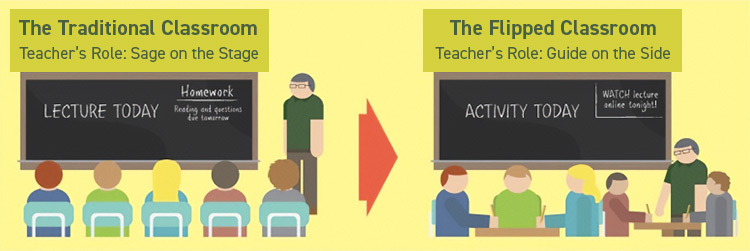
Hybrid teaching example 6 calls for a “flipped classroom,” which inverts activities that the instructor traditionally conducts in the classroom (e.g., lectures) with learning activities that students are usually assigned as homework (e.g., answer questions, solve problems).
Instructors using the flipped classroom in hybrid course delivery mode often ask students to watch pre-recorded videos before coming to class. In theory, students come to class prepared to engage in active learning. Improved student learning is the most reported advantage of flipped classroom teaching; however, out-of-class activities such as inadequate student preparation is an oft-mentioned challenge (Akçayir & Akçayir, 2018).
Hybrid Teaching Support
Learning specialists in the Centre for Teaching and Learning have experience teaching and supporting hybrid teaching. We are available to support your hybrid teaching journey! Whether you are just getting started with hybrid teaching or tweaking an existing hybrid course, we are happy to consult on your hybrid course design, identify suitable technologies, recommend relevant resources, and connect you with experienced colleagues.
References
AJC1. (2013, April 3). The flipped classroom. Wikipedia. https://commons.wikimedia.org/wiki/File:The_Flipped_Classroom.jpg
Akçayir, G., & Akçayir, M. (2018). The flipped classroom: A review of its advantages. Computers & Education, 126 (2018), 334-345. https://doi.org/10.1016/j.compedu.2018.07.021