
 Students doing hands-on learning during study abroad field course in Paris. Prof. Dan Mennill is leading a lecture on bioacoustics in urban green spaces. (DAN MENNILL/University of Windsor)
By Sara Elliott
“The field course was a pivotal point in my academic journey because if not for my study abroad experience, I genuinely would not be in this lab and I wouldn’t be doing my master’s in this area of study,” says Natalie Emerick (BSc 2025).
In 2023, Emerick and 13 other University of Windsor undergraduate science students accompanied professors Dan Mennill and Stéphanie Doucet to Paris for a field study course.
Now a master’s student in Dr. Mennill’s lab, Emerick says she was a bird and research novice before the course.
“It was awesome experiencing that as a study abroad. It made you excited about travelling, it made you excited about the city, made you excited about research and the birds too, of course,” she says.
Emerick says she learned about the research process, which set the stage for her completing her undergraduate honours thesis.
“We got to see the microcosm of a thesis and a research project which allowed us to gain confidence when eventuallypresenting our theses at different conferences. For me, it led me towards pursuing a master's degree too,” says Emerick.
“After this field course, I had a better idea of what it takes to do field research.”
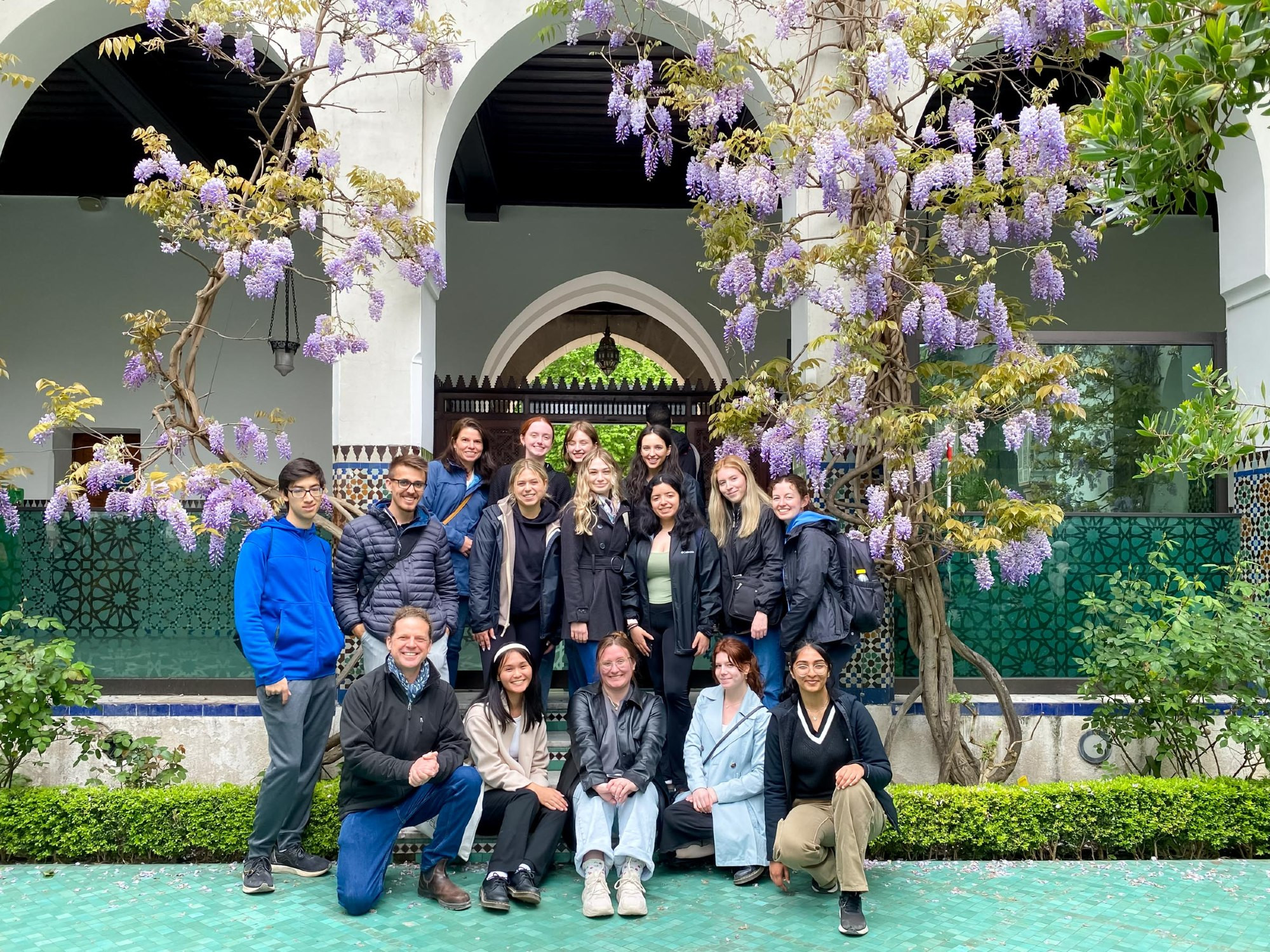
A collaborative field research project, born out of the trip, would turn all of them into published authors.
Posing the question “do larger green spaces support greater bird diversity?” the students explored the green spaces of the European city.
“This real-world research involved students at every step – project design, data collection and publication of key findings,” says Mennill.
This led to the team co-authoring the research paper "Avian biodiversity in the urban green spaces of Paris: higher bird species richness in larger parks and park centers", which was published in the scientific journal, Avian Conservation and Ecology, in July 2025.
After collecting recordings of birds in 37 parks, gardens, and cemeteries, Mennill says they quantified the total number of diverse bird species vocalizing in each green space.
“We recorded more bird species in Paris’ larger parks teaching us that by protecting larger urban green spaces, we can maximize bird diversity,” he says.
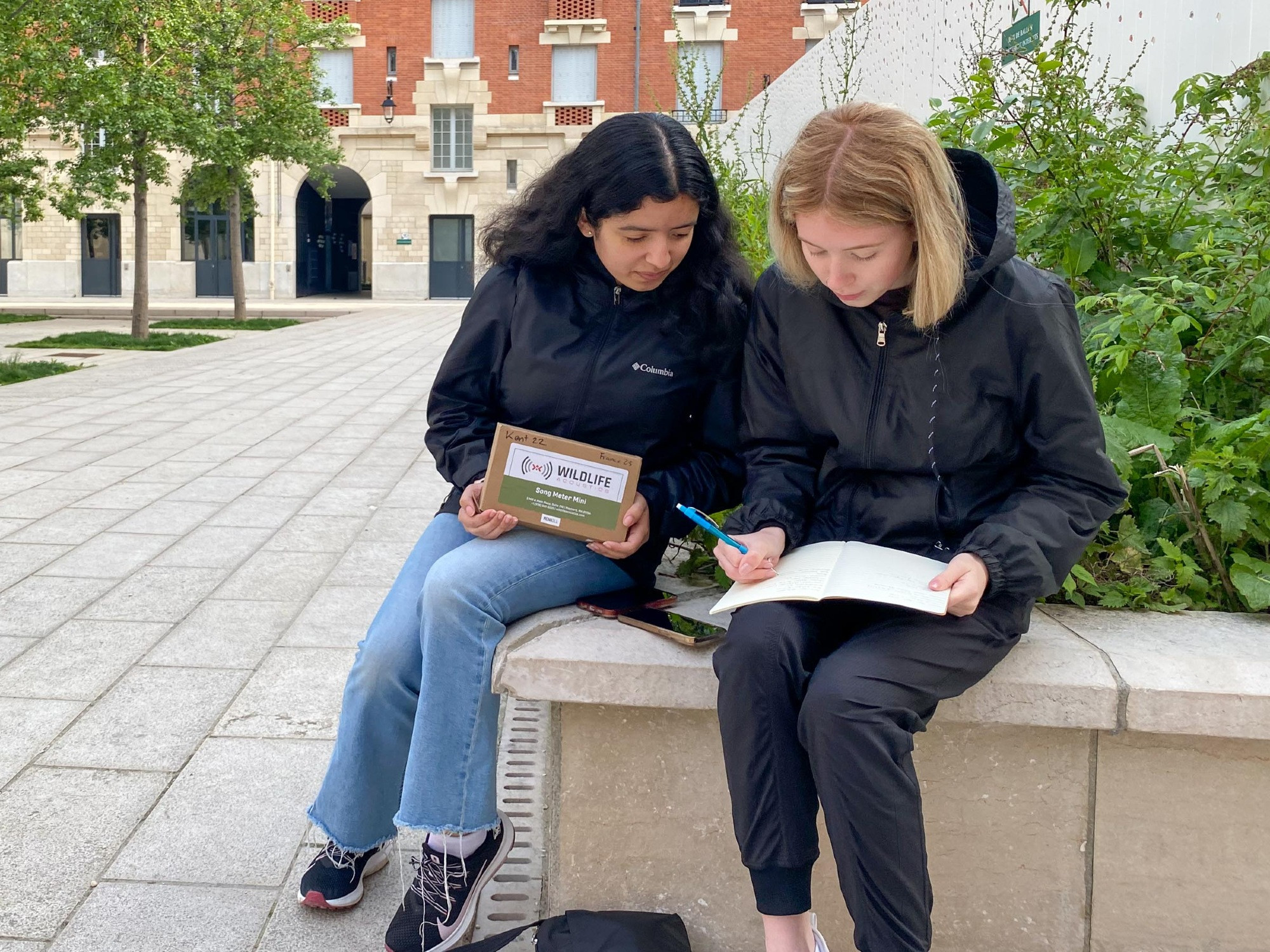
Bird species richness also varied when they recorded at the centre versus the edge of Paris parks. They detected more bird species in the central habitats compared to edge habitats.
“Both the size of urban green spaces and the amount of central habitat within those green spaces influence bird species richness,” says Mennill. “Even small green spaces should be protected, and green spaces should be designed to maximize their size and amount of central habitat.”
Madison Bygrove (BSc 2025), who is also a master’s student in Mennill’s lab, took the course during her undergraduate degree.
“I’m excited to show my friends and family this official and important work,” she says.
“It set us up well and I feel more confident to get my thesis work published because I’ve already done this.”
Splitting into smaller groups, the students jetted around Paris on the Métro to set up song meters to record birds.
“Paris was obviously a big draw with a lot of beautiful green space and European birds we don’t have at home and see the biodiversity and you get a more intimate connection,” says Bygrove.
As an undergraduate researcher working in Mennill’s lab, Bygrove says she jumped at the chance to go to Paris.
As a bonus, she got to use the data she helped to collect, for her undergraduate thesis.
“When you’re volunteering in a lab, you are taking recordings and going through them but when you personally take that recording it feels a lot more meaningful,” says Bygrove.
“A field course can really get students more excited about science for sure.”