
 Kristen Thomasen, Chair in Law, Robotics, & Society at Windsor Law, was the conference chair for 2025 We Robot [ANGELA KHARBOUTLI/University of Windsor]
By Sara Elliott
Windsor Law hosted the 2025 We Robot interdisciplinary conference, drawing more than 100 scholars and practitioners from around the world for lively discussions on the legal and policy implications of robotics and artificial intelligence.
Among the panels and workshops, one creative project stood out—an original zine titled Resisting Techno Fascism.
“Academic work is often shared in peer-reviewed journals that may feel inaccessible, and this zine provides a different way of getting that conversation out into the world,” says Kristen Thomasen, conference chair and Chair in Law, Robotics, & Society at Windsor Law.
The zine, a small magazine, emerged from a panel of the same name and was illustrated by local artist Marc Ngui. Amongst the four panelists was Windsor Law Prof. Vasanthi Venkatesh.
“The zine shares a really generative conversation captured by a Marc,” Dr. Thomasen says.
“Marc brilliantly captured the big ideas the panelists were talking about and added graphics and illustrations to help make that point,” she says.
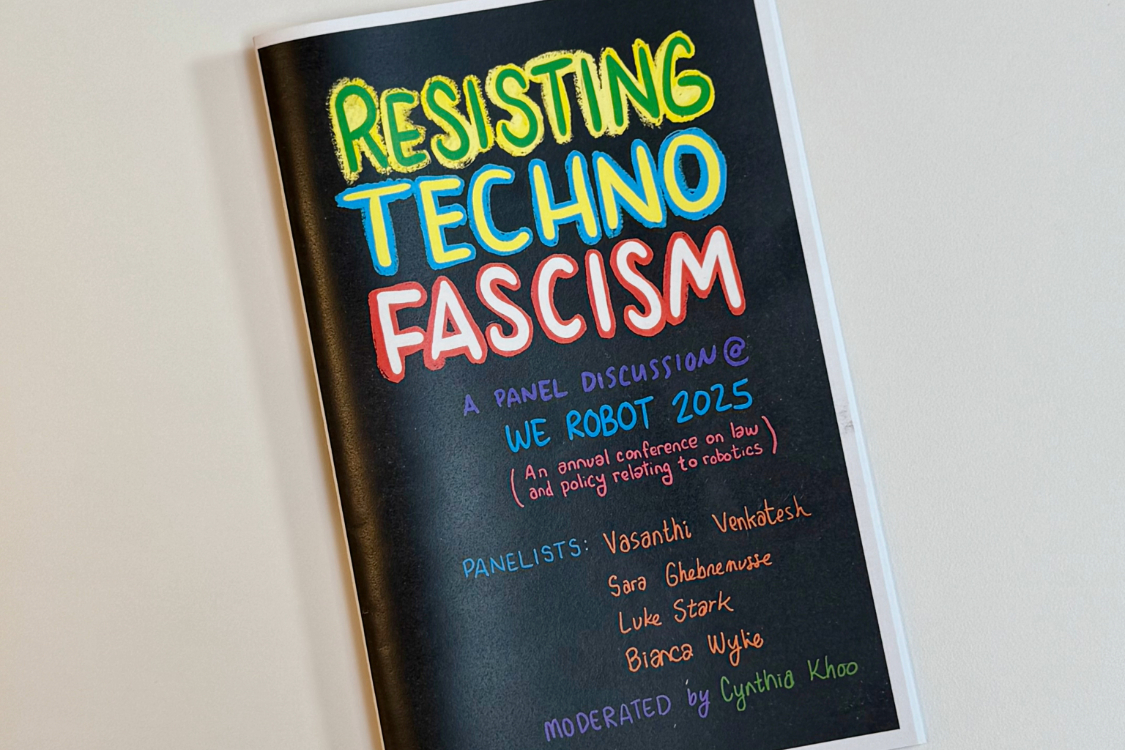
The original zine titled Resisting Techno Fascism was created out of the 2025 We Robot conference [ANGELA KHARBOUTLI/University of Windsor]
Thomasen says the zine is a highlight because it transforms academic dialogue into something more accessible to the public.
“These are important conversations to be having right now at this conference that brings together people from varied backgrounds thinking about how law regulates technology,” she says.
“This zine is for an audience of anyone who wants to think or reflect more on the way that big tech and politics are intersecting in North America.”
The zine is available online through the Windsor Law website.