
 Students visit Oxley Estate Winery as part of a series of field trips for a biology course with Prof. Sherah Vanlaerhoven. Winemaker Andrew Wilson talked about real-world integrated pest management practices in viticulture.
By Sara Elliott
What started as a field trip to farms and wineries for a biology course, ended with job offers and a potential new career path for some students.
Prof. Sherah Vanlaerhoven brought the students from BIOL 4008, Integrated Pest Management course, to five agricultural businesses across Essex County to learn about economic pest control practices.
"These experiences offer students a break from the classroom as well as open doors to future careers in agriculture, says Dr. Vanlaerhoven.
“As part of their hands-on learning, students explored sustainable pest control practices at local businesses—and left with more than just knowledge; some walked away with job offers."
She says this is a strong example of experiential, place-based education that blends biology, sustainability, and agriculture.
“We took students out into the industry to talk to people who are doing pest management – from farmers in the field, to greenhouse growers and biocontrol producers.”
Integrated pest management, she says, is a group of strategies used to battle economic pests. From using chemicals, sanitation, and choice of plant to stop diseases, birds, insects and rodents in their tracks.
One of the visits was to Oxley Estate Winery. Winemaker Andrew Wilson talked to students about real-world integrated pest management practices in viticulture, including explaining grape root stocks, different varieties of grapes and the challenges of growing grapes in terms of integrated pest management.
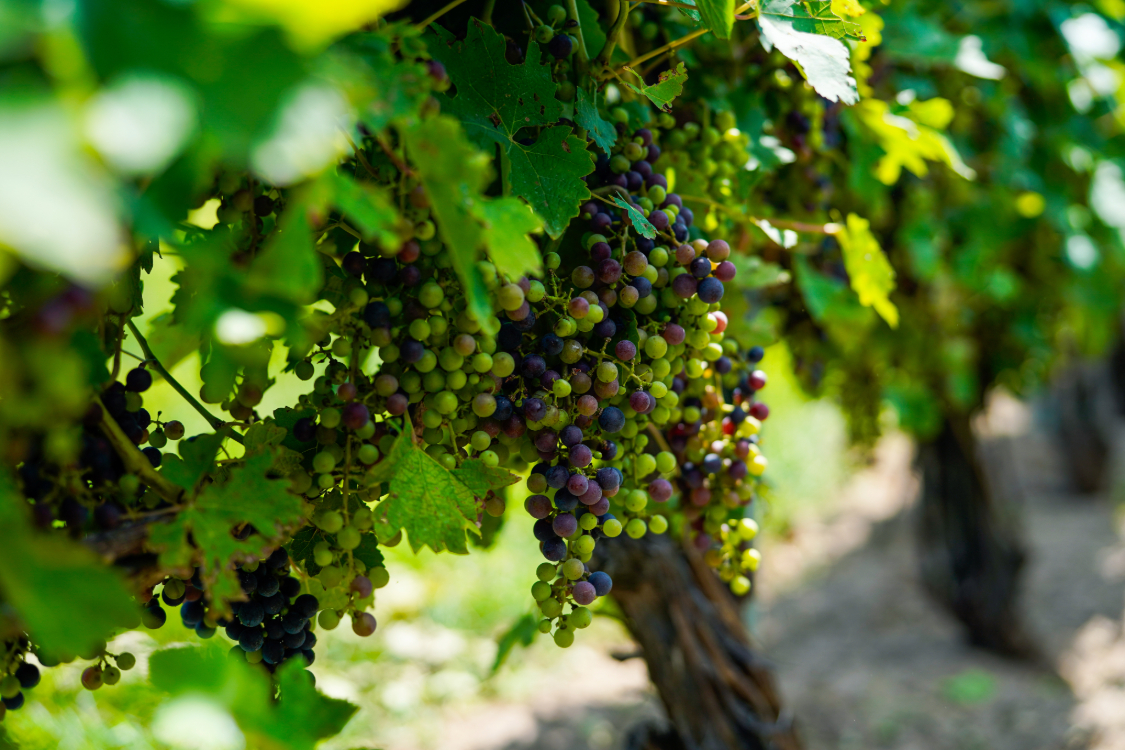
Students visit Oxley Estate Winery as part of a series of field trips for a biology course with Prof. Sherah Vanlaerhoven.
“I focus on crops because we have a billion-dollar industry on our doorstep that is crying out for people in integrated pest management,” says Vanlaerhoven.
“Multiple places we visited told the students that if they wanted a job, they should leave an email because they wanted to hire them. How often does this happen?”
She adds that there is a base level of knowledge that benefits people in this career path. Taking courses such as biology, ecology, entomology, plant ecology, and genetics, gets students the background to understand the decisions being made in pest management.
“There’s nothing better than real-world experiences and talking to people who are doing it beats a textbook any day,” she says.
“And they really want people – I’ve had students hired right out of my lab for integrated pest management.”
The course took students to Crop Defenders, Simon Farm, the Fruit Wagon, GrowLiv Biologicals, Jem farms and Centre for Horticultural Innovation.
“They have different perspectives depending on what they’re doing and developing for the future.”
“This field-based learning in undergraduate science education strengthens UWindsor’s ties to local agri-businesses community-engaged, applied learning in environmental biology.”