
 PhD candidate Mona Farhani assessed PCB levels to understand how climate-driven changes in water levels influence pollution dynamics in the Detroit River. (SARA ELLIOTT/University of Windsor)
By Sara Elliott
As water levels in the Detroit River rise and fall, so do concentrations of toxic legacy pollutants.
New research by University of Windsor environmental science PhD candidate Mona Farhani shows that higher water levels are associated with increased concentrations of bioavailable polychlorinated biphenyls (PCBs) at some locations — a long-lasting toxic chemical linked to human and ecosystem health risks.
“Essentially, under certain conditions as water levels increase, PCB concentrations in the water increase as well,” said Farhani.
Her work challenges a common assumption about environmental recovery.
“We focus on PCB contamination because it affects fish consumption and drinking water,” she said. “Most people assume contamination simply declines over time in the river. What we found was more complex — and unexpected.”
Farhani assessed PCB levels to understand how climate-driven changes in water levels influence pollution dynamics in the Detroit River, a historically contaminated Great Lakes waterway designated as an Area of Concern.
Water levels in the Great Lakes naturally rise and fall over multi-year cycles, influenced by precipitation, evaporation and climate conditions. In 2020, those factors combined to produce record-high water levels in the Detroit River and across the Great Lakes. Since then, levels have gradually returned toward long-term norms.
“Farhani’s work provides critical insight into how climate change and water level fluctuations influences pollutant recovery in large freshwater systems,” said Dr. Ken Drouillard, her supervisor and professor of biological sciences at the University of Windsor. “It also underscores the need to incorporate hydrological cycles into environmental management plans.”
To better understand these relationships, Farhani used artificial intelligence models to analyze more than 30 years of monitoring data. The data tracked PCB levels in mussels living in the Detroit River — organisms that absorb contaminants directly from the water and reflect local pollution conditions.
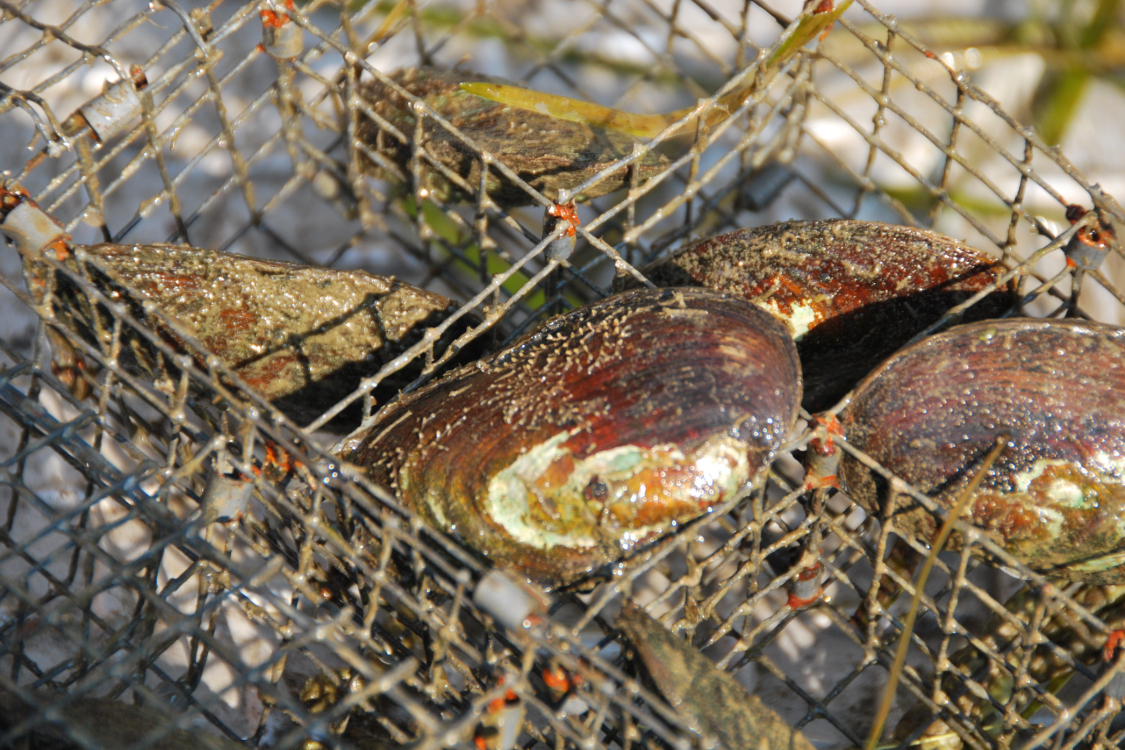
Mona Farhani tracked PCB levels in mussels living in the Detroit River. (Photo courtesy of Ken Drouillard/University of Windsor)
“We know the Detroit River has a long history of industrial contamination, including PCBs, which persist in the environment,” Farhani said. “Mussels absorb contaminants directly from the water, so we can use them to estimate PCB concentrations over a 30-year period.”
The data were collected by the City of Windsor and the Great Lakes Institute for Environmental Research (GLIER) between 1998 and 2023.
“Rising water levels from 2014 to 2020 were associated with increased concentrations of bioavailable PCBs at certain upstream monitoring stations,” said Farhani.
“These increases may be linked to sediment resuspension caused by higher water flow and turbulence.”
The effect varied by location and by PCB type, with the strongest responses observed near the Riverside Marina upstream, and weaker responses at mid-river sites. These differences, she says, likely reflect local water flow patterns and sediment conditions.
The models also showed that legacy contamination in river sediments remains the strongest predictor of PCB levels, suggesting that higher water levels can remobilize pollutants that were previously buried.
Two peer-reviewed journal articles based on her doctoral research were accepted on the same day.
Her paper, “An artificial neural network model reveals water level changes alter bioavailable PCB concentrations in the Detroit River,” was published in Chemosphere. A second article was accepted by the International Association for Great Lakes Research.
Despite the findings, Farhani says the outlook is cautiously optimistic.
“Based on restoration activities and modelling, we see promising trends for the future,” she said.
Using her model, Farhani projected PCB concentrations in water and assessed implications for mussels and fish through bioavailability relationships, fish and mussels 10 years into the future, to 2035.
“Model results suggest that as water levels continue to decline in the Detroit River, PCB concentrations are likely to resume their long-term decreasing trend in the coming years,” she said.