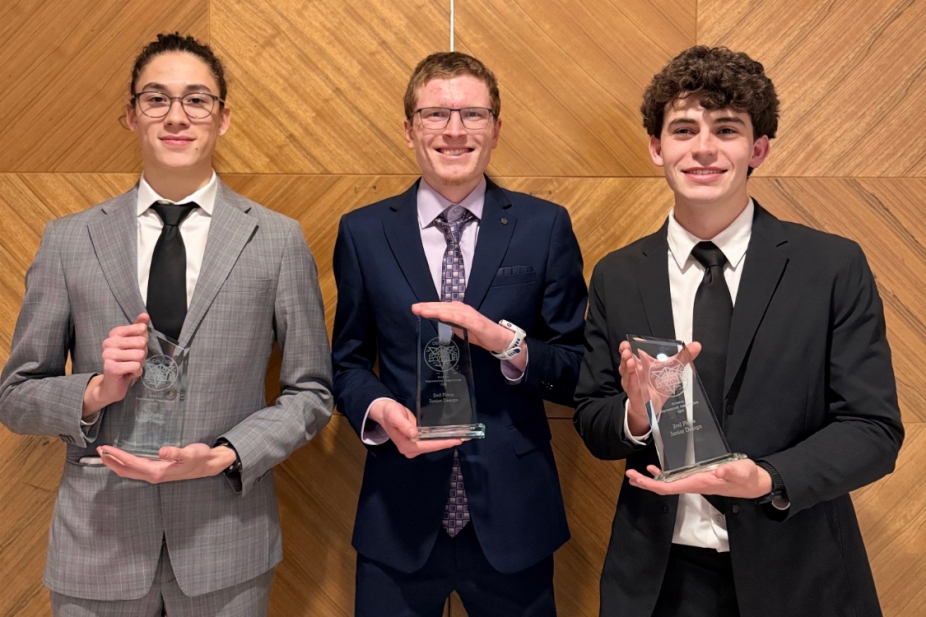
 Second-year mechanical engineering students (from left to right) Kai Luong, Owen Lebel and Andrew Raoux secured second place in the junior design division at the Ontario Engineering Competition in Ottawa, Ont. (ANDREW RAOUX/ University of Windsor)
By Lindsay Charlton
After winning their home competition, three University of Windsor engineering students earned a second-place finish in the junior design division at the Ontario Engineering Competition in Ottawa.
At last month’s competition hosted at Carleton University, second-year mechanical engineering students Andrew Raoux, Kai Luong and Owen Lebel earned one of two qualifying spots for the Canadian Engineering Competition with a project that launched and safely landed an egg “astronaut.”
“It was a really good experience,” Luong said. “Going up against other schools and the best those schools have to offer demanded a lot.”
Teams were given a vague prompt before receiving the full briefing on competition day and did not know exactly what they would be required to build.
With just eight hours to create a prototype and presentation for the judges, the team drew on what they had learned in their classes, past experiences and individual strengths to secure the win.
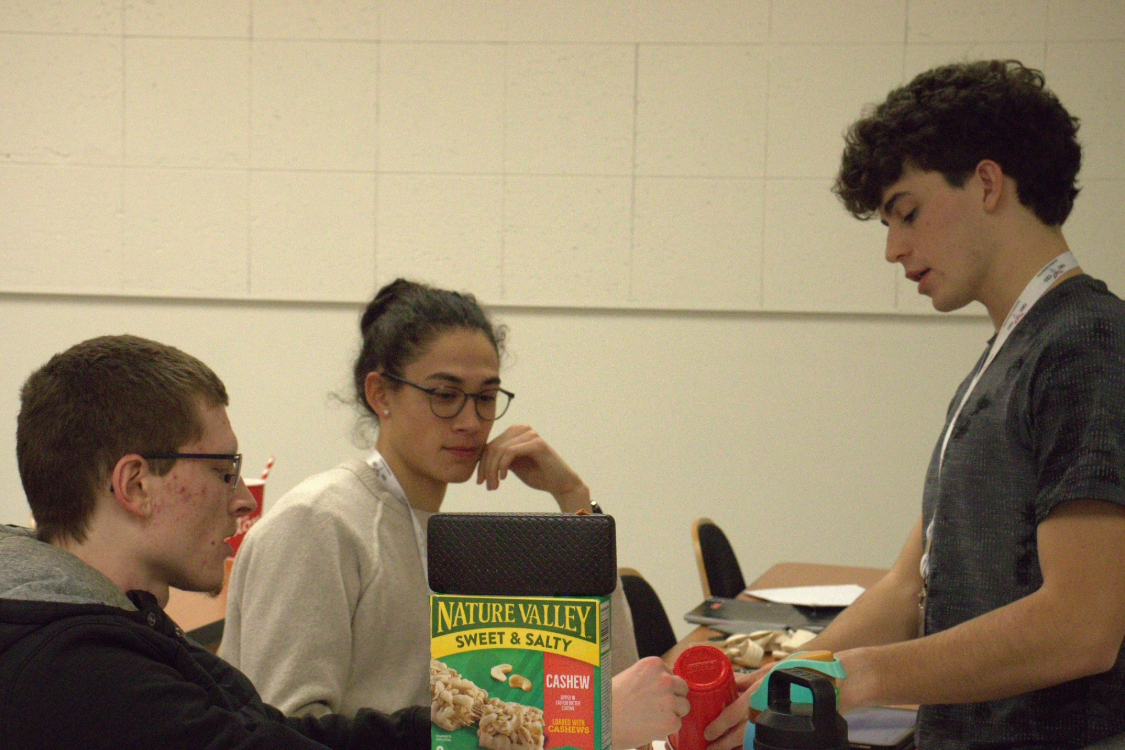
From left to right: Owen Lebel, Kai Luong and Andrew Raoux work on their design at the Ontario Engineering Competition in Ottawa, Ont. (ANDREW RAOUX/ University of Windsor)
“You’re allowed to bring in any course notes or prior research you did. So, once we were given the prompt, we figured it would be something aerospace- or space-related because that’s what Carleton is known for, so we were able to get some ideas going into it. Our experience at the Windsor competition also helped,” Raoux said.
“We spent a couple of hours ideating and coming up with a design, then broke it into tasks based on what each of us does best,” Lebel added. “Andy handled all the 3D modelling, while Kai and I focused on assembling the parts and helping prepare the presentation.”
Having built a slingshot-style launcher to serve as a catapult for the Windsor competition, the trio drew on that design to create their egg dropper and launch system, which could withstand a four-metre drop.
“It really helped us generate a ton of ideas. And it was more about how we can use our materials effectively to put something together,” Raoux said.
The team’s method included creating a 3D model of their idea, which allowed them to visualize their system and revise the design as needed.
“We were trying to simulate spacecraft re-entry. Specifically, the briefing talked about exploring Mars and how it might be more efficient to crash something into the surface rather than safely land it,” Luong explained.
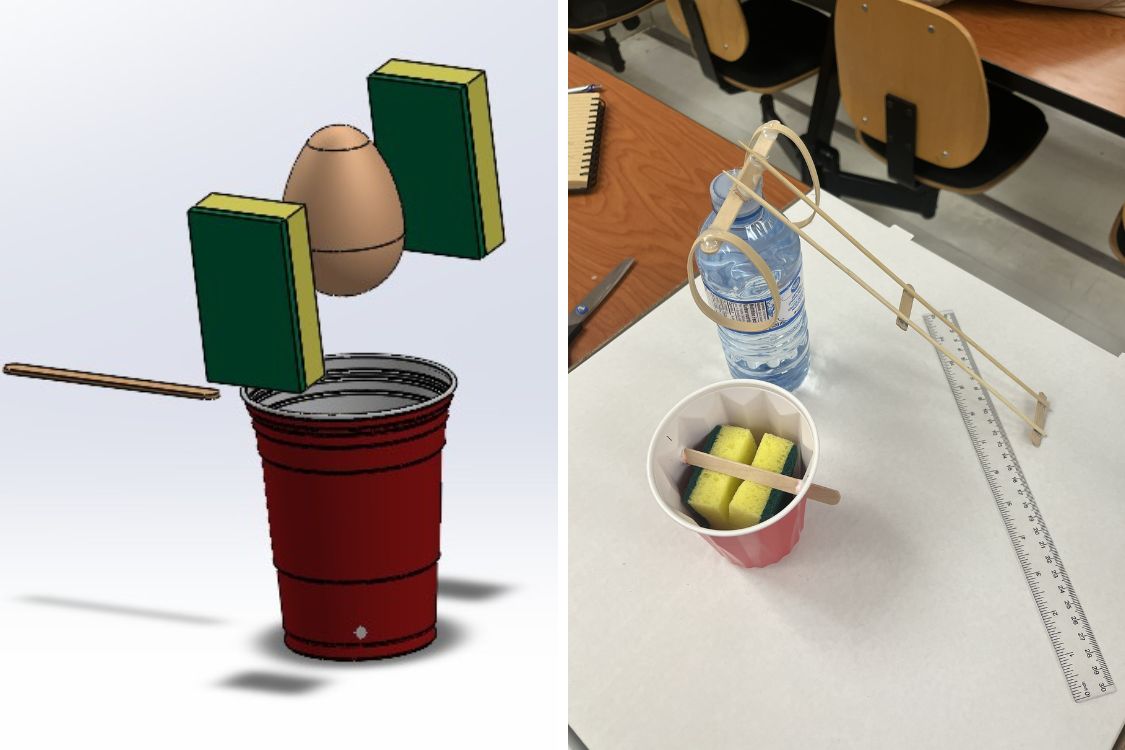
3D design rendering and the University of Windsor team’s final design that secured them second place in the junior design category at the Ontario Engineering Competition in Ottawa, Ont. (ANDREW RAOUX/ University of Windsor)
“If you build a system that can crash safely while keeping whatever’s inside safe, it would be more cost-effective and efficient, so that was the goal.”
Their design included a cup with sponges placed inside and a popsicle stick on top to keep the egg secure and cushioned. The launcher was made using a water bottle, rubber bands and wooden sticks to propel the “astronaut” for a crash landing.
“The junior design category is really about applying engineering principles from school to make a functional prototype,” Raoux said.
“For instance, the hook slot: when you pull an elastic band, you’re storing energy into it. By putting that into our presentation and explaining it to the judges, we let them know the reason behind why this works.”
Judges awarded points for the prototype, presentation and testing phase of each design, with scores tallied to determine the winners, who were announced that evening at a gala.
The announcement caught the team by surprise, Lebel said they were “well, ecstatic would be the word to use.”
More than 300 undergraduate students from over 16 universities in the province competed in this year’s competition.