
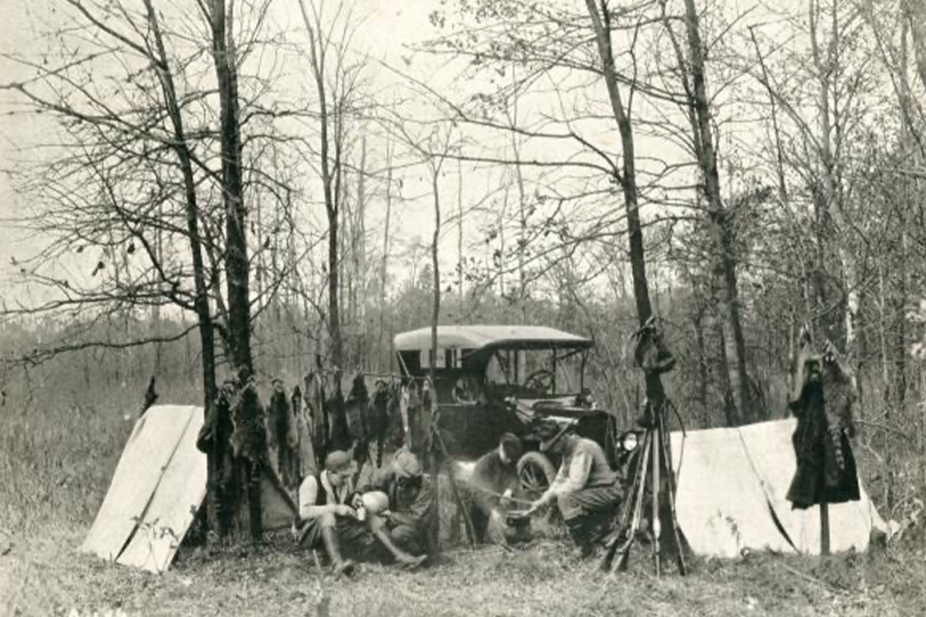
 A raccoon hunting party gathers west of Windsor, likely in Yawkey Bush, circa 1925. (Photo courtesy of the Tony Techjo Collection, Leddy Library, SWODA/UNIVERSITY OF WINDSOR)
By Lindsay Charlton
Home to more than 4,000 species — some endangered — the Ojibway Prairie Complex is one of the most biologically diverse landscapes in Canada.
Its protection, however, came partly by chance.
Now a nature reserve and the largest natural area in Windsor, the complex is also being considered for inclusion in a national urban park. The land came close to industrial development several times throughout its history.
“It’s a history of close calls,” said University of Windsor librarian Heidi Jacobs, who also sits on the board of the volunteer organization Friends of Ojibway Prairie (FOOP).
“Someone owned the land, and they wanted to do something big with it, but then wars happened, the Depression and other events got in the way of any plans; it wasn’t until fairly recently that someone actually suggested making the area a park.”
Jacobs said the land could at times have become an industrial park, pointing to Zug Island, which was once a marsh-filled peninsula.
“That’s how fragile these spaces are,” she said. “That was once a plan for it. It’s a story of accidental neglect in a way.”
That history and more are now captured in the archival collection History of the Ojibway Prairie Complex in Print (1791-2025). The collection is available at Leddy Library Archives and Special Collections for researchers interested in the area’s history as documented in print. Information about the holdings is available in a downloadable research guide.
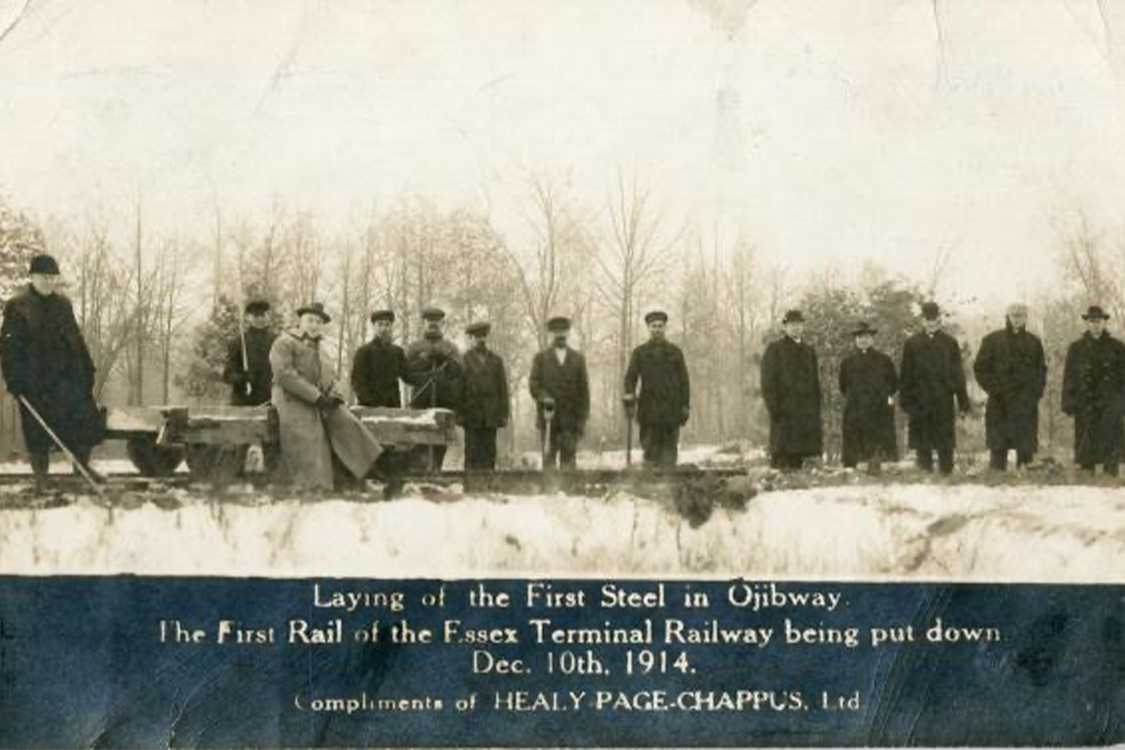
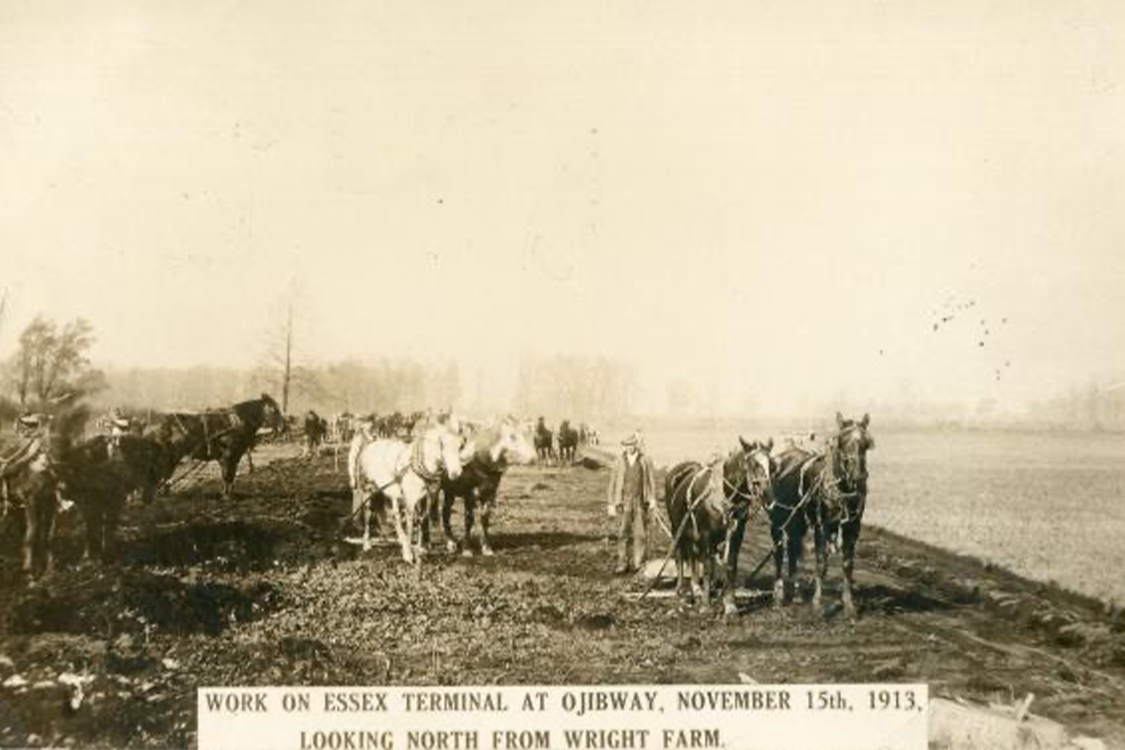
The collection includes textual records and visual materials such as photographs, maps, newspaper clippings and journals, along with other printed materials related to the area.
“We know there are oral histories related to this area, and they are being collected elsewhere. This is an open collection, which means it will be added to indefinitely. FOOP is hopeful it can evolve to be more representative of the full history of these lands,” Jacobs said.
FOOP hired public historian Willow Key-Chauhan (MA ‘24) to carry out the project.
Key-Chauhan has worked on previous projects with Jacobs and the library, including the McDougall Street Corridor and the North Star Portal projects.
“I knew she would be excellent; one of the reasons I knew we could do this project is because we could get Willow. She’s so methodical,” Jacobs said.
“It covers social history, natural history, politics. We’ve got city plans, records of surveys they do in various feasibility studies and all sorts of maps and charts and things like that. I think it’s a really great place for anybody to find what they’re looking for.”
FOOP will launch the archive as part of its 35th anniversary celebrations, with Key-Chauhan presenting and discussing the collection.
Key-Chauhan’s research involved searching newspapers and microfilm, visiting the city archives and consulting provincial archives to gather material about the area, with records dating to 1791.
Jacobs said she was struck by evidence of how long people in the community have used the area.
“There were newspaper stories about the space being used by amateur art clubs, school groups, Brownies and Cub Scouts, families and scientists. For at least 100 years, people have been using and enjoying that space in the same ways we do now,” Jacobs noted.
Jacobs has served on the FOOP board for more than five years. She proposed collecting and organizing the area’s history as a way to support protection and restoration efforts as well as advance FOOP’s educational outreach work.
“We have been advocating for the National Urban Park for a long time, as have many people, and I thought this would be another piece of advocacy work,” she said.
This summer, 19 hectares of land bordering the Ojibway Prairie Complex — once home to Windsor Raceway — were acquired for the planned park.
As plans for the park progress, Jacobs said the collection will continue to grow, documenting work by scientists and advocates.
“I really wanted this to be a level of activism because how can you protect something for the future if you don’t know its past?” she said.