
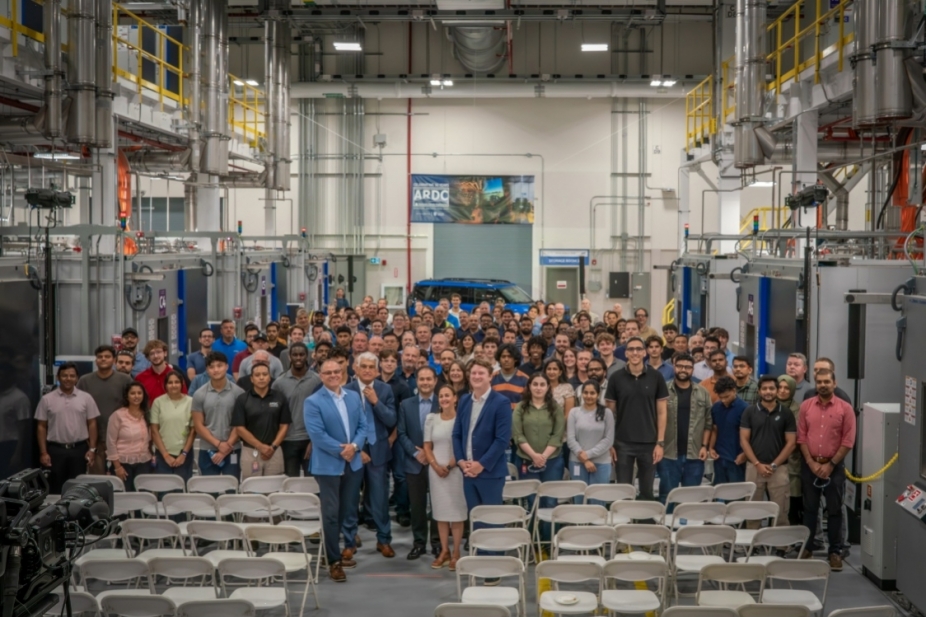
 Celebrating 30 years of partnership, the Stellantis Canada-University of Windsor Automotive Research and Development Centre (ARDC) welcomed visitors on Tuesday, Aug. 4, 2026, inside the facilities. (KYLE ARCHIBALD/ University of Windsor)
Marking 30 years of collaboration, the Stellantis Canada-University of Windsor Automotive Research and Development Centre (ARDC) welcomed visitors Tuesday for a rare look inside the facilities and technology driving the future of vehicle development.
A first-of-its-kind Canadian partnership between industry, academia and government, the ARDC conducts research, testing and engineering work to advance the technology, quality and safety of tomorrow’s vehicles.
“For 30 years, the ARDC has demonstrated what is possible when industry, academia and government work together with a shared commitment to innovation,” said Trevor Longley, president, Stellantis Canada.
“This milestone celebrates the people and partnerships that have helped shape automotive research and development in Windsor, while also looking ahead to the future of mobility.”
Since opening in 1996, the ARDC has supported more than 800 engineering co-op placements, allowing students to gain experience while contributing to real-world automotive projects.
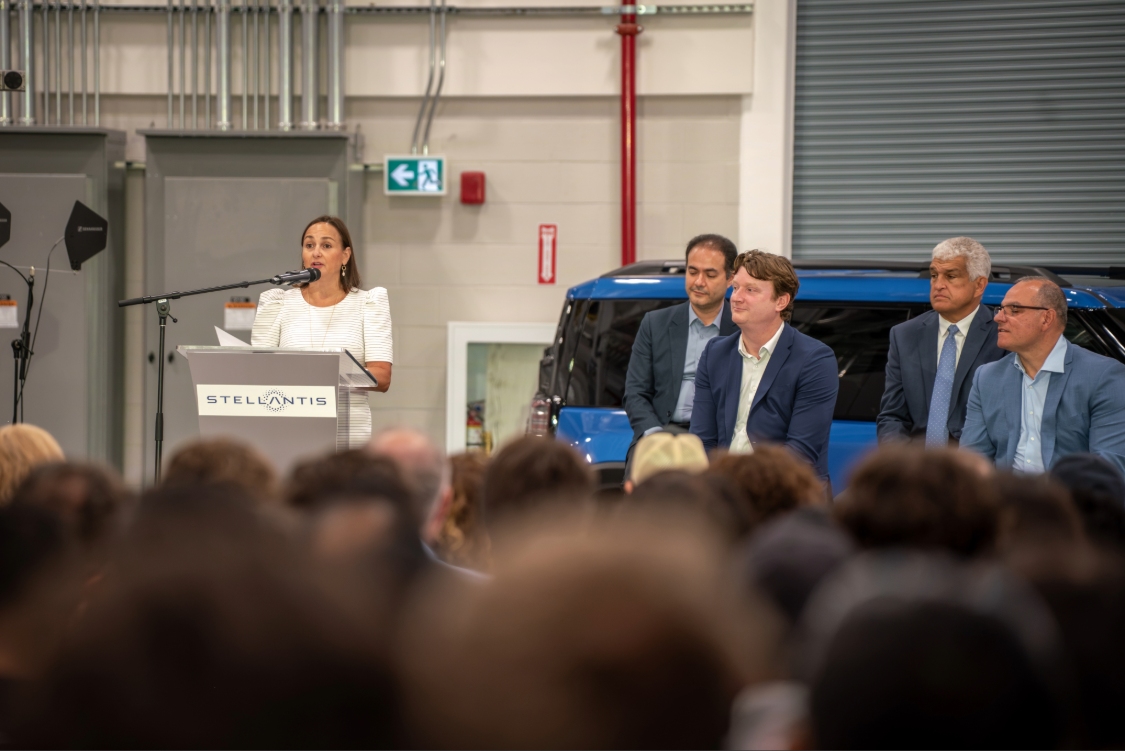 University of Windsor associate vice-president external, Judy Bornais, speaking at an event celebrating 30 years of the ARDC in Windsor, Ont. on Tuesday, Aug. 4, 2026. (KYLE ARCHIBALD/ University of Windsor)
"Our students have developed the skills and experience that employers need, our researchers have tackled real-world challenges, and our region has benefited from the talent, innovation and investment that strong collaboration makes possible. We look forward to building on that success," said Dr. J.J. McMurtry, president and vice-chancellor of the University of Windsor.
Over the past three decades, Canada’s total research and development spending related to the centre has grown to more than $2 billion. The ARDC now employs about 800 people and plays an important role in the product development of nearly every vehicle produced by Stellantis.
“The expertise, discipline and dedication of the teams in Windsor have earned the ARDC a reputation for excellence over the past three decades and established this center as a cornerstone of our North American engineering network,” said Muttalip Akin, head of North American technical centers.
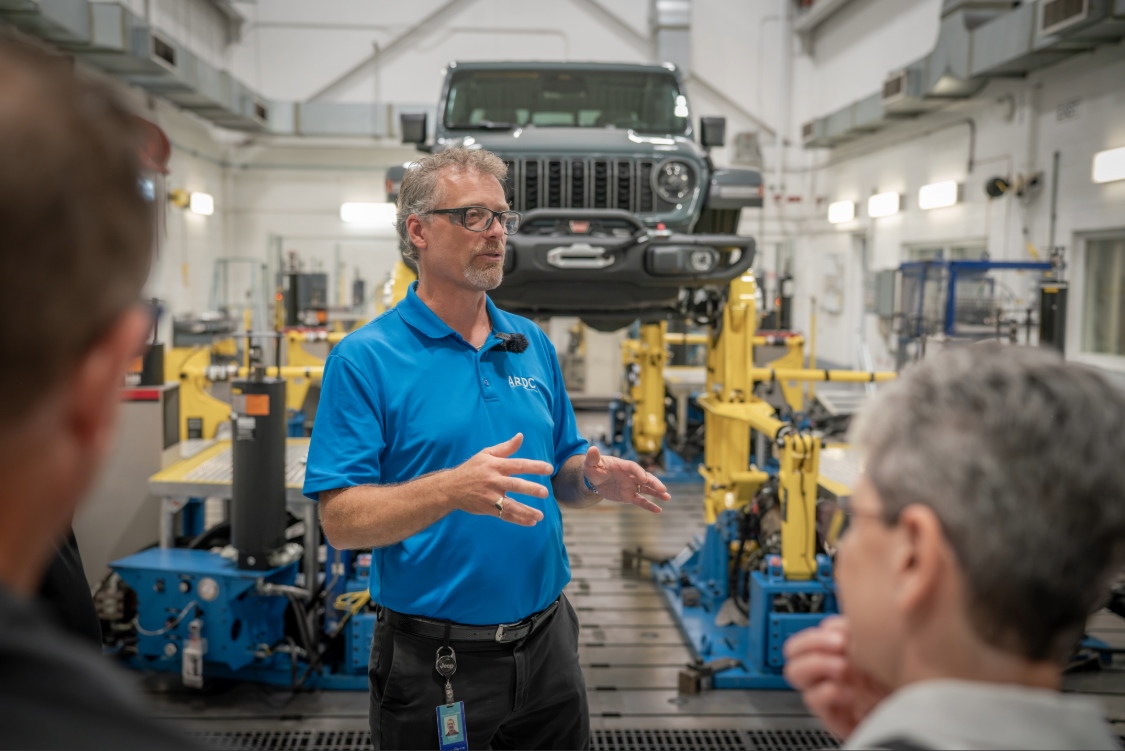
The anniversary celebration also showcased the ARDC’s newest addition, the North America Battery Technology Centre, which represents the next phase of automotive research and testing at the facility.
Spanning more than 8,000 square metres, the centre includes 35 climatic test cells and 11 reach-in test cells, serving as the hub for Stellantis EV battery testing in North America. It is one of only two such facilities operated by the company.
“With the addition of the North America Battery Technology Centre, Stellantis is strengthening its Canadian engineering footprint and advancing the technologies that will help deliver the next generation of electrified vehicles for our customers,” Longley added.
Part of a $3.6-billion investment announced in May 2022, the new facility expands opportunities for collaboration between Stellantis and the University of Windsor through testing projects that support the development of future vehicle technologies.