
 Dianne Bondy is a social justice activist, author and accessible yoga teacher. (Photo courtesy of Dianne Bondy)
By John-Paul Bonadonna
A University of Windsor alumna believed the global yoga industry wasn’t built with everybody or every body in mind.
So, she set out to change it.
Dianne Bondy (BA ’94), a former accountant turned social justice advocate, has become a leading voice for inclusivity in movement and mindfulness. She’s showing the world that yoga is not about perfection, but participation.
“I just wanted to share yoga in a way that made people feel seen,” said Bondy.
“I wanted to create a space where people felt they belonged, no matter their size, colour or ability.”
After graduating from the University of Windsor with a degree in political science, Bondy followed a practical career path into banking and later, accounting and a career with Ontario Lottery and Gaming Corporation (OLG).
She was also a “side gig” fitness instructor, having done so at the St. Denis Centre while a student at UWindsor. During time away from OLG in maternity leave, Bondy felt a strong calling that would redefine her life.
“People always seemed to love my classes and so I thought — what if I built a business out of this?” she recalled.
Drawing on her financial background and entrepreneurial spirit, Bondy opened a brick-and-mortar studio in Windsor-Essex, teaching yoga and fitness classes that focused on accessibility and body positivity.
Her decision to step away from the security of a government job was bold, but as Bondy stated, “I come from immigrant stock — people who took big leaps.” Her parents left Barbados for England and eventually Canada, where they rebuilt their lives.
“I learned from them that you prepare yourself and when the opportunity comes, you take the leap.”
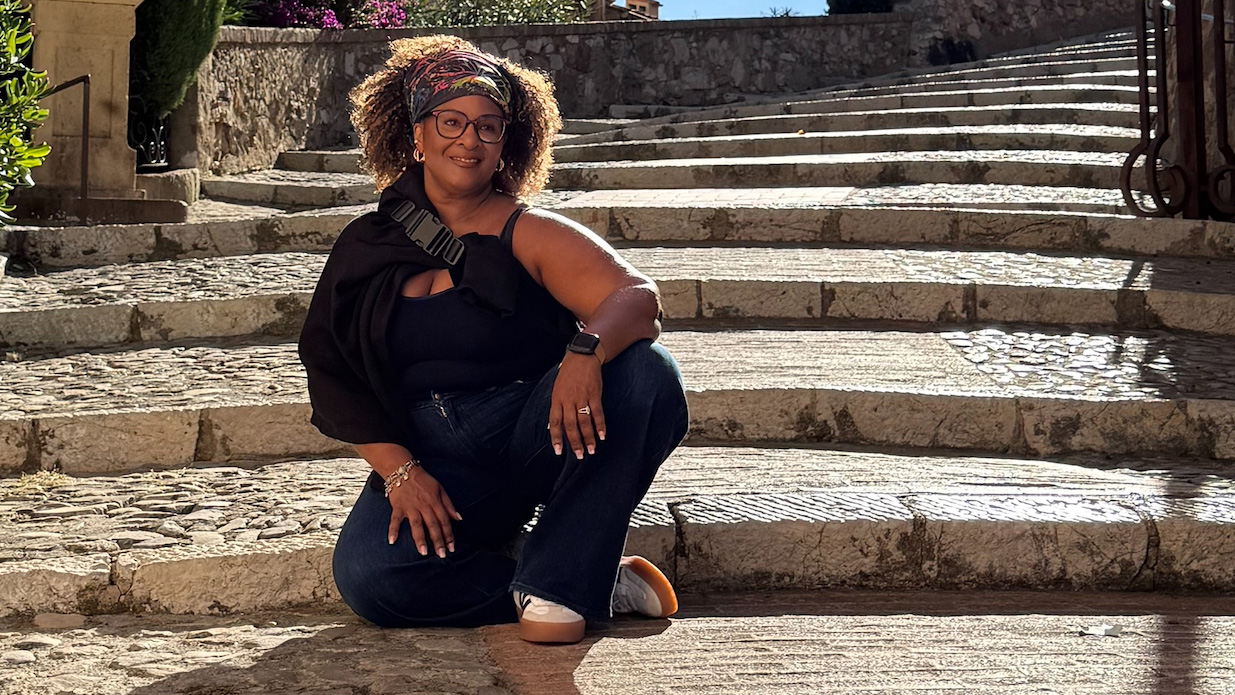
She is now a globally recognized social justice activist, author, accessible yoga teacher and leader of the Yoga For All movement.
Her message — rooted in equity, compassion and authenticity — has reached hundreds of thousands through social media, books, media appearances and workshops worldwide.
Bondy’s advocacy for inclusivity took root when she wrote a blog post titled Yoga Isn’t Just for Skinny White Women. The post went viral on Elephant Journal, earning her a regular column and establishing her as a leading voice in accessible yoga.
Soon, her online following grew, and publishers came calling. Speaking invitations followed — from the University of California, Berkeley, to Princeton and Duke — where Bondy addressed audiences about equity, inclusion and mindfulness.
“I didn’t have a PhD, but I realized everyone has a PhD in their own lived experience,” she recalled.
That lived experience now informs all her work.
Bondy’s Yoga for All training program educates instructors worldwide on creating inclusive practices. Her social media presence continues to blend personal insight with activism, using yoga as a lens to discuss systemic inequities and self-acceptance.
Bondy traces her understanding of equity back to her time at the University of Windsor.
“Everything is political,” she says. “Whether it’s exercise, bodies or identity — politics is about who gets to belong.”
She credits her UWindsor education, especially her political science professors, with nurturing that perspective.
“We had these incredible minds teaching us,” she recalls, naming mentors like Lloyd Brown-John, former diplomat T.A. Keenleyside and former Manitoba premier Howard Pawley.
“Who gets to sit in class with the former premier of Manitoba? Or talk to someone who worked for Pierre Trudeau?” she stated.
“That was Windsor.”
Acknowledging that her advocacy helped shift how brands represent bodies and identity in their imagery, Bondy remains deeply humble.
“It’s surreal to the positive change in how yoga is photographed, taught and talked about,” she said.
“To think that something I said or wrote here in Windsor could influence an entire industry, that means everything.”