
 Gordon Thompson's study of Indian classical music led him to the tabla and careers as both an academic and author. (LEFT PHOTO BY JOHN JUURINEN, RIGHT PHOTO SUBMITTED BY GORDON THOMPSON/UNIVERSITY OF WINDSOR)
By John-Paul Bonadonna
Gordon Ross Thompson (BMus '74) was perfectly content to be a “regular” music theory and composition student when he arrived at the University of Windsor in 1969.
His academic path shifted and worlds merged after enrolling in an Asian studies course.
Class professor Nazir Jairazbhoy introduced Thompson to Indian classical music and the field of ethnomusicology, a study that combines musicology with anthropology to understand music as a cultural system.
“That was my introduction to thinking about music in a broader cultural context,” Thompson says.
The percussionist began studying the tabla – a hand-played drum central to North Indian music.
“I went from lugging a timpani up several flights of stairs to learning the tabla and the sitar,” Thompson recalls.
“You try something creative and see where it leads. It’s the kind of thing you can do at a smaller institution.”
His foray into Indian music soon saw him performing demonstrations and delivering lectures at universities across North America.
After graduating from Windsor, Thompson continued his studies at the University of Illinois and later earned his PhD in ethnomusicology from the University of California, Los Angeles.
His academic career eventually led him to Skidmore College in Saratoga Springs, New York in 1988, where he served in numerous roles including Professor, Chair of the Music Department and Director of Asian Studies until his retirement in 2019.
Throughout his tenure, he was a prolific author, lecturer and sought-after subject matter expert.
Thompson recently received the 2025 Award for Excellence in Historical Recorded Sound Research from the Association for Recorded Sound Collections.
The award recognized his two-volume work titled Sixties British Pop, Outside In, an expansive study of the music and culture that reshaped global popular music in the 1960s.
Rather than focusing solely on famous performers, Thompson’s Volume One: Downtown, 1956–1965 and Volume Two: Itchycoo Park, 1964–1970 examine the broader ecosystems that produced the music that defined each decade.
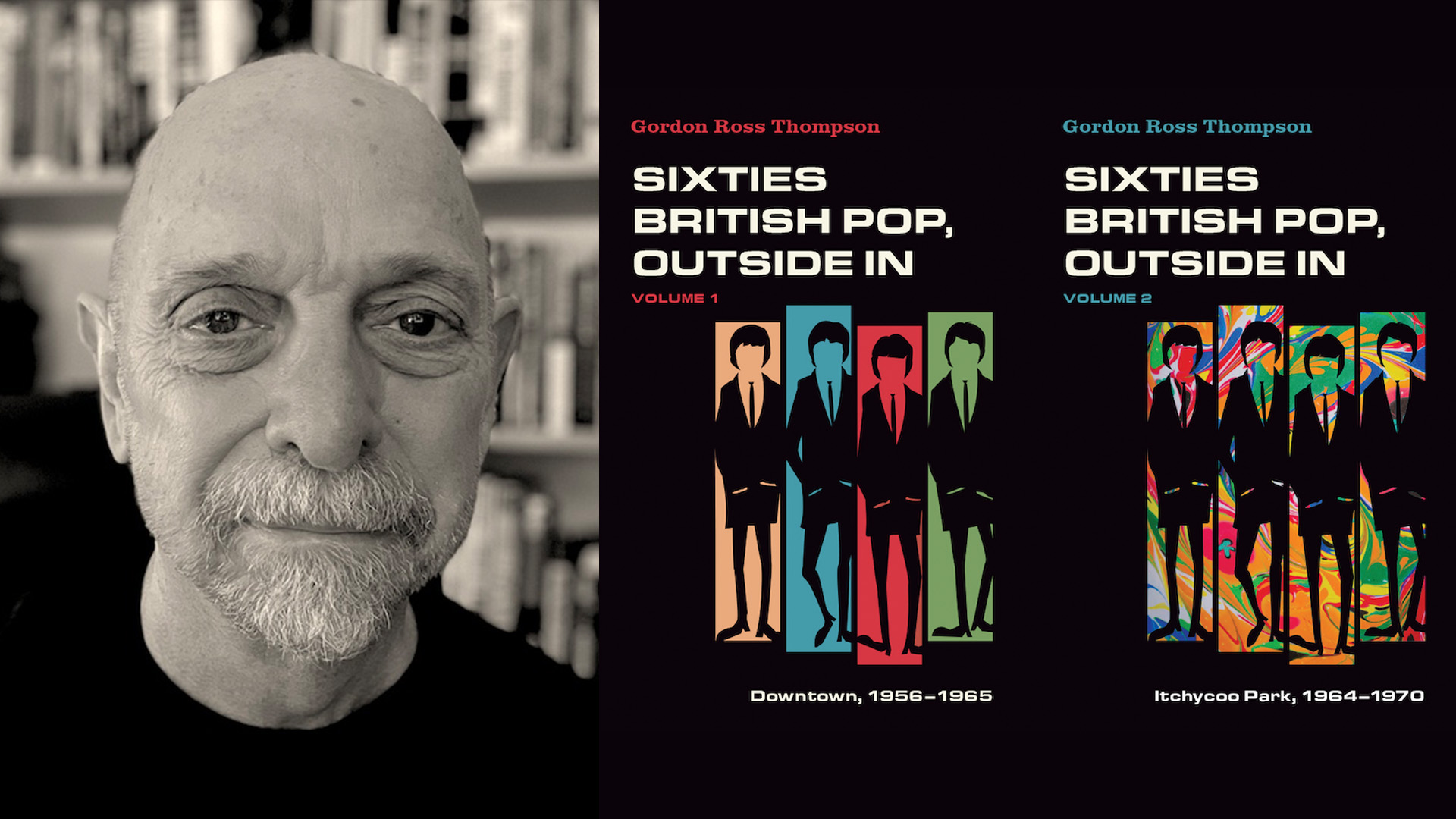
To build that picture, Thompson conducted hundreds of interviews with musicians, producers and industry figures connected to the British pop movement. The project was a culmination of research into one of the most transformative eras in modern music history
His books include detailed discographies and documentation of the radio and television broadcasts, films and media platforms that helped propel British artists to international prominence.
The resulting study explores the social forces that shaped the era – from technological advances like transatlantic jet travel and improved telecommunications to youth culture movements.
“Ethnomusicology is about understanding how music functions within culture,” Thompson explains.
“My work on British pop is not just about the songs and performers – it’s also about the producers, the music directors, the recording engineers, the songwriters, the session musicians and the audiences who make the whole system."
Reframing the British pop explosion
Together, these influences created the conditions for what North American media famously called the “British Invasion.”
Before the 1960s, Thompson notes, American popular music largely dominated global markets. British pop’s success helped reshape that landscape.
“It opened the door for international artists to compete in what had been primarily an American market,” he said.
“Once that door was open, you begin to see performers from other countries gaining ground as well. I would argue that time also benefitted emerging Canadian artists.”
Roots in Windsor’s vibrant music scene
Although Thompson’s research focuses on London and the British music industry, he credits his upbringing in Windsor for shaping his understanding of popular music’s cultural power.
Growing up in the border city during the 1960s meant being immersed in a uniquely dynamic musical environment. Windsor audiences had access to both Detroit’s influential Motown scene and the powerful radio signal of CKLW – known as “The Big 8” – which helped introduce British pop acts to North American listeners.
“At the time I probably didn’t appreciate Motown as much as I should have,” he admits.
That vibrant scene helped shape his early career as a performer and later informed his academic perspective on music communities and cultural networks.
“And as a working musician, there were probably fifty places in Windsor that had live music," he says.
"You could almost always find another gig.”
Continuing the story
Thompson is currently working on another book examining the global phenomenon of The Beatles and the networks of creativity, management and fandom that sustain their legacy.
“There are thousands of books about The Beatles,” Thompson noted.
“The challenge is finding a new way to think about them.”
Thompson’s path from University of Windsor music student to acclaimed professor and award-winning author is a remarkable one. A testament of how local beginnings can lead to global influence when driven by curiosity, creativity and a lifelong love of music.