
How three UWindsor students cracked open vehicle communication safety at an international hackathon
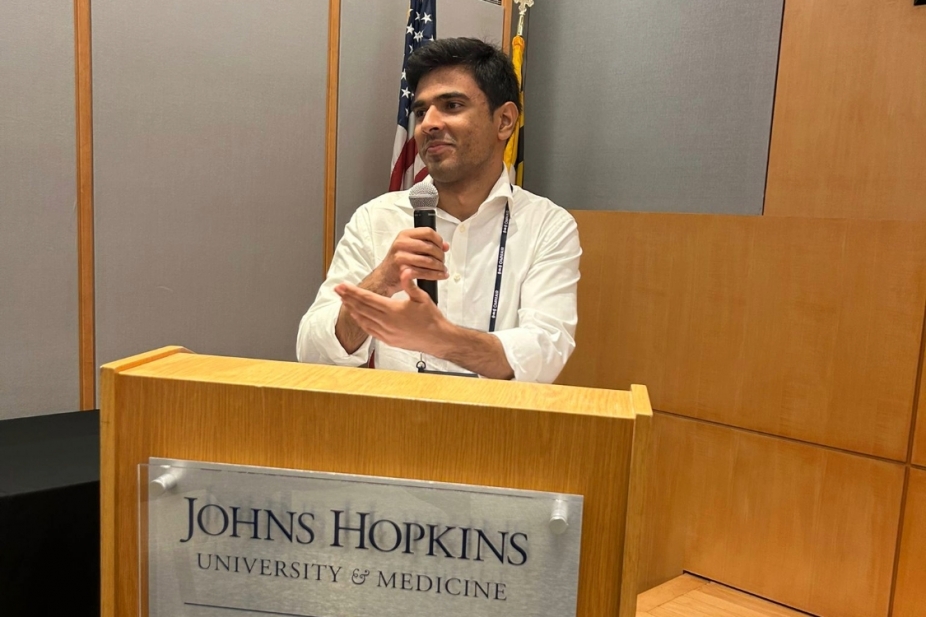 Hashim Tayyab Shah presents at the inaugural OmniAir Hackathon held at Johns Hopkins University in Baltimore. (Courtesy of Hashim Tayyab Shah/University of Windsor)
By Sara Elliott
A future where vehicles communicate directly with one another is not so distant — but is the technology safe enough to deploy?
That question was at the centre of the inaugural OmniAir Hackathon held at Johns Hopkins University in Baltimore, where three University of Windsor graduate students earned first place for their research.
