
An X-ray beam can produce an image of a broken bone or deliver radiation to a tumour. Medical physicists study how radiation interacts with tissue and use that knowledge to improve images and treatments. In hospitals and cancer centres, they also test and calibrate equipment so that clinical teams can use it safely and accurately.
“Medical physicists are health care professionals with specialized training in the medical applications of physics. Their work often involves the use of x-rays, ultrasound, magnetic and electric fields, infra-red and ultraviolet light, heat and lasers in diagnosis and therapy. Most medical physicists work in hospital diagnostic imaging departments, cancer treatment facilities, or hospital-based research establishments. Others work in universities, government, and industry.”
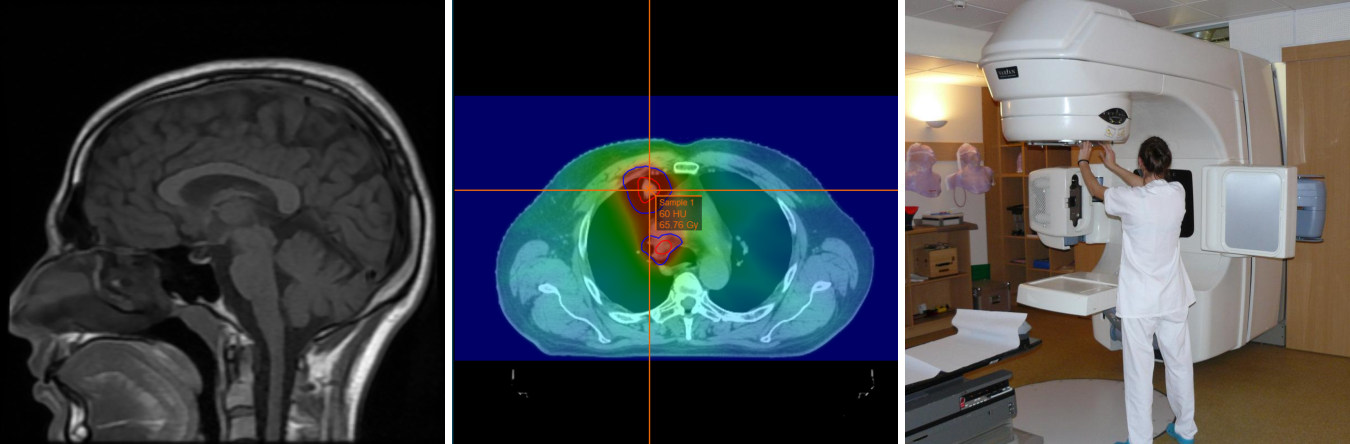
Medical physicists tailor scans to clinical questions. CT and MRI show anatomy, ultrasound can show a heart valve in motion, and PET shows where a radioactive tracer collects.
In radiation therapy, physicists help target tumours while limiting the dose to nearby healthy tissue. They calculate and measure radiation dose, a field called dosimetry.
Physicists also check that treatment machines deliver the intended dose to the right place, both before first use and throughout their working life.
Medical physics in their own words
Five Windsor graduates and program advisor Stephen Brown answer the question “What is medical physics to you?” (1:12). In the individual interviews, they talk about studying at Windsor and what their work looks like after graduation.
- Choosing a career in medical physics — Luc Serre (0:39)
- Why study medical physics at Windsor? — Alexi Jankulovski (0:52)
- What makes the work rewarding? — Khadija Sheikh (0:27)
- A working day in a medical physics residency — Andrea Bisutti (1:07)
Watch the full Medical Physics interview series on the UWindsor Physics YouTube channel.
Studying medical physics at Windsor
In our Medical Physics program, you study physics alongside biology and biochemistry. Upper-year labs take place in the Baker Lab and at the Windsor Regional Cancer Centre. The degree can lead to work in medical technology or to graduate study in medical physics.
For students interested in clinical practice, graduate study is typically followed by a residency in medical physics, where trainees work under the supervision of clinical physicists. The American Association of Physicists in Medicine has a career guide for prospective students that also describes paths into research, teaching and industry.