
 A researcher stands below the slump, where muddy water flows through a network of channels. Rust-coloured microbial mats cover the surface, growing where the permafrost has melted. [Photo courtesy of Chris Weisener]
By Sara Elliott
As the once permanently frozen ground known as permafrost rapidly thaws in the Canadian Arctic, emerging health threats loom.
Researchers at the University of Windsor are using modern science and Indigenous knowledge to address the emerging issue.
“Permafrost thawing is not just a matter of melting ice. It has the potential to release vast amounts of sediment to adjacent rivers and lakes,” says Chris Weisener, School of the Environment professor and researcher with Great Lakes Institute for Environmental Research (GLIER).
“This has the potential to release ancient microbes, chemicals and excess nutrients that have been locked away for thousands of years.”
Supported by the New Frontiers in Research Fund (NFRF), the project bridges Indigenous knowledge with cutting-edge environmental genomics to investigate the affects thawing permafrost has on water quality both from a nutrient and potential pathogen perspectives an issue with profound implications for food and water security in northern communities.
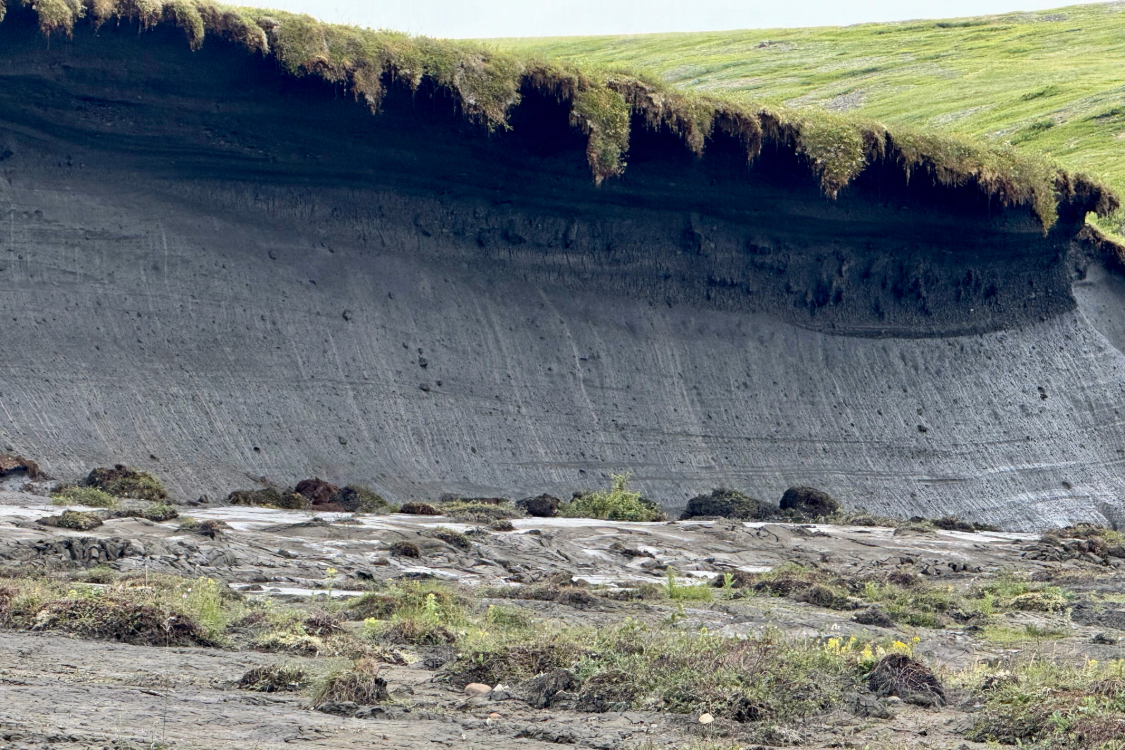
As the permafrost ice sheet melts, pieces break off and contribute to the mudflow below. The overhang at the top marks the original ground level. [Photo courtesy of Chris Weisener]
The team brings unique expertise, from ecosystem science, microbial ecology and biogeochemistry to community engagement and Indigenous knowledge integration.
The full interdisciplinary team includes Felix Nwaishi, Jeela Acedo, Dr. Weisener, Elisabeth Richardson and Ranjan Datta, with guidance from Elders including Copper Jack Joe.
“Scientists are increasingly concerned that some of these microbes could carry genetic traits that make bacteria develop resistance to the medicines we rely on to treat infections in humans and animals,” Weisener says.
“If released, the chemical and biological materials could find their way into food and water systems, posing risks to health in northern communities and beyond.”
This is especially concerning as climate change is transforming the Canadian Arctic landscape faster than almost anywhere else in the country. As the region warms three times that of the global average, the permafrost is beginning to thaw at an alarming rate.
In the summer of 2024, before starting fieldwork, Dr. Nwaishi and Dr. Datta travelled north for a community engagement process, which began with storytelling sessions guided by Elder Jack Joe.
“These sessions provided essential knowledge about how permafrost degradation and landscape transformation are affecting both the land, water and community well-being,” says project lead Nwaishi of Mount Royal University
Building on this foundation, Weisener, Nwaishi and Dr. Acedo returned to the field in summer 2025 to collect samples degrading permafrost slumps near the Yukon–Northwest Territories border and along Inuvik-Tuktoyaktuk Highway (ITH).
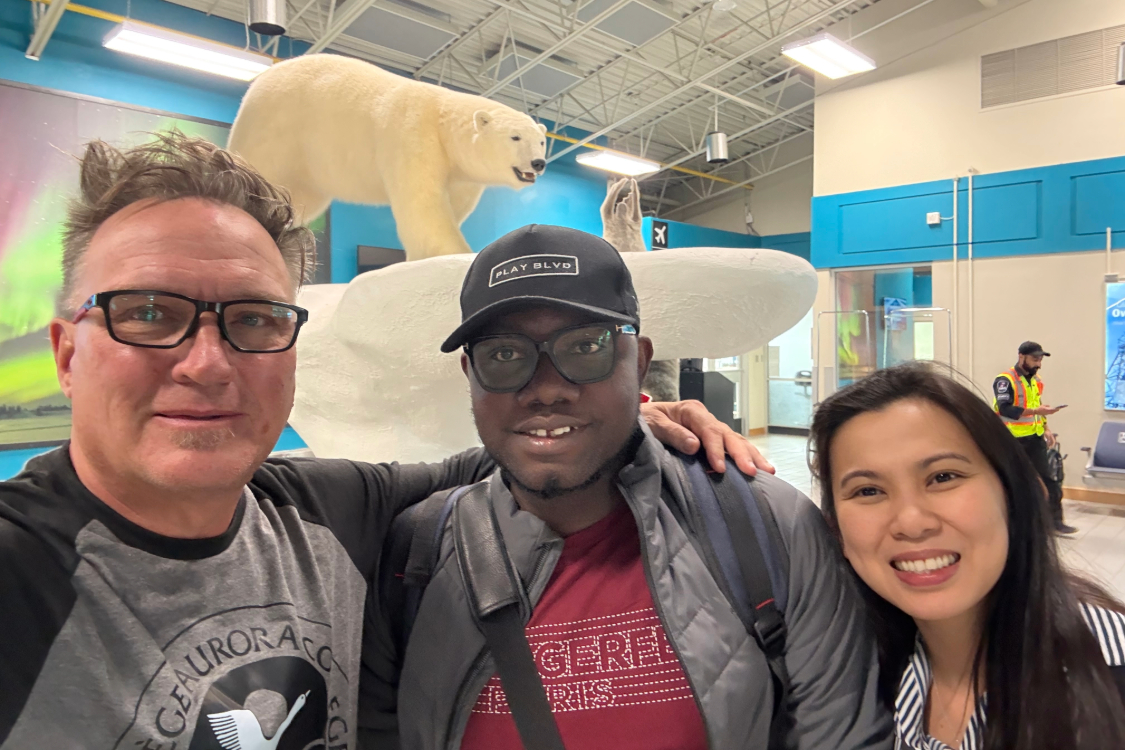
UWindsor researcher Chris Weisener stands with collaborators Felix Nwaishi (centre) and Jeela Acedo (right), part of a group combining modern science and Indigenous knowledge to address Arctic permafrost thaw. [Photo courtesy of Chris Weisener]
“Using modern scientific techniques to study both DNA and RNA, scientists can see what exists in permafrost as well as which microbial processes may be driving the release of contaminants, changes in nutrient cycles, or even the evolution of antimicrobial resistance,” says Nwaishi.
“Co-creating knowledge is at the core of this project. It demonstrates how science can be transformed when it listens first, when the observations and wisdom of Indigenous Knowledge Keepers set the direction, and when researchers use their tools to expand and validate those insights.”
Weisener says the results will further inform both scientific understanding and community-driven engagement to mitigate risks to water security in the Canadian Arctic.
“By working together, this project offers a hopeful path forward: one where Indigenous knowledge and modern science unite to address some of the most pressing challenges of our time,” says Weisener.