
 Recent economics graduate Justin Bensette (BA ‘17, BSc ‘24, MSc ‘25) hopes his master’s research could help shape future health policy. [JOEL GUERIN/University of Windsor]
By Sara Elliott
When Justin Bensette (BA ‘17, BSc ‘24, MSc ‘25) started his master’s research in economics, he wasn’t aiming to reinvent how people access health care.
But his curiosity about how patients make decisions — and how doctors respond — led him down a path that could inform future health policy.
Bensette, who recently completed his Master of Economics under the supervision of Professor Christian Trudeau, developed a mathematical model to better understand what influences people when they decide to visit a doctor, seek a second opinion or delay care. He then used computer simulations to test how small changes in the health system might lead to better diagnoses and outcomes.
One finding stood out: when doctors take more time to listen to their patients, the overall error rate in diagnosis drops significantly.
“Even though the model is black and white, we can simulate 10 million different people — and in the model where the doctor listens, the outcomes are better,” says Bensette. “It’s the only version where the physician considers what the patient thinks is happening and that’s where we see lower error rates, better diagnoses and more people actually going to see the doctor.”
His project, grounded in economic theory but built with real-world implications, explores how time, access and trust factor into health-care decisions — and how they vary by region and population.
The simulations, Bensette says, could be a valuable tool for governments and health-care planners. They offer a low-cost way to model different scenarios and identify where to focus resources. For instance, what works in Windsor may not be the right approach for rural or remote communities.
“In Northern Ontario, people might have to travel hours to see a doctor,” he says. “If we can reduce that burden — maybe through virtual care or mobile clinics — will people be more likely to seek care earlier and will that lead to better outcomes?”
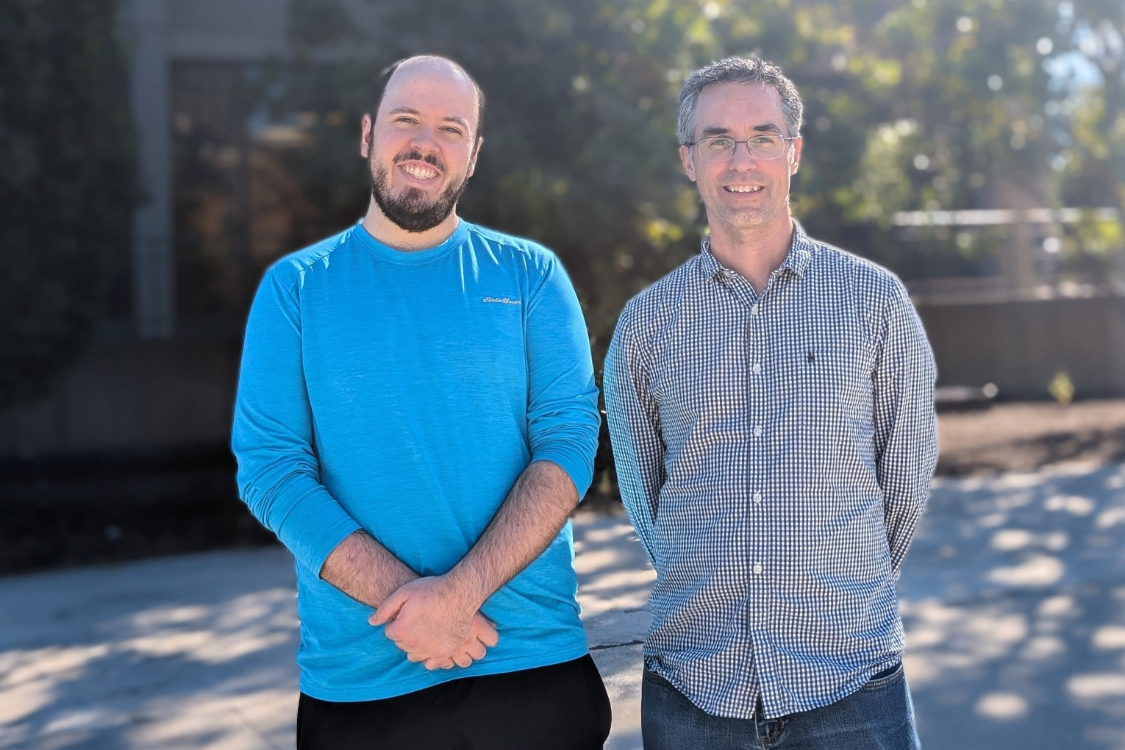
Dr. Trudeau says Bensette’s work shows the power of economic models to shape public systems.
“Economics is all about decision-making,” he says. “This model helps us see how small system changes can affect patient behaviour and ultimately improve care.”
The project also highlights a blind spot in the health system: what patients are thinking when they choose to seek or delay care. Bensette’s model brings those decisions into the conversation.
“It’s just a starting point,” he says. “But my goal was to create a tool — in the language of economics — that could help governments and planners make better decisions about how to invest in health-care services.”