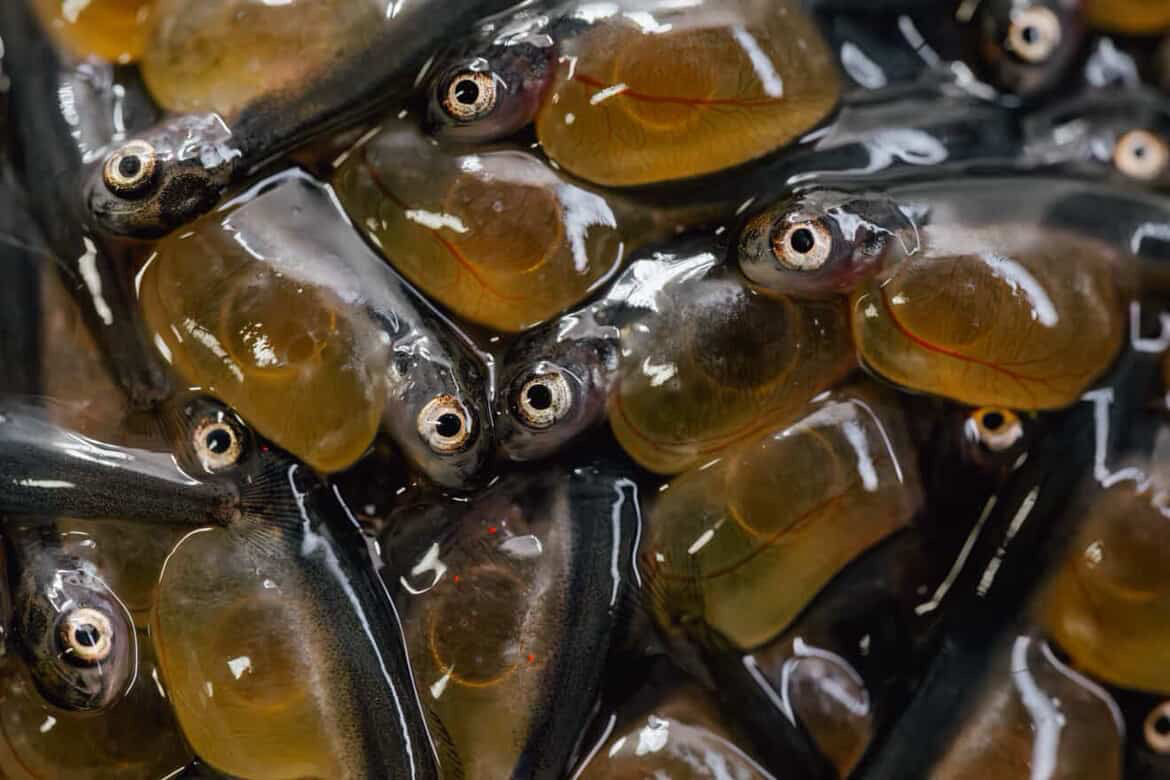
Rare conjoined salmon twins were born at the University of Windsor’s Freshwater Restoration Ecology Centre (FREC). (PHOTO COURTESY OF TREVOR PITCHER/University of Windsor)
By Sara Elliott
A rare and remarkable fishy find is turning heads at the University of Windsor’s Freshwater Restoration Ecology Centre (FREC).
Among thousands of newly hatched Chinook salmon eggs this fall, graduate students discovered a pair of conjoined twins—an uncommon phenomenon that occurs in just one in every 10,000 eggs.
The twins are ventrally conjoined, meaning they’re joined along their bellies and share a yolk sac.
“Because so many fish pass through the research centre, once in a while, a memorable baby fish takes centre stage,” says Dr. Trevor Pitcher, director of FREC.
Thousands of fish are born each year at FREC as part of conservation efforts to support recreational fisheries and restore endangered species.
Each one is monitored daily and cared for by a dedicated team of researchers and students.
The discovery comes just in time for World Fisheries Day on Nov. 21—a global reminder of the need to protect aquatic ecosystems and the people who depend on them.