
 IJEDID Circle faculty members committed to education, advocacy, and transparency in justice, equity, diversity, inclusion, Indigenization, and decolonization initiatives. Pictured left to right - Prof. Rachel Elliott, Dr. Noeman Mirza, Dr. Jamie Crawley, Dr. Sebastian Gyamfi, Prof. Heather Sweet. (KYLE ARCHIBALD/University of Windsor)
By Sara Meikle
When the Faculty of Nursing’s IJEDID Circle first met in 2021, there was no agenda — just shared food, open conversation and a simple but powerful question: what should equity and justice look like here?
That conversation sparked a movement.
Today, the Circle is one of UWindsor’s most collaborative and transformative initiatives, recognized in October with an Equity, Diversity and Inclusion Award at the 2025 People, Equity & Inclusion Awards, honouring efforts that advance equity in meaningful ways.
IJEDID — short for Inclusion, Justice, Equity, Diversity, Indigenization and Decolonization — began as a dialogue about how the Faculty of Nursing could better address diversity and equity. As frontline health-care providers, nurses witness inequities daily, a reality that drives the Circle’s focus on awareness and meaningful change both within the faculty and across the health-care community.
The Circle is deliberately non-hierarchical, bringing together faculty, staff, students and community partners from organizations including the Windsor-Essex County Health Unit, Hotel-Dieu Grace Healthcare and St. Clair College’s Chatham campus.
“We call each other in rather than calling each other out,” says Professor Jamie Crawley. “Everyone gets to share. Everyone’s voice matters.”
Conversations are grounded in respect and curiosity, creating a space where participants can ask difficult questions, acknowledge missteps and learn together. By emphasizing shared responsibility over blame, the Circle fosters honest dialogue and collective growth.
A purpose rooted in practice
At its core, the Circle works to identify inequities and create safer learning and working environments. Members examine curriculum, institutional policies and student experiences through an equity lens.
Their work is guided by meaningful change toward inclusion, justice and decolonization in all aspects of education and healthcare.
“We’ve really tried to do tangible things, not just envision what could be,” says Professor Rachel Elliott.
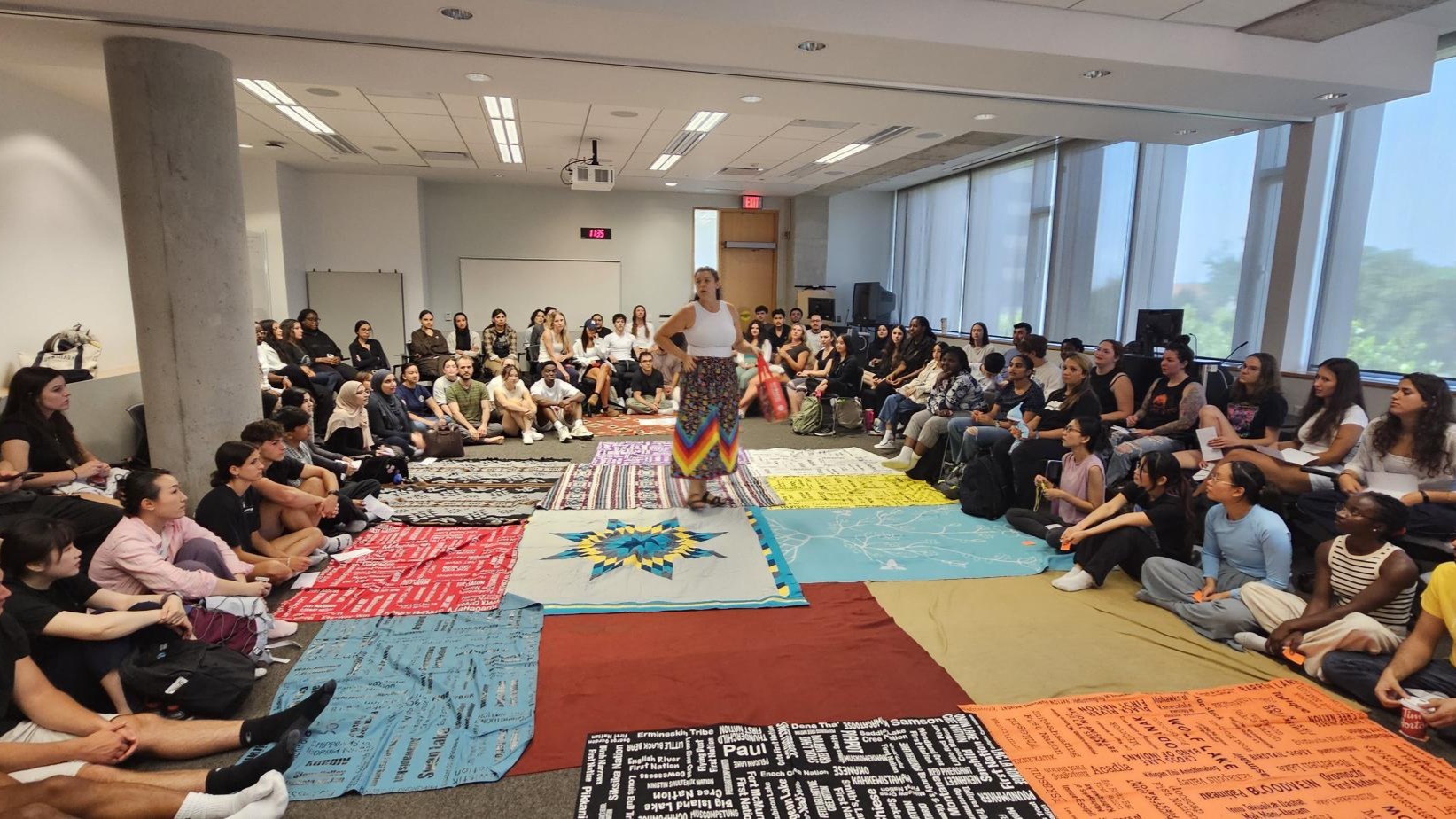
One example is the redesigned blanket exercise, developed by Professor Sara Williams and now integrated into years three and four of the BScN program. More than 700 students have participated in the experiential learning activity, which explores historical and ongoing harms Indigenous Peoples face in health-care systems.
“It’s more impactful than a classroom lecture. Experiencing it and debriefing in a meaningful way has significant value,” says Elliott. “Many students would not get that experience elsewhere.”
The Circle has also hosted traditional medicine workshops, arts-based decolonizing sessions for faculty and is preparing to launch an “equity walk” to evaluate campus spaces and teaching practices this winter.
These efforts, combined with a standalone Indigenous nursing course, have helped UWindsor meet all five criteria used by an organization that ranks nursing schools on their response to the Truth and Reconciliation Calls to Action.
Preparing future nurses to break harmful cycles
Much of the Circle’s motivation comes from what students encounter in clinical practice: medical gaslighting, racism and stigma that disproportionately affect equity-seeking groups.
“Nurses are part of a system where they may witness inequities or silently participate in them,” Elliott explains. “Our goal is to create a generation of nurses who can identify these issues and take action to stop or change them.”
To help prepare students, the Circle has introduced tools such as a CPR RACISM card developed by Cree scholar Dr. Holly Graham. Elliott says incorporating these tools goes beyond education — they can be lifesaving.
Building a collaborative future
Like many equity-focused initiatives, the Circle faces challenges, including funding and capacity. Members juggle grant applications on top of full workloads. They also see opportunities to strengthen institutional supports — such as Canada Research Chairs in Indigenization and community-engaged initiatives — to help sustain and grow equity-focused efforts across the University.
Despite the hurdles, momentum is building. New collaborations are emerging across campus, including interprofessional placements like a recent nursing-education partnership in Tanzania.
There is also growing conversation about how AI is reshaping teaching and assessment, prompting interest in more participatory, culturally grounded approaches to learning.
Personal motivation at the heart
The Circle’s work remains rooted in care and a shared commitment to improvement.
“It’s the morally and ethically right thing to do,” Crawley says. “We’re passionate educators who want students to feel supported. We want them to be resilient, prepared and ready to challenge the inequities they see.”
As the Circle continues its work, its founding principle — dialogue — remains at the centre.
“Change begins with conversation,” says Professor Noeman Mirza. “We’re not just educating students. We’re helping shape the nurses who will change practice.”