
 University of Windsor Interdisciplinary & Critical Studies professor, Ashley Glassburn, took part in a retreat as an artist-in-residence at Point Pelee National Park. (ASHLEY GLASSBURN/ University of Windsor)
By Lindsay Charlton
Place was more than just inspiration for Ashley Glassburn during her time as an artist in residence at Point Pelee National Park — it was built directly into her creations.
Interested in materials and their connections to where they come from, the Interdisciplinary & Critical Studies professor used minerals harvested from the park’s shorelines to create her pottery.
“When I was there, I really studied the kinds of materials that become part of clays and glazes. So, I talked to the people there about geology and the long history that goes into making these things,” she explained.
“I worked with them, and I harvested iron from the beaches, and I incorporated those iron specs into the pieces.”
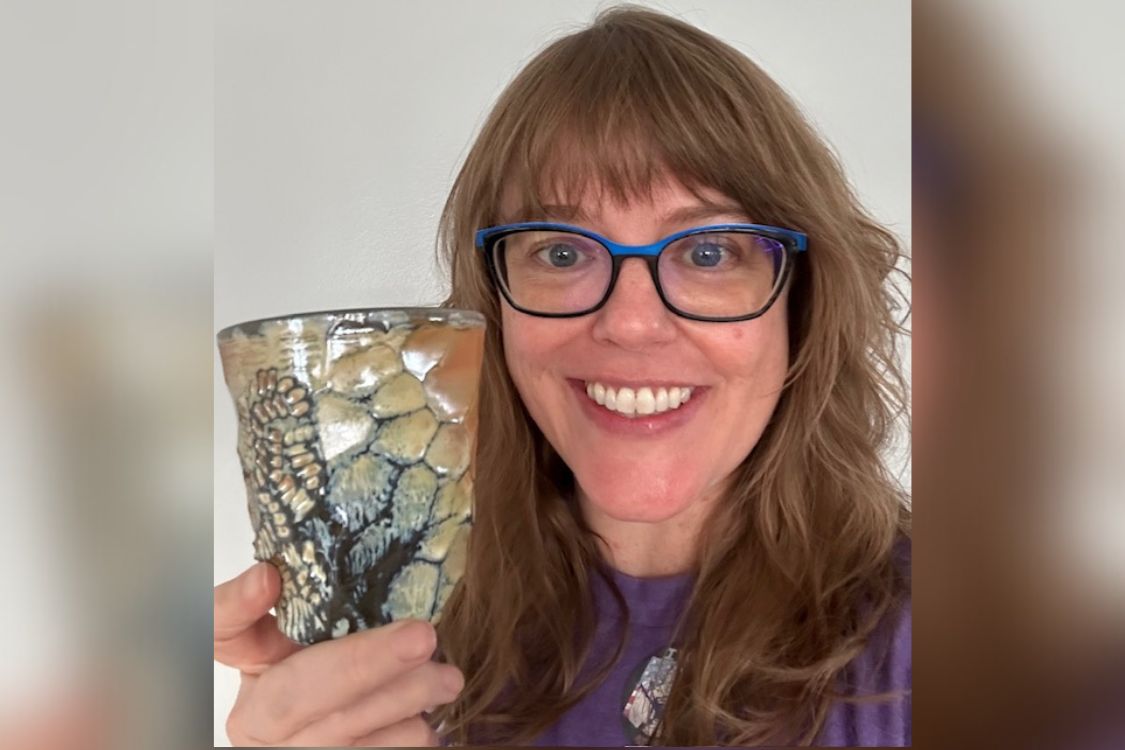
University of Windsor Interdisciplinary & Critical Studies professor, Ashley Glassburn, participated in a retreat as an artist-in-residence at Point Pelee National Park. (ASHLEY GLASSBURN/ University of Windsor)
Glassburn explained that clays, like kaolin or red art clay, are named for the places they come from, not just their type. This includes the irons, salts and other materials used in clay bodies and glazes.
“They’re named after specific mines where they’re gathered. If you gather iron from one part of the world, it’s not the same as iron from another part of the world. And I’ve become really interested in that hyper-locality of clay ingredients,” she shared.
Point Pelee was a natural fit for Glassburn to explore this with its lush marshland. Over thousands of years, the wetlands decomposed, forming the clay that makes the area so rich.
Each year, Point Pelee National Park selects a set of artists in residence to spend a week at the park to create and find inspiration.
Glassburn joined a group of five other artists in June for an experience she described as “powerful.”
“We took over a little corner of the campground and every day we made art,” she shared. “We were in community with each other as artists, we worked and learned about the park and the different ecosystems there, and created our art based on those experiences.”
While Point Pelee influenced her pieces physically, she also wove the visuals and feelings of the park into her work.
“I was thinking a lot about how enjoyable it is to spend time in a national park like that and what you do in that space. A lot of the time it’s staring at the light dancing through the trees, feeling the wind blow or listening to the shifts as it moves through the trees,” she shared.
“One piece I made is a large bowl filled with these rattles. Each rattle that you pick up and shake has a different sound. I wanted it to have that playfulness of just being in the woods, in the bush.”
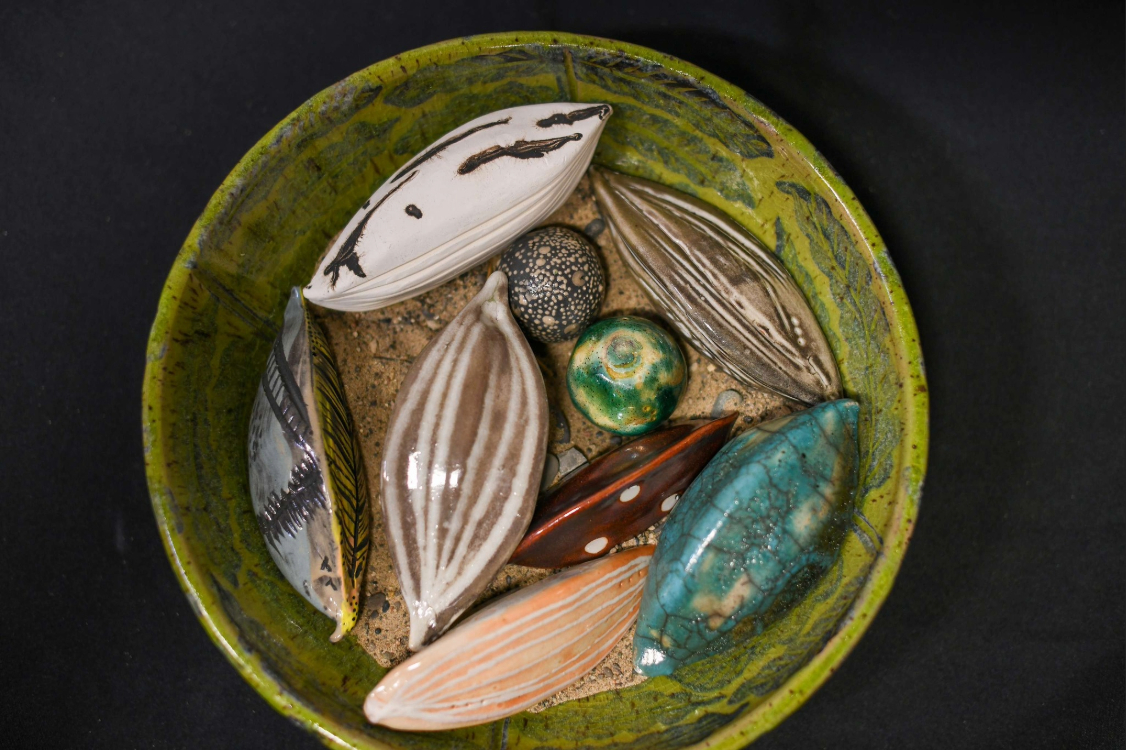
A piece created by Interdisciplinary & Critical Studies Professor Ashley Glassburn, which drew inspiration and materials from Point Pelee National Park, while she was an artist in residence. (ASHLEY GLASSBURN/ University of Windsor)
Glassburn’s pieces and those of the other residency artists have been on display at the park’s visitor centre since the exhibition opened in October and will remain there until Sunday, Feb. 1.
“You’ll see all these different artistic interpretations of the same experience, which I think is really cool,” she noted. “There is also a broader museum with other artists represented.”
Pottery is a relatively new endeavour for Glassburn. She said she spent much of the pandemic watching The Great Pottery Throw Down, which prompted her to take her first class once restrictions were lifted.
She’d always enjoyed making things, but the retreat helped her realize she is an artist.
“We had a lot of conversations about what it means to make art in general, what it means to count something as art, and what it means to make art in a particular place,” Glassburn shared. “It was really beautiful to be part of a community of artists all thinking through those things together.”
Having spent a week in the park, she encourages others to make it a point to visit, even in these winter months.
“It’s the most biodiverse park in Canada and a lot of people don’t realize that because it’s so small,” she said. “But go visit Point Pelee — it’s so close and so beautiful.”
The 2025 Artist in Residence Exhibition will be on display at the Point Pelee National Park Visitor Centre until Sunday, Feb. 1.
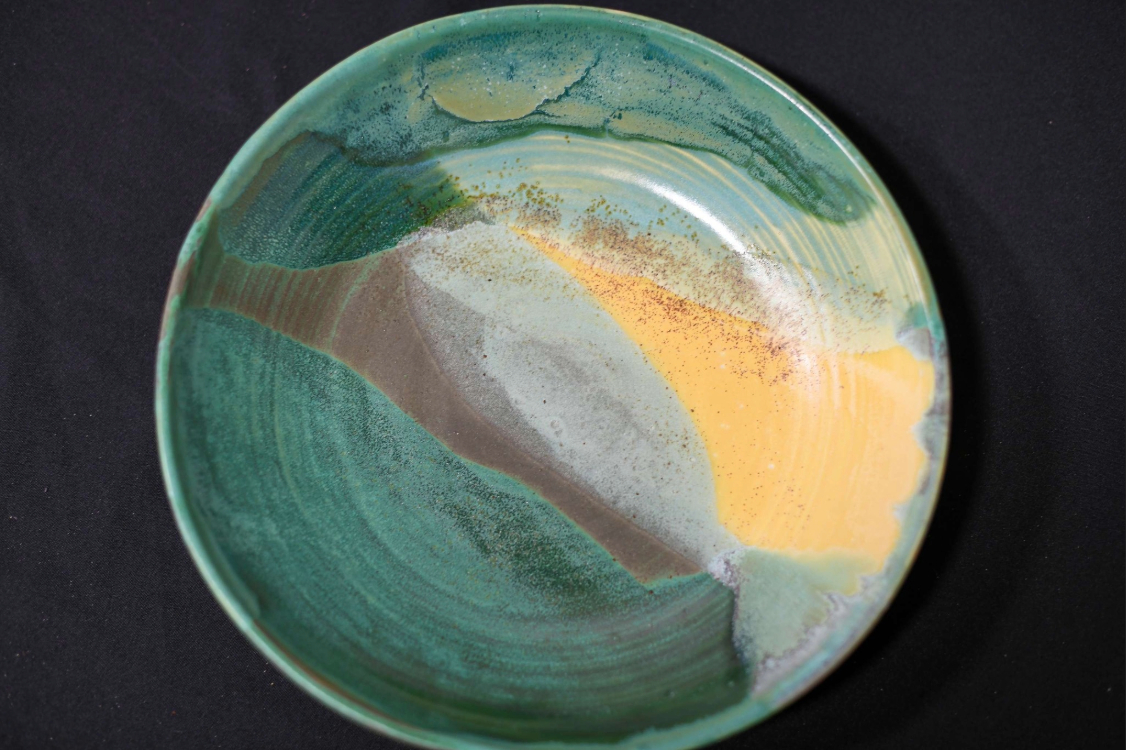
A piece created by Interdisciplinary & Critical Studies Professor Ashley Glassburn, which drew inspiration and materials from Point Pelee National Park, while she was an artist in residence. (ASHLEY GLASSBURN/ University of Windsor)