
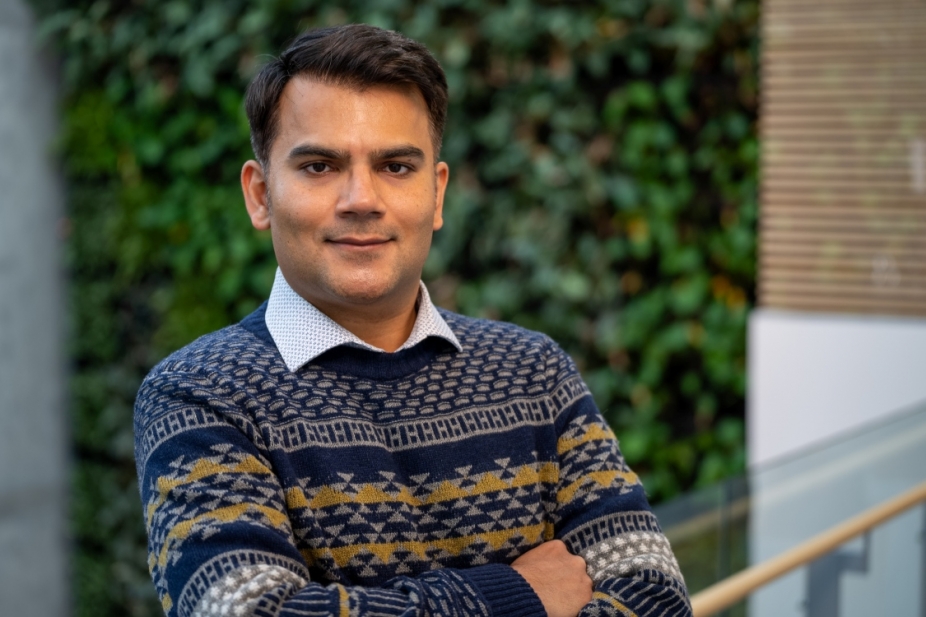
 Dr. Noeman Mirza led the ROAR study, advancing research focused on improving healthcare access for rural seniors. (CHERRY THERESANATHAN/University of Windsor)
By Sara Meikle
As winter loosens its grip and the first signs of spring emerge, many Canadians are welcoming the change.
But for vulnerable older adults, particularly those living in rural communities, the most pressing challenge exposed by the colder months does not disappear with the thaw.
For Dr. Noeman Mirza of the University of Windsor’s Faculty of Nursing, winter is more than a backdrop of snow and ice — it is a magnifier. The deeper issue is transportation.
Through his team’s Researching Older Adults’ Repositioning (ROAR) study in British Columbia, Mirza and his colleagues have heard repeatedly from rural seniors that simply getting to appointments is one of the greatest barriers to staying healthy. Winter conditions, like icy roads, long distances and reduced availability of travelling specialists intensify that barrier, but they do not create it.
“Winter tends to magnify challenges that rural older adults already face,” Mirza said. “Issues like transportation, housing and social supports play a big role in whether they can actually access care.”
For many older adults in rural communities, accessing healthcare requires travelling significant distances to urban centres for specialist appointments, diagnostic tests or hospital services. Many no longer drive. Others rely on family members, neighbours or community transportation programs with limited schedules.
When winter weather hits, those already fragile arrangements can unravel. Roads become unsafe. Appointments are postponed. Visiting specialists may suspend rural clinics. A routine checkup can turn into a complicated and sometimes impossible journey.
But the vulnerability existed before the snow fell and remains after it is gone.
Mirza’s findings highlight how transportation intersects with other social factors. Older adults living alone may have no nearby support to help coordinate rides. Those with lower incomes may struggle to cover fuel costs, vehicle maintenance or private transportation fees. Indigenous and other marginalized seniors in remote communities often face even greater distances from major health centres, a reality shaped by longstanding geographic and systemic inequities.
“Transportation is closely tied to health,” Mirza said. “If someone can’t physically get to care, that care might be delayed or missed altogether.”
The consequences are not minor. Delayed care can mean unmanaged chronic conditions, missed follow-ups, medication disruptions and increased isolation. Difficulty accessing groceries, pharmacies and social connections compounds health risks, particularly for those managing multiple conditions.
As healthcare leaders reflect on lessons from the winter months, Mirza emphasized the importance of strengthening community-based services. Expanding home care, supporting local providers and offering more outreach services can help older adults stay healthy in their communities.
“Winter planning should also be part of this,” Mirza said. “Things like mobile clinics, virtual care and coordinated community supports can help ensure people don’t fall through the cracks when travel becomes difficult.”
He also pointed to the need for better coordination between healthcare systems and transportation services. Aligning appointment times with available transit, integrating transportation planning into discharge and follow-up care and expanding outreach clinics could all significantly improve access. Virtual care, when appropriate, can also reduce the need for travel, particularly during high-risk seasons.
With spring’s arrival, rural roads may be easier to navigate, but the underlying challenge remains. For many vulnerable seniors, access to healthcare depends not only on clinical expertise, but on whether they can physically get through the door.
Through research like the ROAR study, nursing scholars at UWindsor are leading the conversation on systemic solutions that make healthcare more equitable and responsive. Their work is shaping innovative strategies, guiding policy and positioning the Faculty of Nursing as a leader in advancing access to care for vulnerable populations.