
 Dr. Trevor Pitcher, director of the University of Windsor's Freshwater Restoration Ecology Centre, shows students a juvenile sturgeon at the opening of the Giigoonyig Enjintaawgiwaad hatchery at Anishinaabeg Kinomaagewgamig Immersion School on Walpole Island First Nation. (MICHAEL WILKINS/University of Windsor)
By Sara Elliott
At the Bkejwanong Kinomaagewgamig and Anishinaabeg Kinomaagewgamig Immersion School on Walpole Island First Nation, students will soon learn fish biology in Anishinaabemowin — the same language their ancestors used to describe these waters — while raising the very fish that have sustained their community for generations.
The Giigoonyig Enjintaawgiwaad — “Place Where Fish Are Raised” — opened Friday, April 17, at a ceremony marking the beginning of a new kind of classroom: one where fish biology, ecological stewardship and Anishinaabe knowledge are taught as inseparable.
Dr. Trevor Pitcher, director of the University of Windsor’s Freshwater Restoration Ecology Centre (FREC) in LaSalle, provided the equipment, training and expertise that helped bring the hatchery to life.
“They will raise the fish once the eggs hatch in the facility and use them for multiple purposes including education, conservation, cultural, ceremonial as well as for food for elders,” says Pitcher.
The new hatchery is modelled on FREC, a facility where scientists study and develop best practices for restoration ecology relevant to the Great Lakes.
“It was designed for classroom demonstrations, which include language, biology, water quality and engineering lessons,” he says.
The facility includes four major tanks and recirculation equipment and is housed at the Bkejwanong Kinomaagewgamig and Anishinaabeg Kinomaagewgamig Immersion School on Walpole Island First Nation.
Minogiizhgad, immersion coordinator at Anishinaabeg Kinomaagewgamig, said the hatchery represents more than a new piece of equipment.
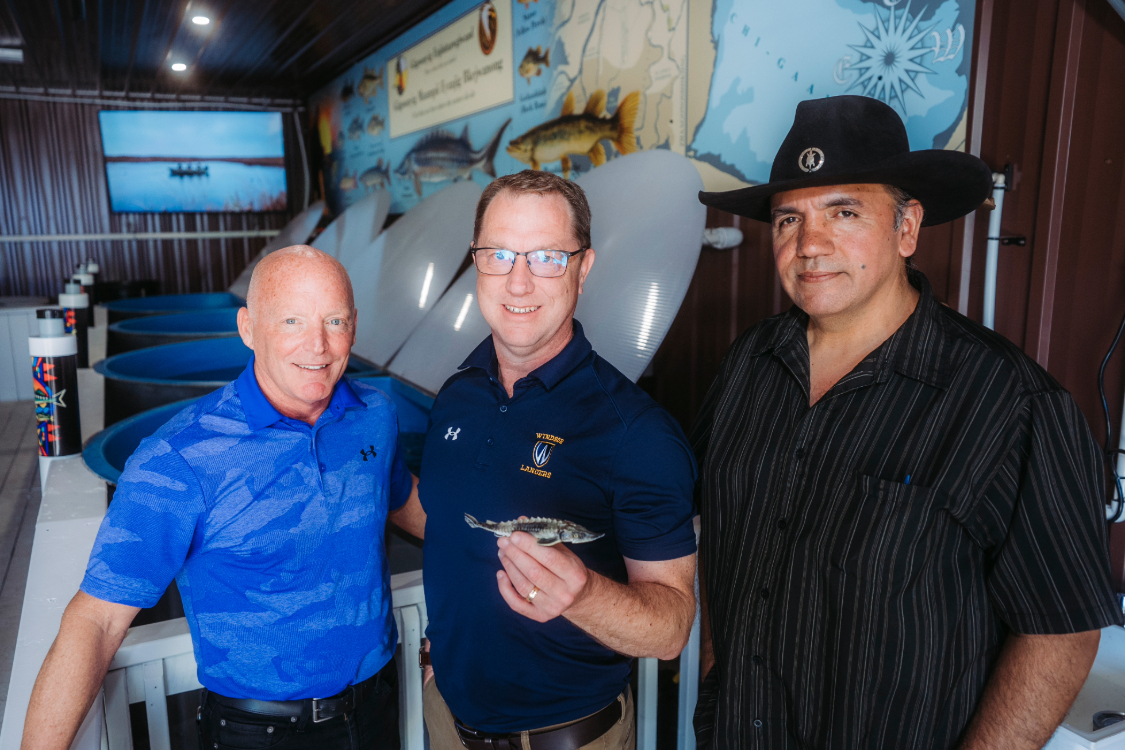
From left, Craig Lindsay, Trevor Pitcher and Minogiizhgad at the opening of the Giigoonyig Enjintaawgiwaad hatchery at Anishinaabeg Kinomaagewgamig Immersion School on Walpole Island First Nation. (MICHAEL WILKINS/University of Windsor)
“The Giigoonyig Enjintaawgiwaad hatchery is more than a science initiative – it’s a living expression of Anishinaabe knowledge and stewardship,” says Minogiizhgad.
“It reconnects our youth and community to the waterways that have sustained Bkejwanong since time immemorial.”
Minogiizhgad says this project restores fish populations, revitalizes language and strengthens relationships with the land and water.
“It’s about nurturing both ecological balance and the next generation of caretakers.”
All scientific learning at the hatchery will be translated into Anishinaabemowin, ensuring science and language grow together.
“This ensures that students learn not only the technical aspects of fish biology and environmental science but also the cultural teachings and vocabulary that express our responsibilities to the water and the fish,” says Minogiizhgad.
“The hatchery extends this learning by offering hands-on experiences in ecology, stewardship and community food systems.”
Pitcher says the school has developed extensive programming and curriculum, including high-tech equipment and a set of bleachers where students can sit and watch.
The idea for a Walpole Island First Nation hatchery came from visits to FREC over the years by Bkejwanong students.
“After visiting at least once or twice a year, the students realised what a great resource it could be to have a hatchery at their school,” he says.
Pitcher supported the project by providing the equipment, training and expertise.
“We're in the background supporting them through the build and through the growth and we’ll keep offering training for their students and staff to maintain the facility over time,” he says.
“This is an ongoing relationship.”
In addition to instruction manuals and signage, Pitcher also plans to have his former graduate student’s book, Sam and the Magic Key: A Quest to Save the Lake Sturgeon, translated for the students.
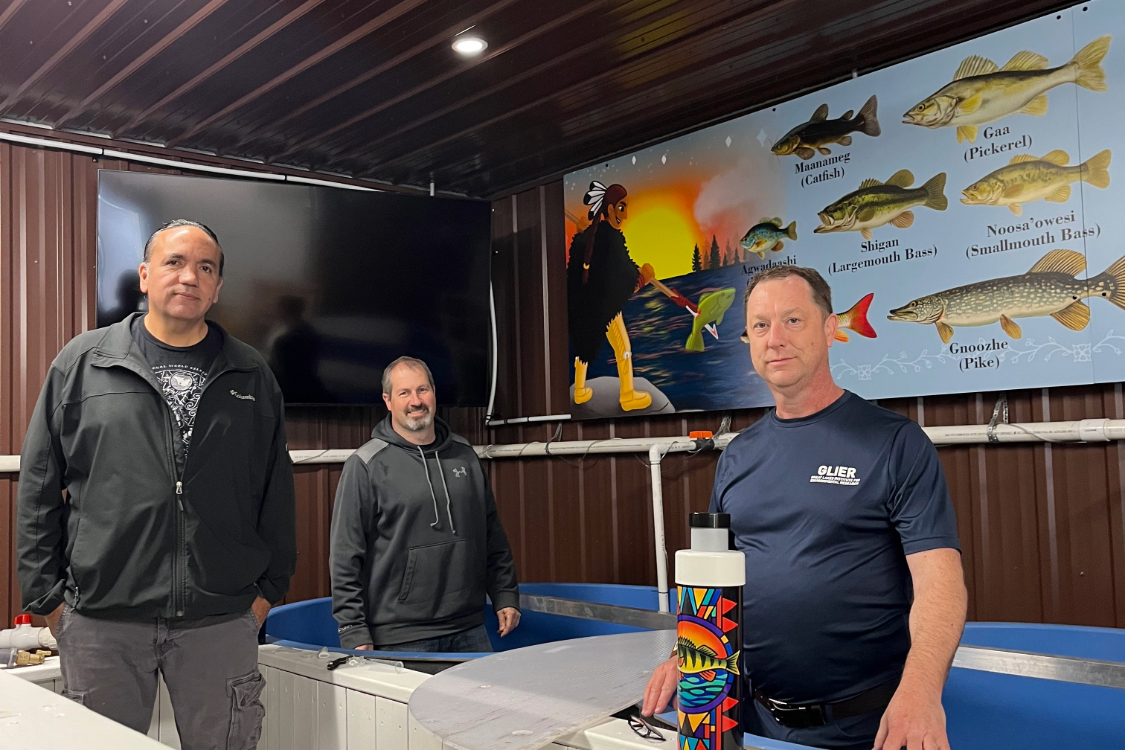
From left, Minogiizhgad, Aaron Newhook and Trevor Pitcher in the Giigoonyig Enjintaawgiwaad hatchery at Anishinaabeg Kinomaagewgamig Immersion School on Walpole Island First Nation. (Courtesy of Trevor Pitcher/University of Windsor)
“It’s a great opportunity because sturgeon holds a special place for them culturally and they will be mainly rearing sturgeon at the hatchery,” says Pitcher.
Anishinaabeg Kinomaagewgamig is an Anishinaabemowin immersion and land-based learning school located in Bkejwanong (Walpole Island First Nation), serving students from Kindergarten through Grade 6.
“Through hands-on learning and collaboration with universities and local partners, the project embodies the spirit of Wii Shaanjgaazwaad Niigaan Ebiyaajig –nurturing the next generations,” says Minogiizhgad.