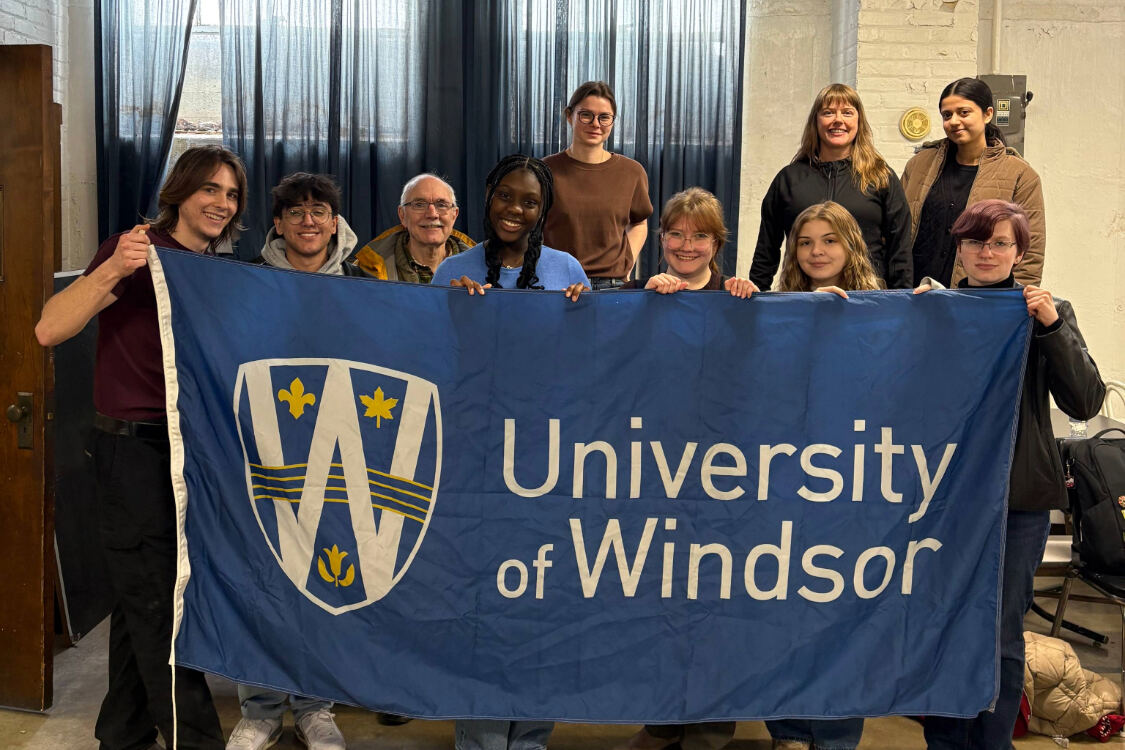
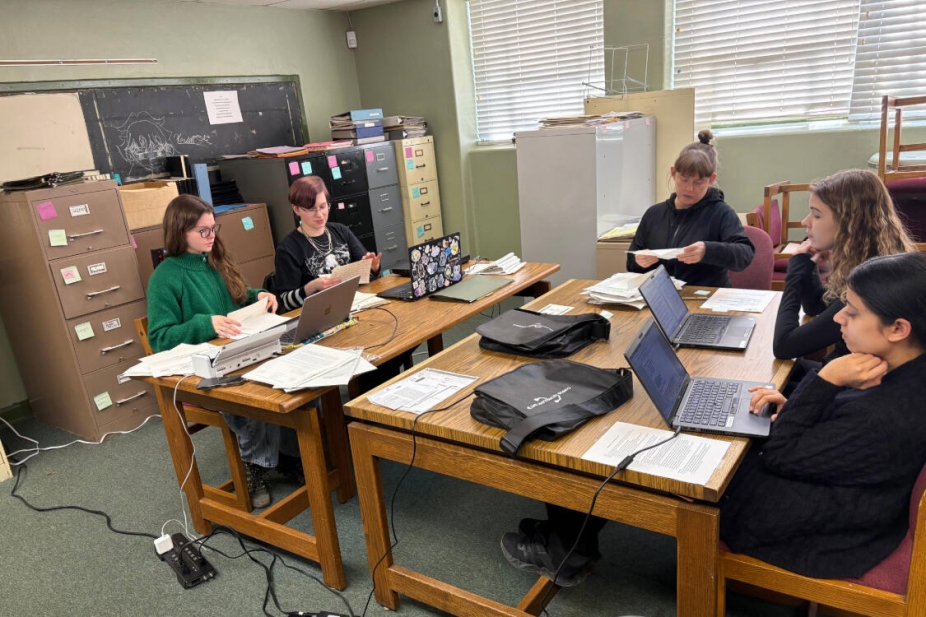
 University of Windsor students and professor Dr. Ashley Glassburn travelled to Peru, Ind., to spend a week digitizing archives for the Miami Nation of Indiana. (Courtesy Ashley Glassburn/ University of Windsor)
By Lindsay Charlton
For decades, the Miami Nation of Indiana has been fighting for its sovereignty to be acknowledged by the United States government, an effort a group of UWindsor students recently supported by helping preserve historical records.
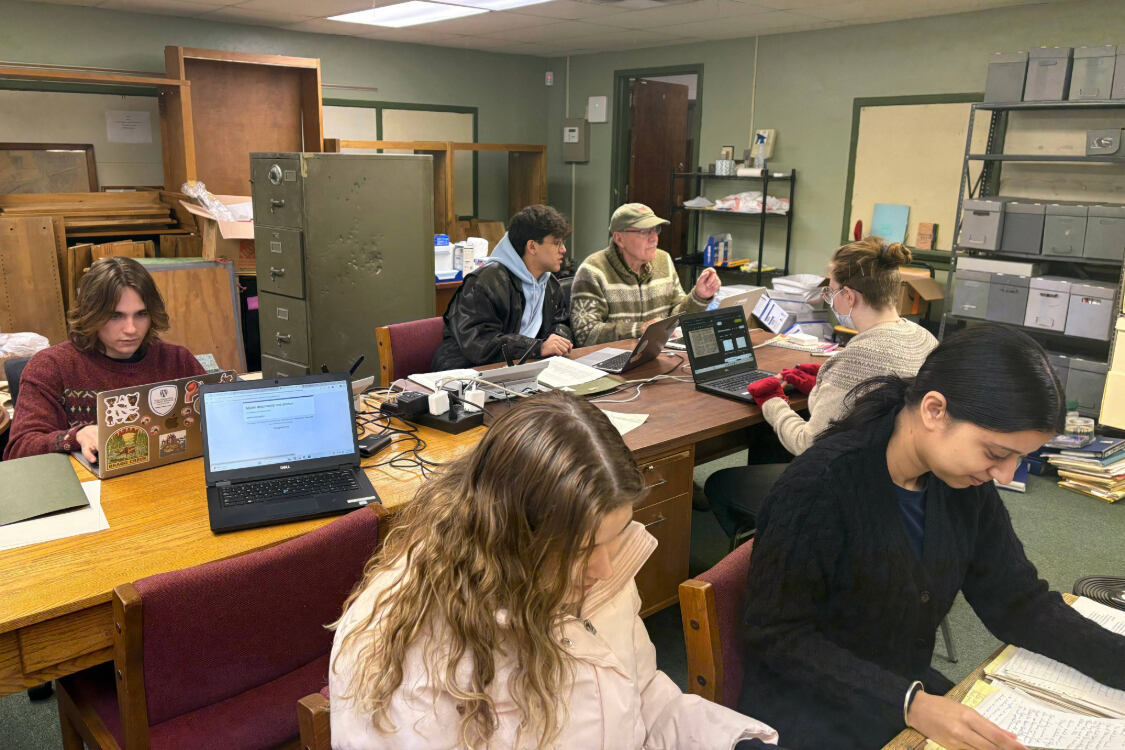
Led by Dr. Ashley Glassburn, a professor in the Department of Interdisciplinary and Critical Studies, the students travelled to Peru, Ind., to spend a week digitizing the tribe’s archives, preserving records that serve as evidence of community continuity and political authority.
“We essentially helped the Miami Nation with a court case they are fighting to regain their federal recognition,” said fourth-year history and sociology student Sheena Bennett.
“We’ve been going through records from secretaries, chiefs and both living and deceased members of the tribe. We’re organizing everything into one file so the prosecutors can easily access it.”
In the 1840s, many Miami people were forcibly relocated to Kansas and Oklahoma, though some families remained in Indiana under treaty agreements. The tribe signed a treaty with the United States in 1854 but lost its federal recognition due to an administrative error in 1897.
Despite repeated appeals beginning in the 1930s and continuing in later decades, Congress and federal agencies have consistently declined to reverse the error and recognize the Indiana Miami as separate from the Miami Tribe of Oklahoma.
“Gaining federal recognition would allow access to federal support and services and help strengthen the community,” Bennett said. “A town like Peru doesn’t have a lot of infrastructure. Access to things like healthcare can be difficult for them, and they’re facing a lot of challenges because of their position.”
Archives are a particularly important part of these efforts because the documents help show continuity of the community and its governing structures over time.
“This whole case is important for people to know that the Miami Nation of Indiana is here, they’ve always been here and they deserve to be recognized,” said Mariabelle Okoko, an undergraduate student in the School of Social Work who participated in the project.
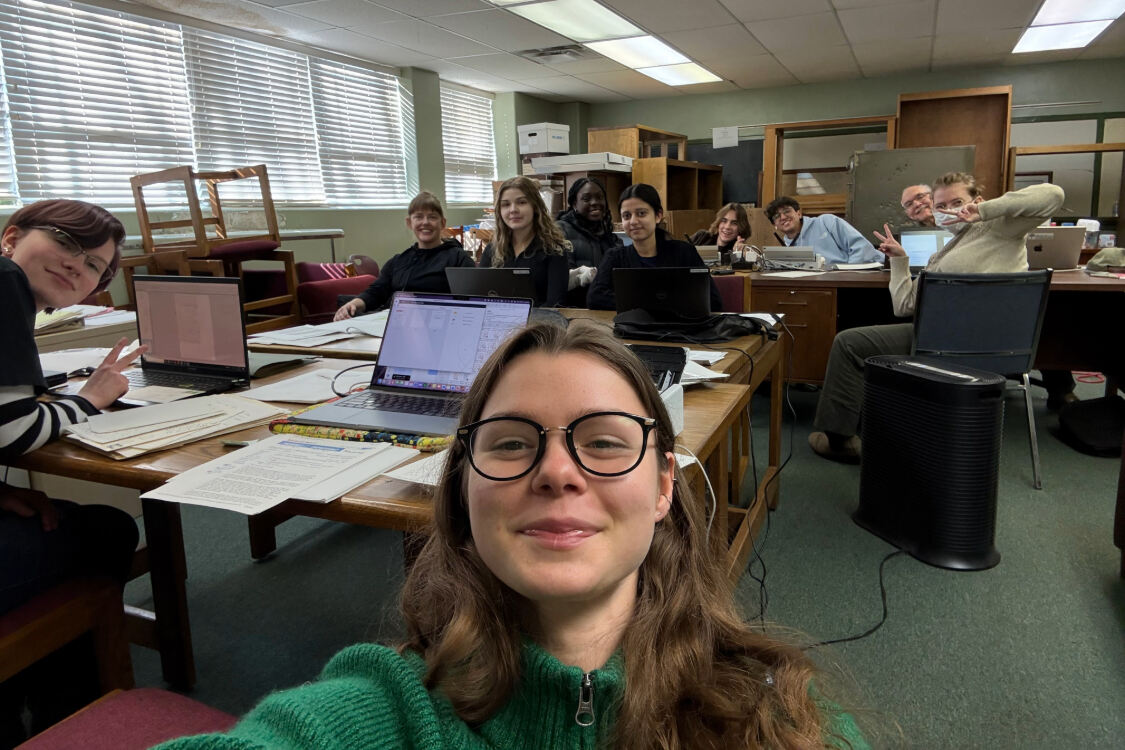
The group, made up of seven current UWindsor students and one alumnus, travelled with Dr. Glassburn during reading week to work on the project. Members of the Miami Nation also worked alongside the students, providing historical context and helping guide the process.
Glassburn will be heading back to Peru this month with a new cohort of students who will be continuing this work in the archives.
Okoko said being part of the group working on the tribe’s efforts has been rewarding.
“As we go and we keep reading and looking at everything, we start to connect the dots and we're getting more familiar with what we're seeing, which has been really cool,” she said.
“It’s been a lot of fun. I like old ephemera (objects that aren’t supposed to last as long as they have) so I’ve really enjoyed digging into things and finding out more and more,” said Ell Harkins, a languages, literatures and cultures student.
However, it hasn’t been without its challenges.
“It’s a lot of pressure,” Harkins said. “There’s very little funding for archives, and the work we’re doing will be preserved long-term. So the decisions we make feel final, which makes it pretty difficult.”
Bennett added that the experience was also emotional. The volume of documents was sobering.
“Some of the documents we came across are people contacting lawyers to get help because they’re in jail for fishing,” she said. “It’s something the Indiana state government has done to Indigenous people in some cases so they can’t practice their way of being, their own ways of life.”
Reading through these archives added a layer of nuance rarely available in the classroom, Bennett said.
“In my program, we’re constantly learning about Indigenous methodology and how to conduct research ethically, but now I’ve been able to put those things into practice and realize you can’t come into these spaces for a self-serving purpose.”
For Bennett, speaking with members of the Miami Nation and engaging critically with the work was an important lesson. She encouraged other students to pursue similar experiences.
“Actually read the emails that go out, all the flyers, anything like that, and take a risk,” she said.
“That’s what this is about: learning, travelling and engaging with different cultures. It’s something students should take advantage of in university.”