
 Patricia Rokitnicki holding three snow bunting chicks after banding them. (Rachel Dow/University of Windsor)
By Sara Elliott
Every Saturday in Iqaluit, Patricia Rokitnicki spends her morning with community members searching the city for snow bunting nests.
That's not a distraction from her PhD research — it is her PhD research.
From hand-painting nesting boxes to organizing public bird walks, Rokitnicki's (BSc '20) songbird research engages directly with a Nunavut community.
"My project explores how and why urbanization impacts the breeding ecology of Arctic-breeding snow buntings," said Rokitnicki.
"There's a knowledge gap for Northern species because most research on urbanization has been conducted at southern latitudes. My thesis begins filling in some of these gaps by examining how snow buntings are responding to urban change in Nunavut's capital city."
Based on Christmas Bird Count data, snow bunting populations have declined by approximately 80 per cent in the last 50 years, but the cause for these declines remains unknown.
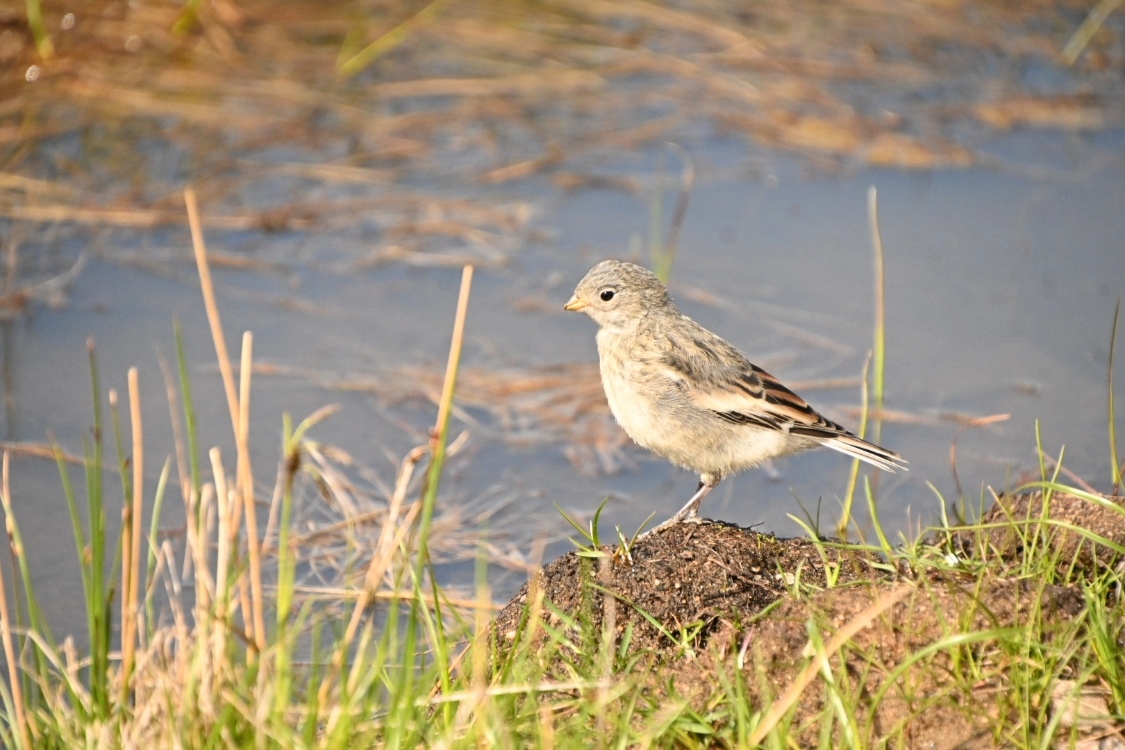
Snow bunting in Iqaluit. (Patricia Rokitnicki/University of Windsor)
Rokitnicki is also using previously collected data from Qaqsauqtuuq, a remote marine island in the low Arctic at a similar latitude to Iqaluit, to build a fuller picture of bird health and to understand how their breeding ecology is impacted by changes in the environment.
“It seems like the birds are benefiting from city life, there is a high abundance of breeding birds in Iqaluit and we’ve found that Iqaluit birds have a longer breeding season than other areas, which seems to be providing them with additional opportunities,” she said.
“I'm looking at how factors like temperature, the use of anthropogenic nesting sites and insect abundance impact parental behaviour and nest success.”
Rokitnicki is supervised by Dr. Oliver Love and Dr. Emily McKinnon. The field work in Iqaluit began in 2022.
Snow buntings are a good study species because they are very abundant in the city and community members are very fond of the birds, seeing them as a sign of spring. Rokitnicki prioritizes community involvement in her snow bunting research.
She continually seeks ways to involve Iqaluimmiut youth and their families in local snow bunting related activities.
“We host a series of events throughout the season to get community members involved in our work. Every Saturday we host community bird walks where community members help us search the city for snow bunting nests,” says Rokitnicki.
“I've been going up since 2023, and each year we offer more opportunities for community members to be involved in our work. It’s created so many meaningful relationships between the community members as well as the birds.”
In 2025, Rokitnicki started a community nest box monitoring project supported by a community grant from Birds Canada. Due to high interest and leftover funds from the Birds Canada community grant, she will host a nest box building workshop during the 2026 field season to assemble and distribute more nest boxes.
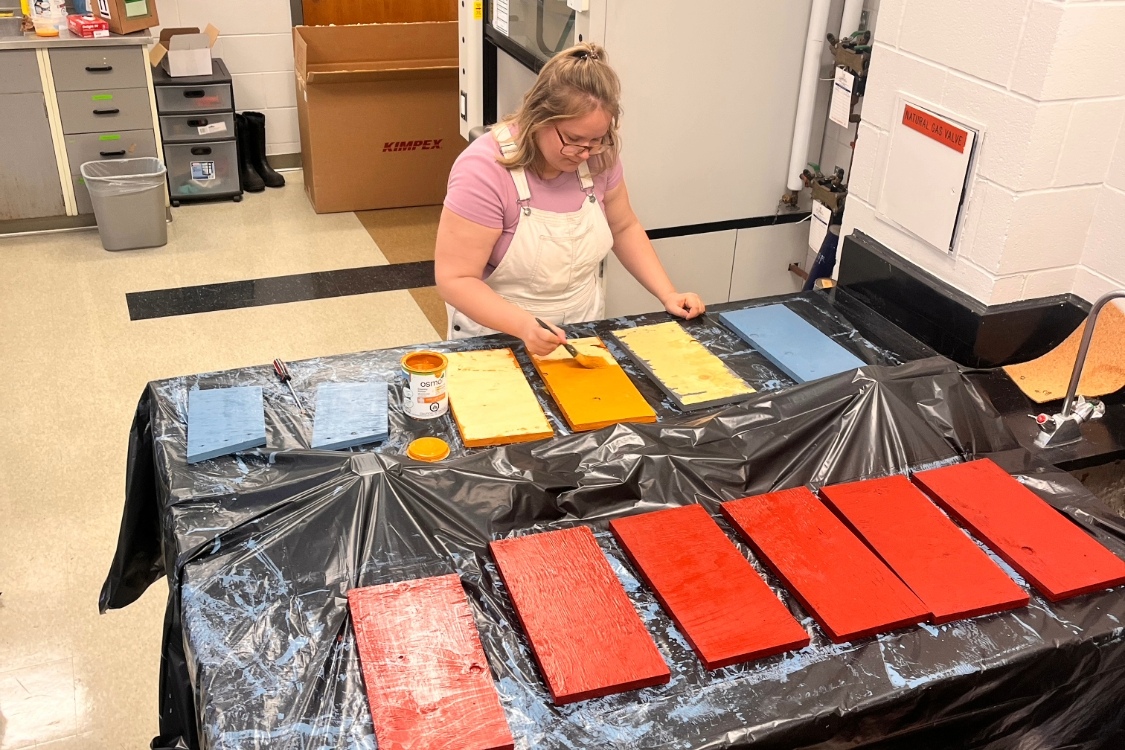
Patricia Rokitnicki painting nest boxes for the community nest box project. (Rachel Dow/University of Windsor)
“This year, we’re turning it into a nest building workshop — we are bringing the wood, building materials and fun paint colours so community members can come and build their own nest box.”
For her Arctic research and outreach, Rokitnicki has received a 2025–2026 Polar Knowledge Canada (POLAR) Scholarship valued at $10,000.
“Beyond Iqaluit, we hope these initiatives will result in the development and support of community-based monitoring, citizen science projects and co-created projects between researchers and additional Northern communities to strengthen relationships and support the stewardship of Arctic species,” says Rokitnicki.
Polar Knowledge Canada (POLAR) is responsible for advancing Canada’s knowledge of the Arctic, strengthening Canadian leadership in polar science and technology and promoting the development and distribution of knowledge of other circumpolar regions, including Antarctica.
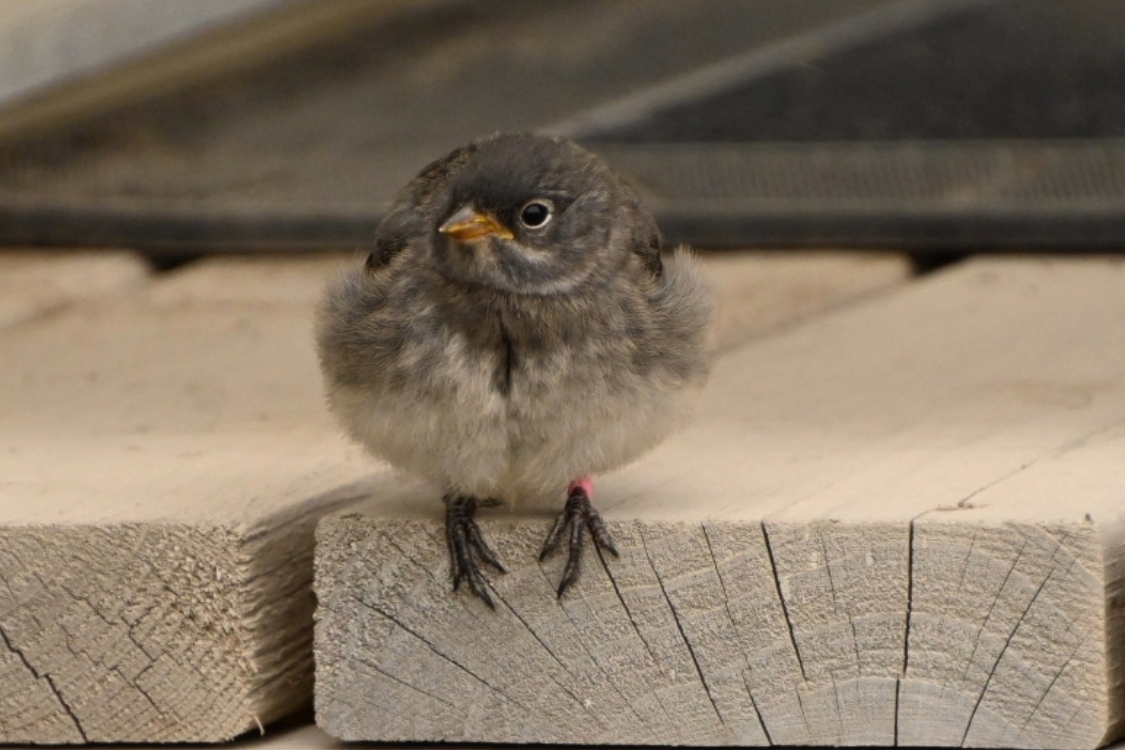
A fledgling snow bunting in Iqaluit. (Patricia Rokitnicki /University of Windsor)
