
 PhD Candidate Sarah Dobney conducting research on Kent Island. [DAN MENNILL/University of Windsor]
By Sara Elliott
What do sparrows’ songs reveal about love, parenting — and surprise conversations at the nest? Sarah Dobney is listening closely to find out.
Her passion for birdwatching took flight early and led her to the University of Windsor, where she’s now exploring the secret lives of Savannah Sparrows on a remote island in the Bay of Fundy.
Read on to learn how Dobney’s research is reshaping what we know about birds — and inspiring the next generation of young ecologists.
Why did you choose to come to UWindsor to do a PhD?
I chose to come to UWindsor for my PhD because my interests in breeding bird behaviour overlapped greatly with the research being conducted in Dr. Dan Mennill's lab. After meeting with Dr. Mennill, I was excited about the research we could conduct together, and it was clear that he would make an excellent advisor.
Have you always been passionate about birds?
I have been passionate about birds since I was 13 years old, when I was first introduced to the Long Point Bird Observatory. There, I was mentored by excellent ornithologists who got me hooked on birding. My first job was with Birds Canada as a seasonal field technician, which got me hooked on bird research. While I love birds in general, I am obsessed with searching for bird nests, and I am excited by any research opportunity that involves nesting behaviour.
Where do you conduct your field research?
I conduct my field research on Kent Island, a small island in the Bay of Fundy, off the southern coast of New Brunswick. This island is home to the Bowdoin Scientific Station, where research and art are the focus of all those who come to the island.
What are you focusing on in your research?
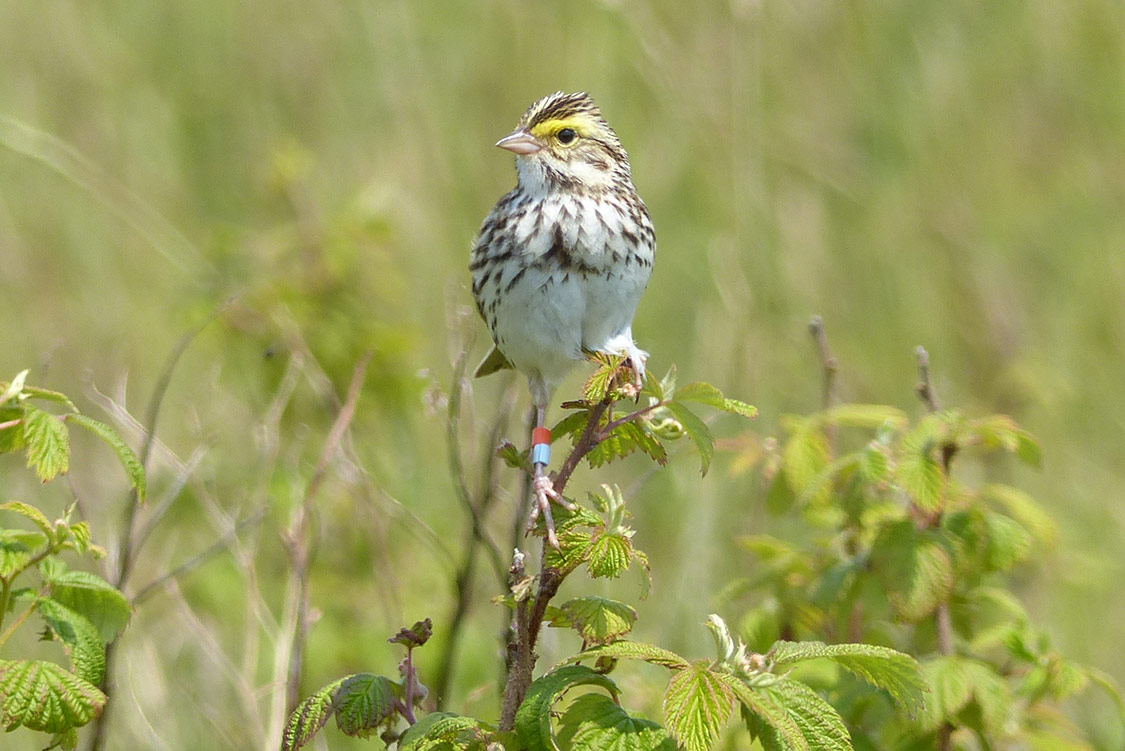
For my dissertation, I study the songs of Savannah Sparrows. Specifically, I want to know if any features of song relate to a male's reproductive success, and if any features relate to a male's parental behaviour. My goal with these two questions is to understand if female sparrows can predict which males in the population may possess good genes for their offspring, and which males may be good parents to better raise offspring. Additionally, I study which factors early in life influence a male's adult song quality. Specifically, I want to know if young sparrows are able to learn higher quality songs if they are exposed to a richer acoustic environment (where they hear more singers and/or higher quality singers) as nestlings.
What are the highlights of your findings?
So far the biggest highlights of my findings are findings that I did not expect. For example, I used video cameras to observe sparrow parental behaviour, and while watching videos of the parents at the nest, I found that the parents make an interesting vocalization to each other, one that I was not previously aware that this species produced. This observation led to a new addition to my research that was not originally part of my dissertation, and I am now investigating possible functions of this vocalization as well.
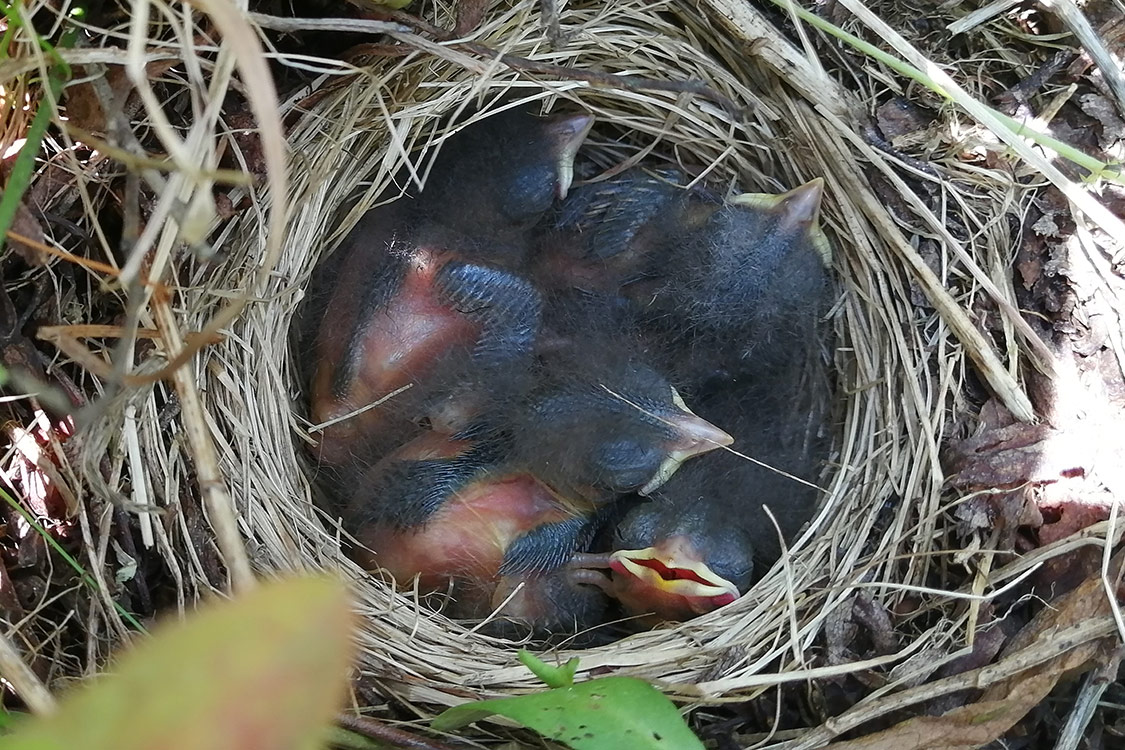
Aside from exciting, unexpected findings, it is really rewarding to see the product of all the hard work that went into data collection, both by myself and by everyone else who has added to the long-term project that my research is part of. We spend a lot of time collecting data, so it is amazing to see the outcomes of the questions we asked long before arriving to the field.
What’s it like working with undergraduate researchers?
Working with undergraduate researchers is one of my favourite parts of research. Each year, I get to conduct field work with students and work in the lab with students analyzing data we collected. Most of the time this is the student's first experience working in ecology, in a lab or field setting, and it is fun to experience their excitement for research in this field, and to watch them grow as young ecologists.