
 This “Get Swabbed!” stem cell registration drive is centred on Daphne, a Windsor-area mother and grandmother diagnosed with a rare blood cancer. A stem cell transplant is her only potential cure — and you could be the match she’s waiting for. (SUBMITTED BY KATELYN BEDARD BONE MARROW ASSOCIATION/University of Windsor)
By Victor Romao
Fill out a form and have your cheek swabbed. It’s only eight minutes of your time that could lead to saving a life. Daphne’s life.
The Windsor-area grandmother has been diagnosed with a rare blood cancer, and doctors say a stem cell transplant is her only potential cure.
More than 45 million potential donors on a worldwide stem cell registry have already been searched, but no suitable match has been found.
That urgent search continues on Tuesday, March 31 at the “Get Swabbed!” event at the CAW Student Centre from 9 a.m. to 3 p.m. Organizers, including the Katelyn Bedard Bone Marrow Association (KBBMA), the UWindsor Blood Club and Canadian Blood Services, hope to register at least 100 new potential stem cell donors.
The registration process is simple and accessible.
“Through the Canadian Blood Services’ stem cell registry, you swab your cheek and they check to see if there is a match for anyone in the global database in need,” said AJ, Daphne’s son. “You can either swab at a cheek swab event in person, register on your phone right there or order a free mail-in kit to your home.”
Accessible and easy stem cell registration has been at the heart of the Katelyn Bedard Bone Marrow Association, one of the event organizers, founded in memory of their daughter by alumni Bryan Bedard and his wife, Joanne.
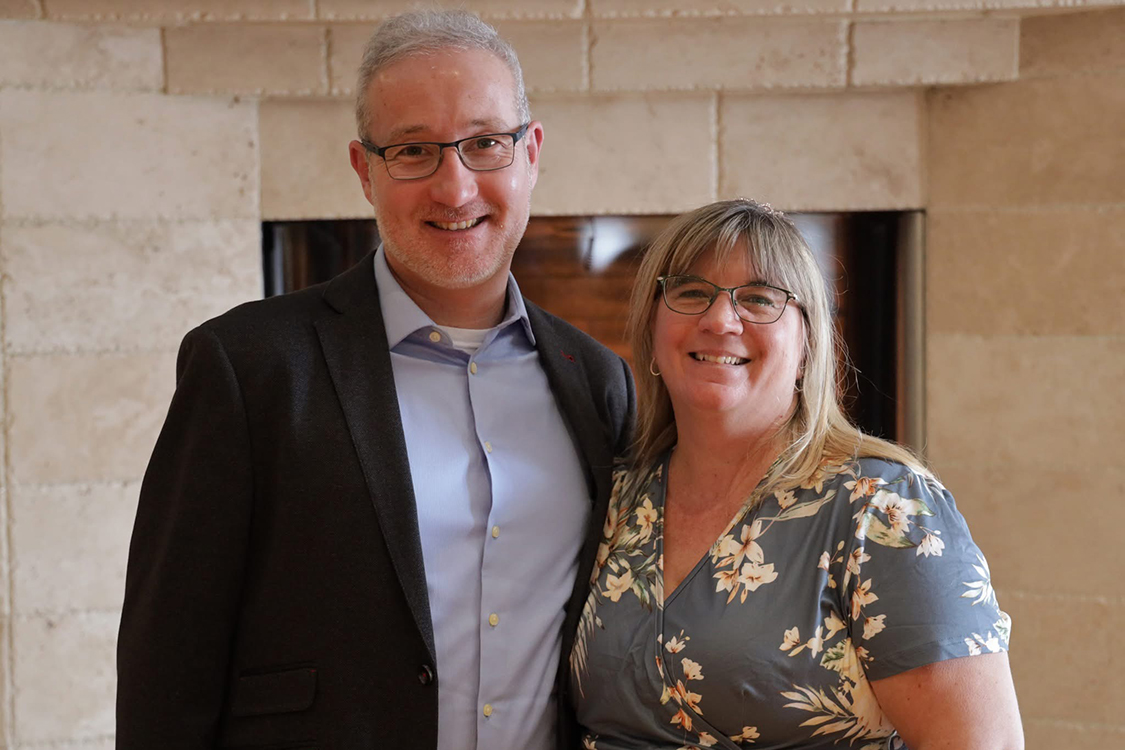
Bryan (BComp ’99) and Joanne Bedard (BA ’98), founders of the Katelyn Bedard Bone Marrow Association, are helping cohost a stem cell donor registration drive at the University of Windsor in support of Daphne, a Windsor-area mother searching for a life-saving match. (SUBMITTTED BY JOANNE BEDARD/University of Windsor)
At the age of two, their daughter Katelyn was diagnosed with Leukemia and underwent a year and a half of treatment. After doctors initially believed she was in remission, the cancer returned quickly. A stem cell or bone marrow transplant was her only chance to survive.
“We were all tested — my wife, our son and I — but none of us were a match,” said Bedard. “Doctors then turned to the world registry, but unfortunately no suitable match was found.”
Despite efforts to encourage more people to register as donors, time ran out and Katelyn died at three and a half years old.
“We wanted to do whatever we could so other families wouldn’t have to go through what we did,” said Bedard. “That’s why the association was created.”
In Canada, donor registration is open to those aged 17 to 35, but registered donors remain eligible to be called upon later in life, a factor that can still make a critical difference.
“The data points to younger being better, but if someone is a 10-out-of-10 match and is older, it could easily be better than a nine-out-of-10 with a bad mismatch,” said AJ.
Bedard said donor matching is highly specific and influenced by genetics and ethnicity, which is why registries continue to face shortages among certain populations.
“That’s why universities are such important places to recruit,” he said. “You’ve got young people and a lot of diversity in one place.”
At the March 31st event, participants will scan a QR code, complete an online registration form and provide a cheek swab, which is mailed for testing. The process is painless and non-invasive.
“People can do it all on the spot,” said Bedard. “That immediate call to action makes a big difference. Getting on the registry means you could save a life.”