
New archive traces Ojibway Prairie’s history of close calls
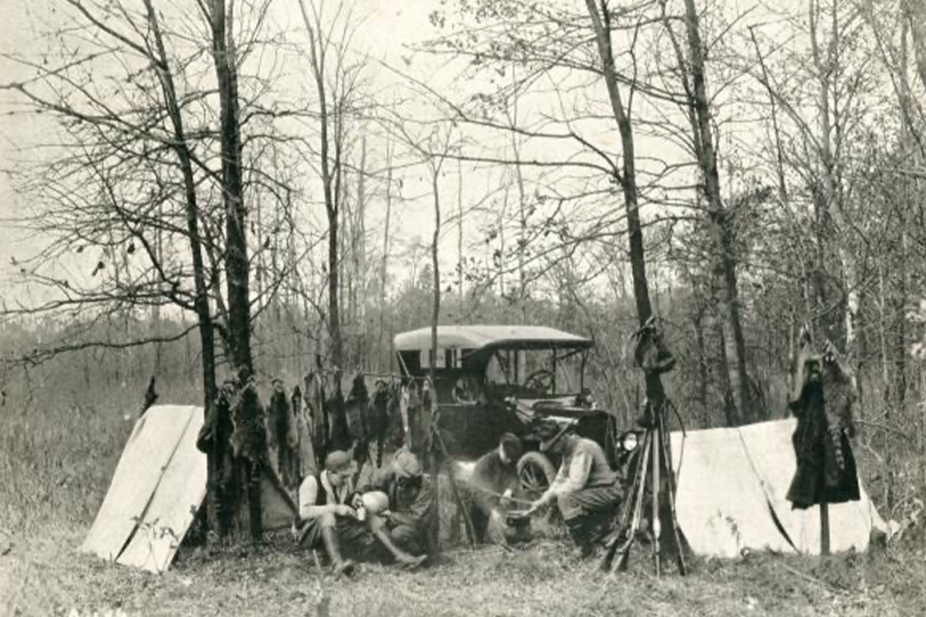 A raccoon hunting party gathers west of Windsor, likely in Yawkey Bush, circa 1925. (Photo courtesy of the Tony Techjo Collection, Leddy Library, SWODA/UNIVERSITY OF WINDSOR)
By Lindsay Charlton
Home to more than 4,000 species — some endangered — the Ojibway Prairie Complex is one of the most biologically diverse landscapes in Canada.
Its protection, however, came partly by chance.
Now a nature reserve and the largest natural area in Windsor, the complex is also being considered for inclusion in a national urban park. The land came close to industrial development several times throughout its history.