
By Shawn Micallef
One of the soundest, sustainable and greenest building practices is to renovate older buildings rather than build from scratch. At the same time, when a building reaches a half-century, it’s time for a refresh and there is often an urge to build something new. In thinking about the future of the Ron W. Ianni building, the Faculty of Law has found the right balance. The school has stood at University and Sunset Avenues since 1970, anchoring this corner of the University of Windsor campus. Its imminent renovation isn’t going to change that, as it remains a building with “good bones,” but the transformation will open the school up to the rest of campus and the city itself.
Originally designed as a different kind of law school, one that facilitated a people-centred approach to law which considered law as a social process, the renovation will allow that tradition to continue for the next fifty years as the building will become more flexible and adaptable to modern teaching techniques. Finding the right architects who can work with an existing building is no small task. After a competitive bidding competition, the firm selected is Toronto-based Diamond Schmitt Architects. Apart from creating landmarks like the Four Seasons Centre for the Performing Arts in Toronto and New York’s Lincoln Center, the firm has been working on updates of projects of similar vintage and style to the Ianni building, including the University of Toronto’s Robarts Library and the National Arts Centre in Ottawa.
Both of these latter projects updated midcentury, public buildings designed in the brutalist style, an architecture movement that is being rediscovered and admired and, ideally, brought up to contemporary standards with sympathetic renovations. In 1970, the Ianni building was opened just a year after the school was created, and with its exposed expanses of concrete, solid walls and lofty interior spaces it seemed to match the institutional weight and gravitas that was being aspired to at the time. Brutalism, though, is sometimes criticized today for being too dark and heavy, and Windsor Law no longer has to worry about such early aspirations, so it’s an ideal time to open the building up a bit.
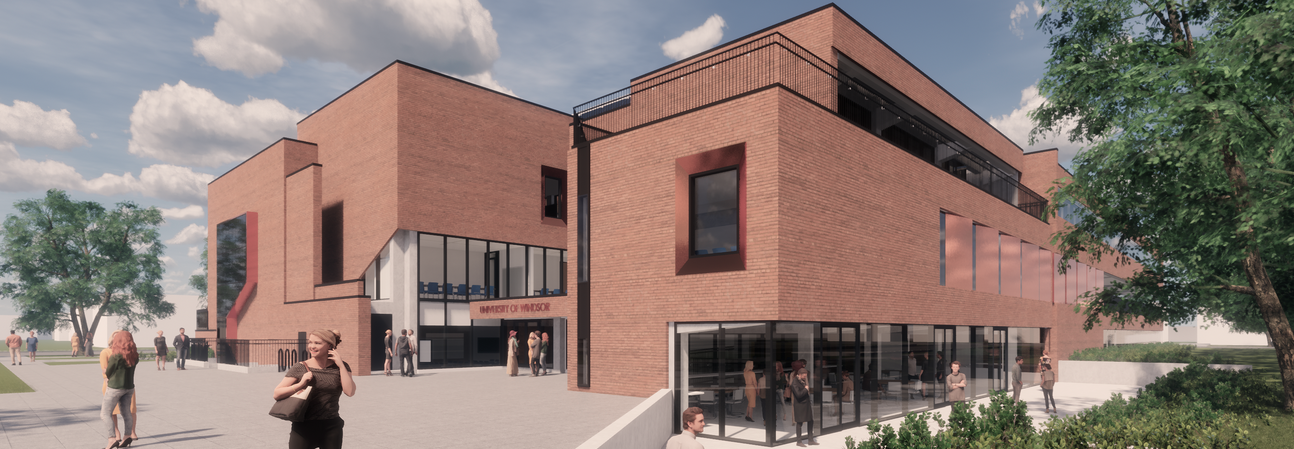
To this end, the architects consulted with students, faculty and staff to understand what is needed today and have come up with a plan that brings natural light into the building and makes it much more accessible. Most dramatic is the moot court, an already impressive place that was ahead of its time with modular walls that created smaller rooms when needed and chalkboards that could be summoned mechanically from the floor. Parts of exterior walls will be removed, allowing for panoramic views through large windows on the north and west sides that look out onto the parklike campus and to the Ambassador Bridge beyond, reminding those inside of the school’s unique international position and relationship with the United States. Passersby, whether in a car or on foot, could always get a glimpse of a student studying in a carrel by a library window, but now they’ll be able to see advocacy, teaching and learning at work too.
The fashion for brutalist windows in 1970 was often to provide oblique, reflected light and encourage users to focus within and not distract from serious study with views of the outside world. While the form of the building will remain intact and its “footprint” will not expand, window incisions, framed in copper, will be made into a number of currently blank walls that will allow light into parts of the school that heretofore were somewhat dark. New entrances will also make the building much more porous and welcoming. Some areas that are currently outdoors but underused, like the ground floor patio space on the southwest corner facing the Leddy Library, will be enclosed in glass, further expanding interior spaces and allowing them to be used during all four seasons. New approaches to the entrances will be landscaped in, further connecting the school with the rest of campus.
One of the most unique parts of the original design was the central communal area known formally as the “lower agora” but colloquially as the “lower pit”. Lower it was as it was sunken, requiring a flight of steps to access. While dramatic, the space was hardly accessible by today’s standards and over the years acquired strips of yellow warning tape to alert people of the change in elevation. The new agora will be on a level floor, allowing everyone to gather in it, staying true to Windsor Law’s commitment to being a people-centred and inclusive law school. The walls of the room above the agora will be removed as well, creating a clinical and experiential learning zone, a multi-floor experience where students and faculty can see other parts of school activity, creating a sense of being in a hive of activity rather than a place where things only happen in enclosed rooms, though there will still be some of those. With further wall punctures, even more light will penetrate the agora than does now, turning it into the bright centre of the school.
This transformation will make an old building feel brand new again while retaining enough of its original style and gravitas to remind everyone that Windsor Law has been around for a half-century and is ready for what comes next.