
 Dr. Mike McKay (right) explains how to use collection kits to Canada Coast Guard officer cadets Raphaël Cere (left) and Jack Hogan (middle). (MIKE WILKINS/University of Windsor)
By Sara Elliott
With Lake Erie locked in its heaviest ice cover in more than two decades, a Canadian Coast Guard icebreaker has become an unlikely research platform for University of Windsor scientists.
As the CCGS Vincent Massey breaks through thick ice, its crew is collecting water samples to help researchers understand how winter conditions shape the lake’s ecosystem.
Dr. Mike McKay, director of the Great Lakes Institute for Environmental Research (GLIER), leads a winter science program examining how ice cover affects Lake Erie. His team has been studying winter conditions since 2007, but accessing the lake during peak ice season is often challenging.
This winter, McKay and his team partnered with Canadian Coast Guard personnel aboard the CCGS Vincent Massey to retrieve water samples from beneath the ice.
“There are no dedicated research vessels to support winter science in the Great Lakes,” McKay said.
“Fortunately, joint ice-breaking operations by the Canadian and U.S. Coast Guards provide safe platforms for opportunistic sampling during the winter season.”
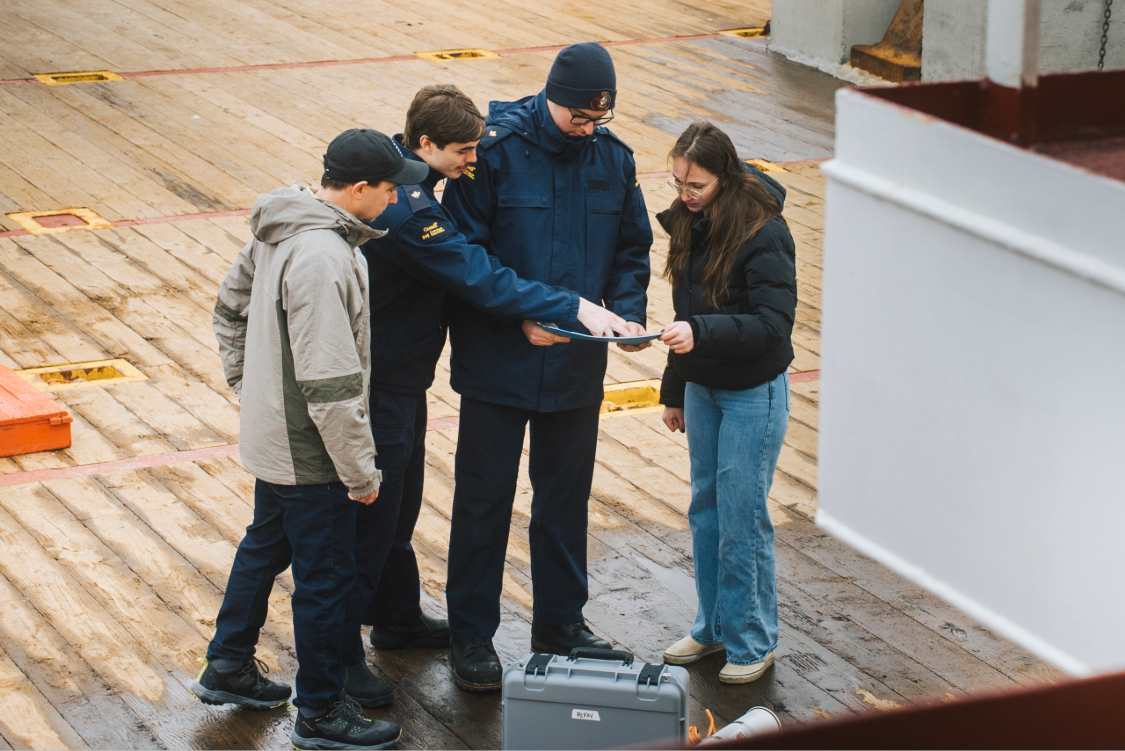
The scientists delivered sampling equipment while the icebreaker was moored at Dieppe Park in downtown Windsor. McKay and two team members trained officer cadets on how to collect and handle the samples.
This year presents a rare research opportunity. Lake Erie is currently more than 95 per cent frozen — the highest level of ice coverage in more than 20 years.
“Consistent with a changing climate, we’ve seen more frequent low-ice years on Lake Erie,” McKay said. “With Great Lakes winter science still emerging as a field, a year like this helps establish a baseline to evaluate change and better predict what the future may hold.”
Most of the lake froze rapidly over an eight-day period in January. McKay noted that extensive ice cover can help protect shorelines from erosion and reduce lake-effect snow.
Because commercial shipping continues through winter, icebreaking vessels remain active on the Great Lakes. The collaboration allows researchers to collect data while the CCGS Vincent Massey carries out its regular duties breaking ice jams and escorting commercial vessels.
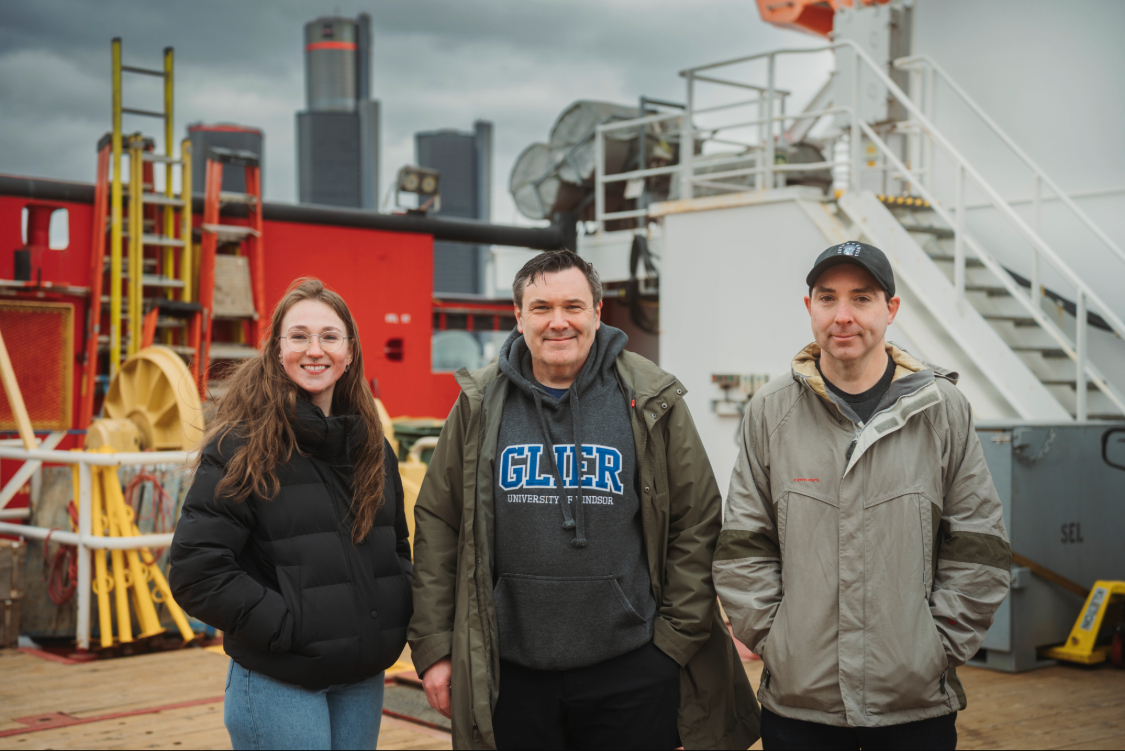
“Our previous work has shown the lake remains very active during winter,” McKay said.
“Expansive blooms of algae — the base of the food web — form under the ice and likely play an important role in supporting the lake’s fishery. A long-term goal is to better understand how ice cover influences the Lake Erie food web and what the consequences of ice loss may be.”
The project is supported by McKay’s NSERC Discovery Grant as well as funding from the Great Lakes Restoration Initiative, awarded to the University of Windsor and the Cooperative Institute for Great Lakes Research through a NOAA cooperative agreement with the University of Michigan.