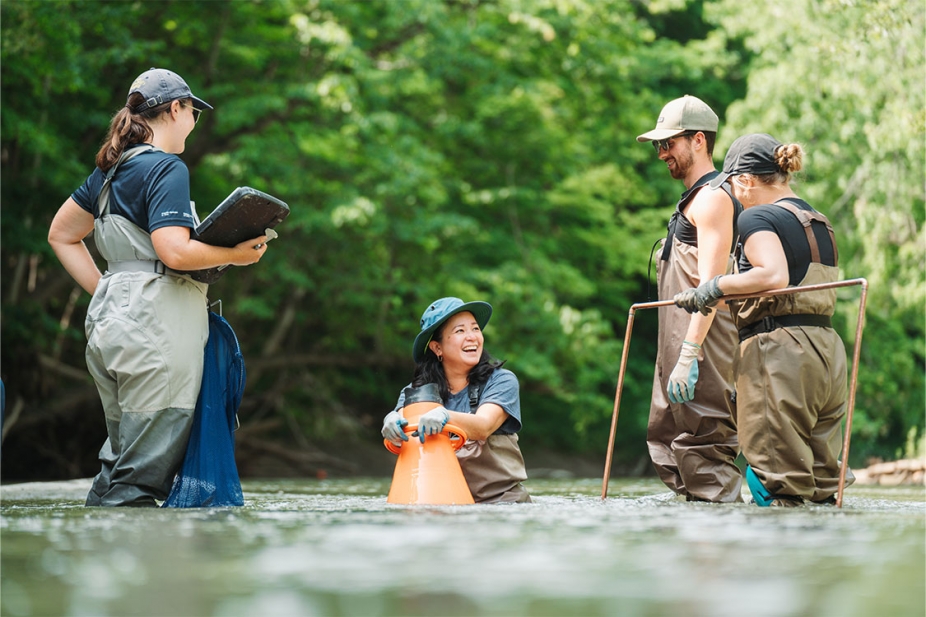
 University of Windsor researcher Dr. Catherine Febria, centre, conducts field work with students in the Sydenham River as part of her freshwater restoration research. (MIKE WILKINS/University of Windsor)
From tracking fish across the Great Lakes to restoring the streams that connect land, water and communities, University of Windsor researchers Dr. Aaron T. Fisk and Dr. Catherine Febria are advancing understanding of how freshwater ecosystems are understood, managed and protected.
Their work has now earned national recognition from the Royal Society of Canada.
Fisk, professor and Tier 1 Canada Research Chair in Changing Great Lakes Ecosystems, has been elected a Fellow of the Royal Society of Canada in recognition of his contributions to aquatic research and leadership.
— Published on Sep 9th, 2026
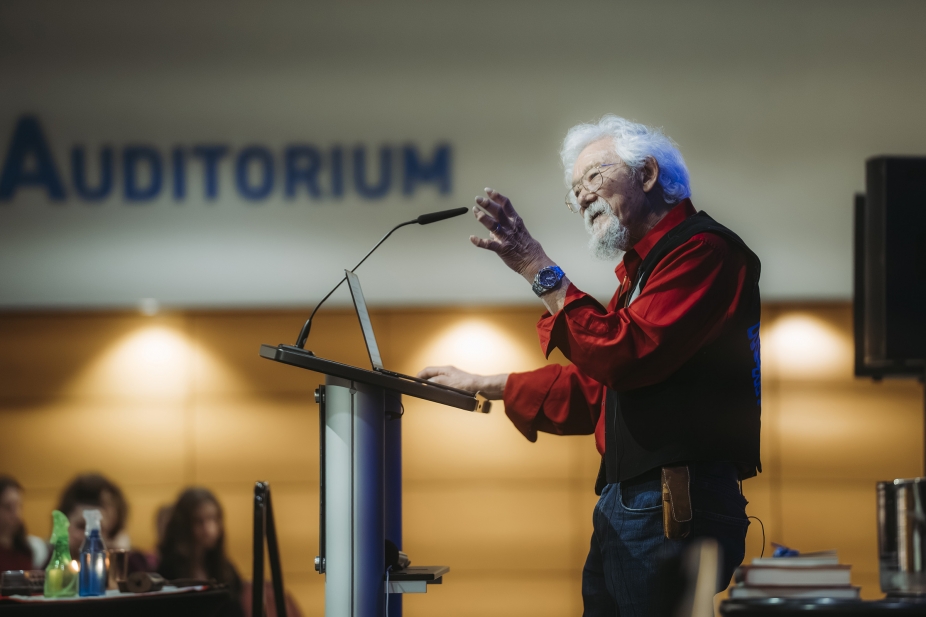 David Suzuki chronicles his journey from a childhood marked by wartime internment to becoming a globally respected science communicator and environmental advocate in his latest book, latest book titled Lessons from A Lifetime: 90 Years of Inspiration and Activism. (PHOTO BY MICHAEL WILKINS/University of Windsor)
By John-Paul Bonadonna
The University of Windsor welcomed one of Canada’s most influential voices in environmental science and advocacy, Dr. David Suzuki, for a wide-ranging and candid evening that challenged audiences to confront the realities of climate change and their own role in it.
Hosted by the Faculty of Science, the School of the Environment and the Healthy Headwaters Lab, An Evening with Dr. David Suzuki drew a sold-out audience from across campus and Windsor-Essex.
— Published on May 6th, 2026
 Dr. Mike McKay (right) explains how to use collection kits to Canada Coast Guard officer cadets Raphaël Cere (left) and Jack Hogan (middle). (MIKE WILKINS/University of Windsor)
By Sara Elliott
With Lake Erie locked in its heaviest ice cover in more than two decades, a Canadian Coast Guard icebreaker has become an unlikely research platform for University of Windsor scientists.
As the CCGS Vincent Massey breaks through thick ice, its crew is collecting water samples to help researchers understand how winter conditions shape the lake’s ecosystem.
— Published on Feb 25th, 2026
 Riders cruise along the Chrysler Canada Greenway, part of a growing network of trails that will soon span two nations. A new report co-authored by UWindsor visiting scholar John Hartig explores how the upcoming Gordie Howe International Bridge can spark cross-border trail tourism and strengthen ties between Windsor and Detroit. (TOURISM WINDSOR ESSEX PELEE ISLAND/The University of Windsor)
By Sara Elliott
With every turn of their pedals across the Gordie Howe International Bridge next year, cyclists will be forging new paths — linking two cities, two countries and a shared story of place and possibility.
A new report, co-authored by University of Windsor visiting scholar John Hartig, explores how the region can harness this opportunity to grow cross-border trail tourism and build connections through shared experiences.
— Published on Jun 17th, 2025
 Grad student Olivia Galloway photographs the progress of juvenile sturgeon before their release into Great Lake waters.
Lurking in the depths of the Great Lakes are massive “living fossils” that have been a vital part of the ecosystem for millions of years, but due to human intervention, have long been considered at risk.
That’s why Master of Science student Olivia Galloway is focusing her research on lake sturgeon. These prehistoric, scaleless fish are the largest freshwater fish in Canada, growing up to two metres long and weighing up to 200 pounds. She is working to improve their environment and help reintroduce these “dinosaurs” back into their habitats.
— Published on Jun 18th, 2025

 University of Windsor researcher Dr. Catherine Febria, centre, conducts field work with students in the Sydenham River as part of her freshwater restoration research. (MIKE WILKINS/University of Windsor)


