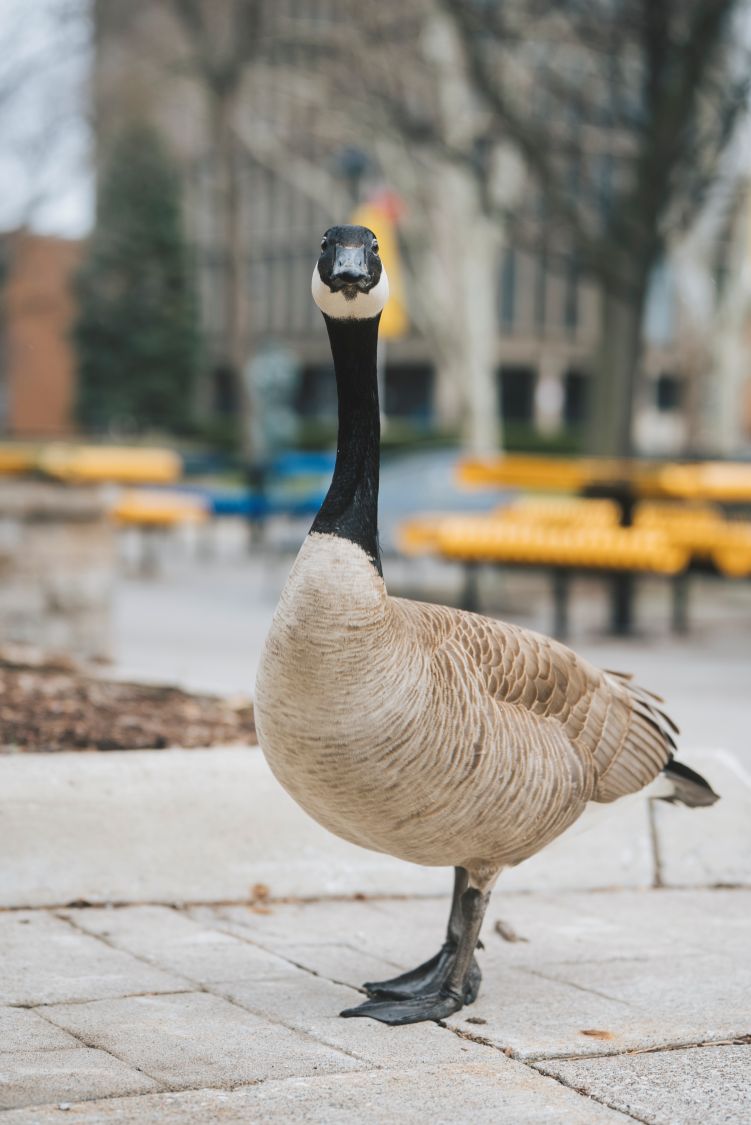
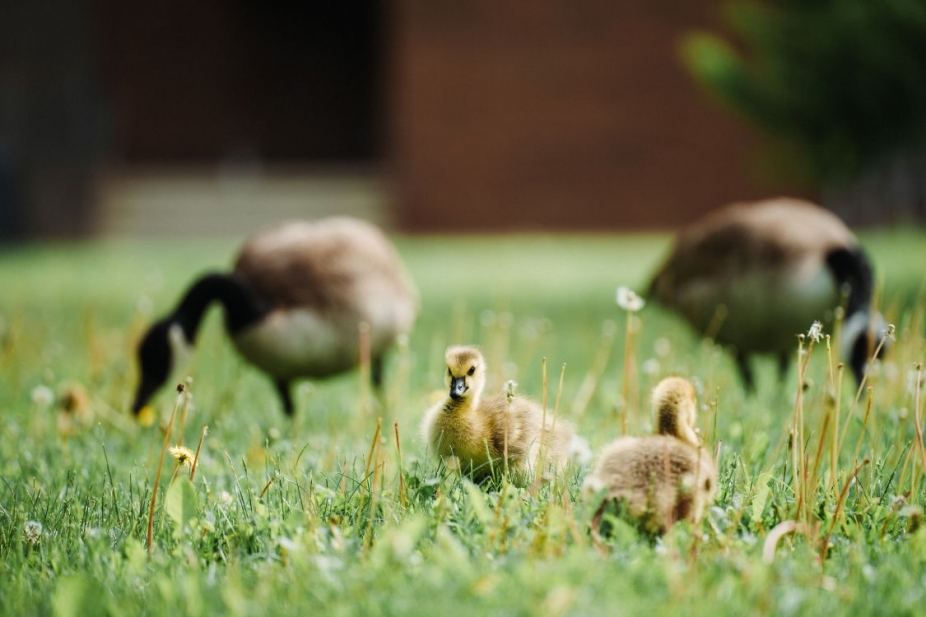
 Springtime brings breeding season for Canada geese on campus (CHERRY THERESANATHAN/University of Windsor)
By Kate Hargreaves
While warmer spring weather seems to be slow to arrive this year, one of the surest signs of spring on campus is the often-noisy activity of Canada geese.
Whether honking from the rooftops of tall buildings or nesting in the grass — or occasionally hissing at a passer-by who comes too close — Canada geese are ubiquitous at the University of Windsor.
Professor of ornithology and avian expert Dr. Dan Mennill explains the changes that springtime brings to goose behaviour and how we can all peacefully co-exist with our goose neighbours this season and throughout the year.
“In fall and winter, we are accustomed to seeing Canada geese in groups,” Mennill explains. "They create an army of lawn mowers for our campus and surrounding green spaces. They may even stop traffic as their flocks cross Riverside Drive.”
In the springtime, these groups break up, and geese pair up for breeding season.
“A sure sign that spring is going to arrive is when Canada geese are seen strutting around campus in pairs,” Mennill says.
“Many of the geese that over-wintered on our campus head north to breed. Others will remain here and reproduce on campus.”
For those that stay local, springtime — and with it the breeding season — can increase territorial behaviour among geese.
“It is not uncommon for geese to arch their necks and hiss at passersby,” Mennill explains.
“As long as we keep our distance, they are not likely to physically rush at people.”
He advises giving the geese their space, especially during springtime breeding activities, to avoid any unnecessary confrontations.
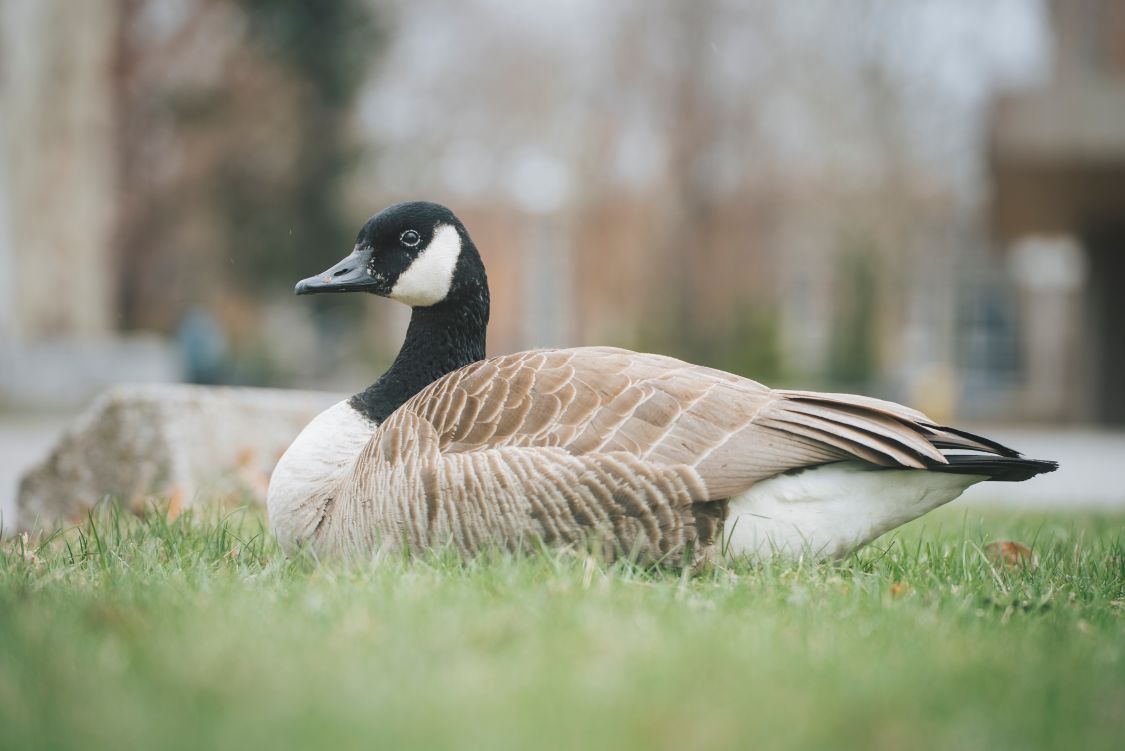
Geese have good reason to be on edge during breeding season, looking to keep their young safe from nest predators such as raccoons and foxes. This is why the flat roofs of tall campus buildings become prime nesting areas.
These nesting habits sometimes give campus community members pause, but there is no reason for concern.
Mennill says he often hears from people on campus that they are worried about baby geese getting stuck on rooftops or being injured trying to get down to ground level.
“It may seem alarming when the parents guide their young off the roofs where they nest, but young waterfowl are quite adept at falling great distances without injury,” Mennill explains.
He adds that while Canada geese are precocial, meaning the young can leave the nest immediately once they hatch, they remain with their parents for a time to learn necessary survival skills.
“The parents will guide the goslings around for several weeks thereafter, teaching the young animals to find food and defending their young from predators,” says Mennill.
These clusters of fuzzy baby geese are part of the biodiversity of our campus, which Mennill says we are lucky to have.
“A healthy environment is one where humans and other wild organisms can co-exist. I think of our campus as a healthy urban ecosystem, where Canada geese, eastern grey squirrels, songbirds and peregrine falcons can coexist with our campus lifestyle.”