
 Graduate students visited the World Anti-Doping Agency as part of Dr. Scott Martyn's Olympics-focused graduate course (S. MARTYN/University of Windsor)
Guest submission by Dr. Scott Martyn
Having studied the 2026 Winter Olympic and Paralympic Games (Milano Cortina 2026) held in Milan and Cortina d'Ampezzo, Italy this past semester, five University of Windsor graduate students from the Faculty of Human Kinetics received an Olympic-calibre experience of their own last month.
The group, led by UWindsor professor Dr. Scott Martyn, travelled to Toronto, Montreal and Lake Placid, New York, to experience the modern Olympic movement first-hand.
The group visited the Hockey Hall of Fame to view the new “Olympic '26 Exhibit” featuring artifacts from the 2026 Milano Cortina Winter Games; the World Anti-Doping Agency to discuss anti-doping policies, testing procedures and global enforcement; the Canadian Olympic Committee’s Montreal office to meet with Olympians and staff; tour the US Olympic & Paralympic Training Center and Olympic Museum; and meet those connected with staging the 1980 Winter Olympics in Lake Placid.
They also visited the home of the 1976 Summer Olympic Games, Montreal’s Olympic Park, and the Lake Placid Legacy Sites from the 1932 and 1980 Winter Games, including the Herb Brooks Arena, home of the 1980 “Miracle on Ice” hockey game, which saw the United States men’s team beat the favoured Soviet Union. Students also stood atop HS-128, often called the 120-metre or 128-metre ski jump, a ‘once-in-a-lifetime’ opportunity for most.
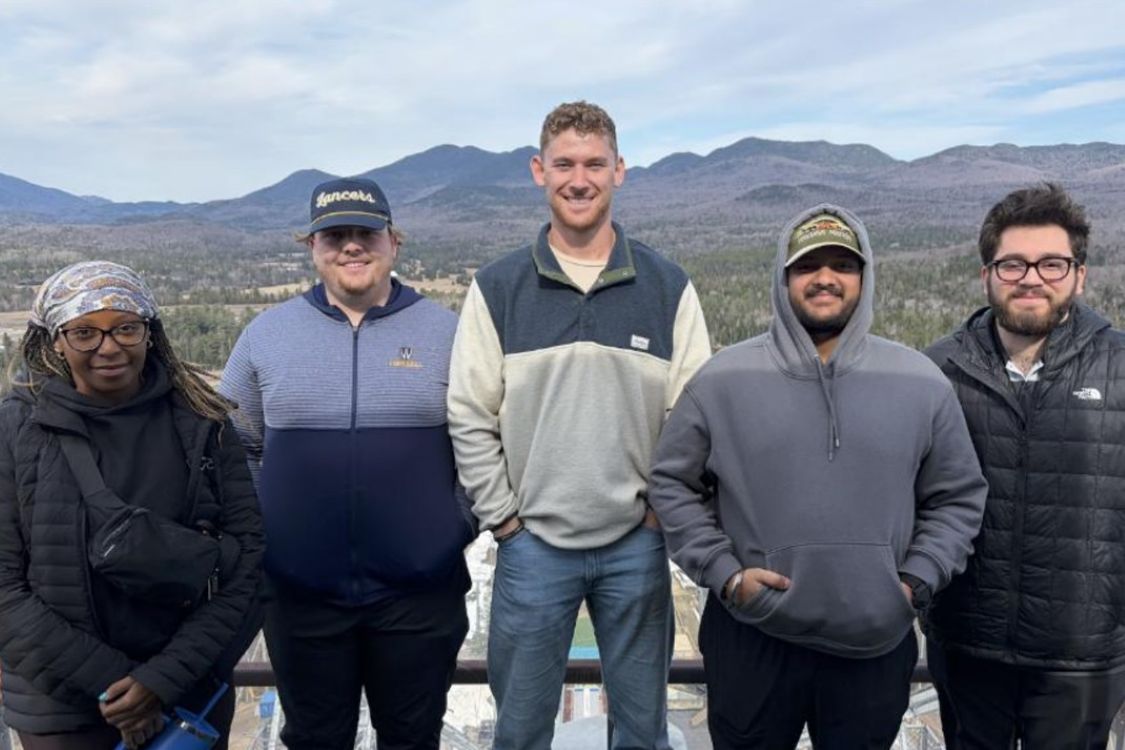
The trip is part of Dr. Martyn’s course, “Crises, Politics and Commercialism in the Modern Olympic Movement,” and is offered annually to graduate students in the Master of Sport Management and Leadership (MSML) program. The course explores persistent issues facing the modern Olympic movement and places a heavy emphasis on experiential learning.
“I am a true believer that experiential learning — learning by doing and reflecting — deeply shapes an individual’s worldview more significantly than relying entirely on traditional classroom instruction by creating personal, emotional connections to knowledge,” explains Martyn.
“This approach transforms abstract theories into lasting personal beliefs through real-world application, reflection, and engagement with unique and diverse perspectives.”
Students agree.
“This trip was a remarkable experience and provided an opportunity to see firsthand people working within the sports industry to produce the sports that fans love,” says Benjamin McJannet.
“Taking what we have learned in the classroom this semester, and getting to see it face-to-face, allowed me to ask questions and gain a better understanding of the world that just wouldn’t be possible in the classroom.”
The trip’s reputation in the faculty already has students asking about next year.
According to Martyn, “that anticipation is the foundation of a great learning experience at the University of Windsor. Providing a meaningful experience often means shifting from simply covering content to creating opportunities for students to connect with the material, each other, and the environment.”