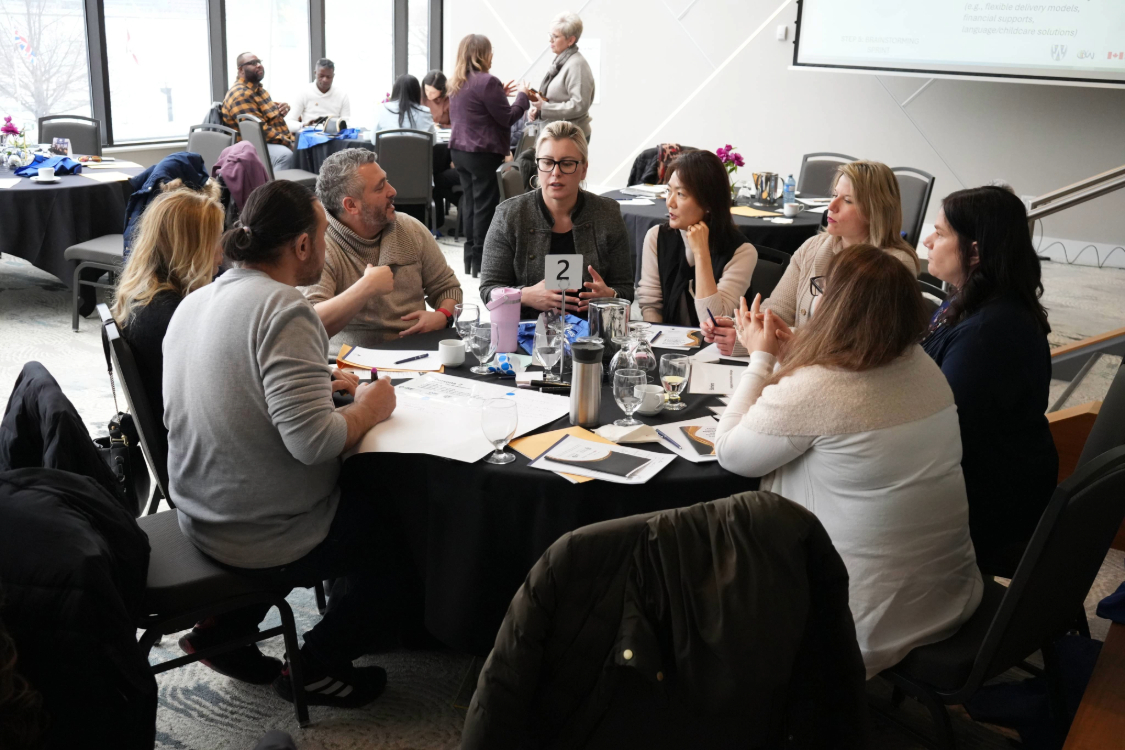
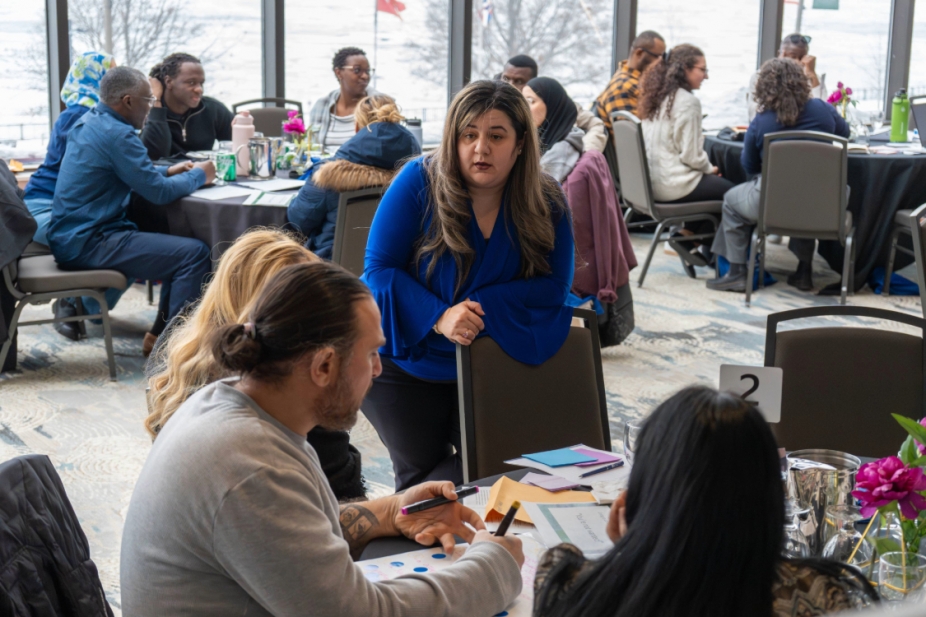
 School of Social Work professor Dr. Riham Al-Saadi hosted the forum, Approaches to Integrating Immigrants & Refugees 2.0, bringing together community organizations, service providers and practitioners for a day of learning about inclusive approaches to newcomer integration in Windsor-Essex. (Photo courtesy of Riham Al-Saadi/ University of Windsor)
By Lindsay Charlton
What began as an icebreaker — picking up a marble for each statement that applied and weighing how light or heavy a bag felt — opened a frank discussion about power and privilege.
“The best assumption is usually that if you are coming from a dominant background, your bag is lighter,” School of Social Work professor Dr. Riham Al-Saadi shared. “This led to emotional reflections from those with lighter bags and conversations about what they can do to support.”
Al-Saadi opened her forum, Approaches to Integrating Immigrants & Refugees, with a reflection on this exercise that took place in 2024, the first in an event series on Embracing Anti-Racism to encourage reflection on systemic inequities.
Participants responded emotionally to the exercise, she added, with some expressing guilt about having a “lighter bag,” while others with heavier bags described feeling the weight of their experiences as “heavy on their heart.”
“That’s how we share the emotional impact,” Al-Saadi said.
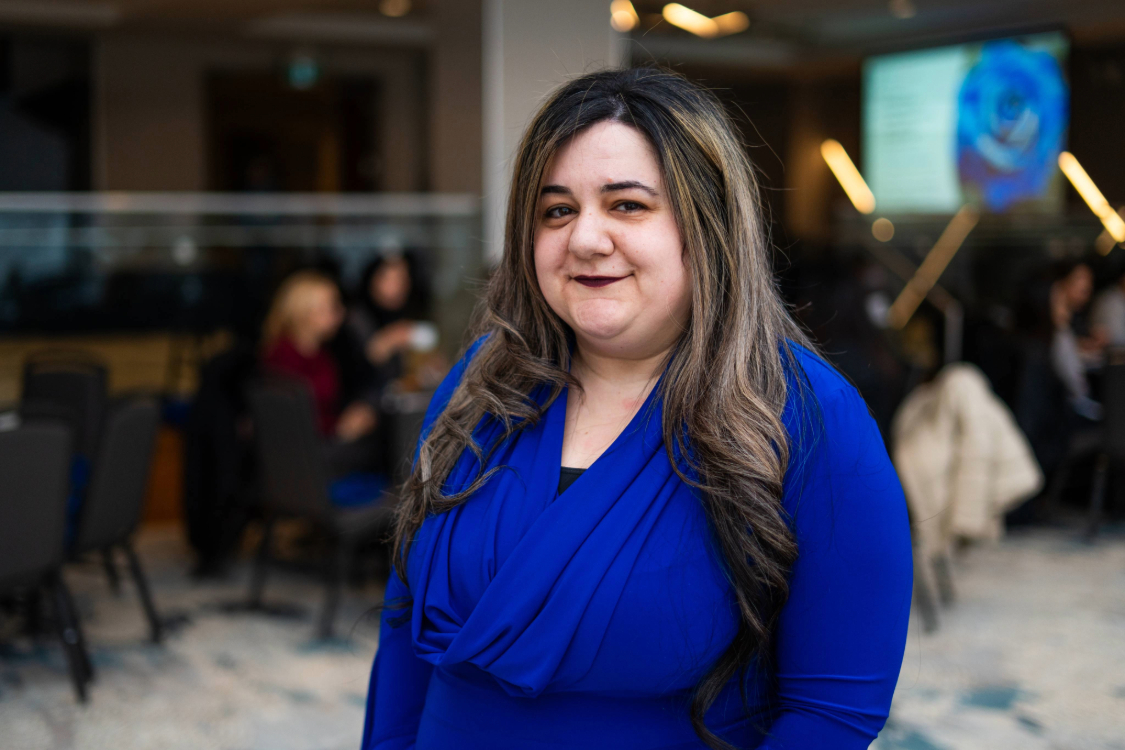
The full-day knowledge-sharing event brought together community organizations, educators, service providers and practitioners, along with faculty and students in the School of Social Work, committed to advancing equitable and inclusive approaches to newcomer integration in Windsor-Essex.
“I’ve been working in the immigrant and refugee settlement sector for about 10 years now. As an immigrant myself, I’m really driven to work within equity, diversity, inclusion and decolonization (EDID) initiatives and anti-racism approaches,” Al-Saadi said.
“I wanted to see what I could best do collaboratively with our community to support our immigrant-refugee population. My focus with this event was to bring my colleagues together to define what EDID means and what anti-racism means.”
Building on an event held in 2024, this forum focused on knowledge exchange and practical engagement around power, privilege, anti-racism and lived experience.
It was supported by the University of Windsor’s Office of the Vice-President, People, Equity and Inclusion (VPPEI) through the Diversity, Indigeneity & Anti-Racism Fund (Article U) and delivered in collaboration with the Windsor-Essex Local Immigration Partnership (WE LIP).
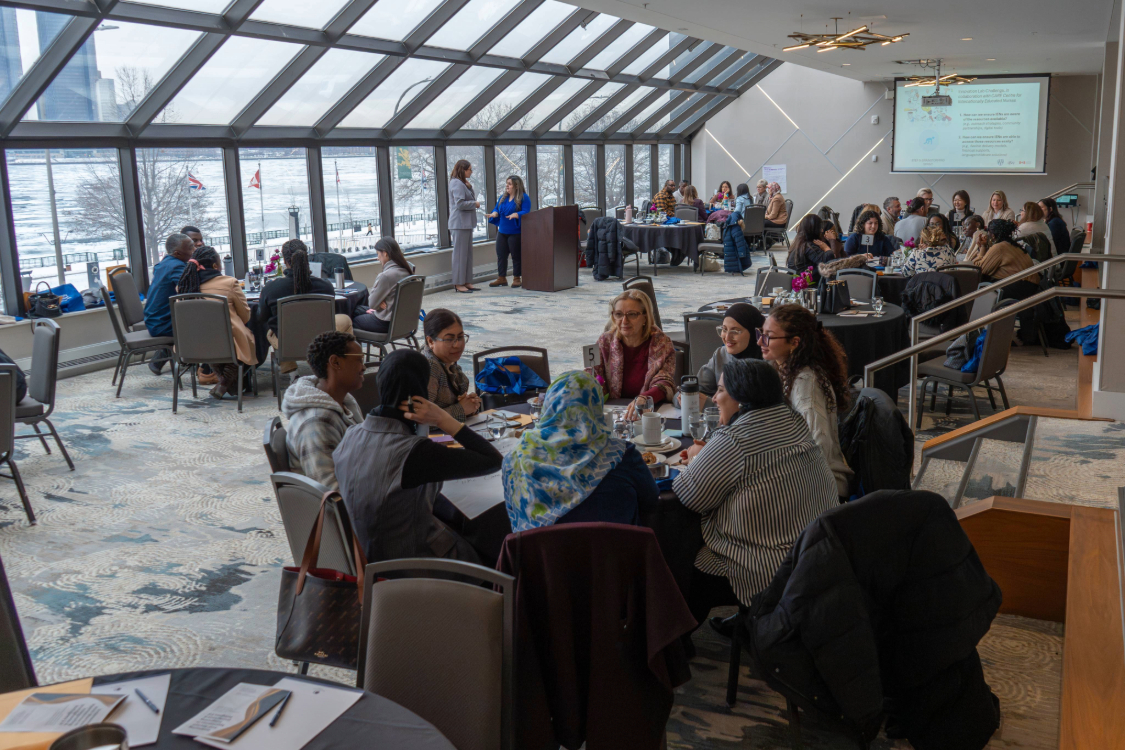
“The day started with dissemination, where I talked about what happened in year one. I did some data analysis with students and went back to look at what the sectoral tables were saying, themes, etc.,” Al-Saadi said.
The sectoral tables included community-based, health or mental health, post-secondary education and settlement, and how they define equity, diversity, inclusion and decolonization.
She said the session combined reflection with practical discussion on what it means to be anti-racist, noting that self-assessment must come first.
“There’s a hunger for liberation, for knowing who I am before I’m able to serve and actually be anti-racist, anti-oppressive and supportive to diverse clients,” she said.
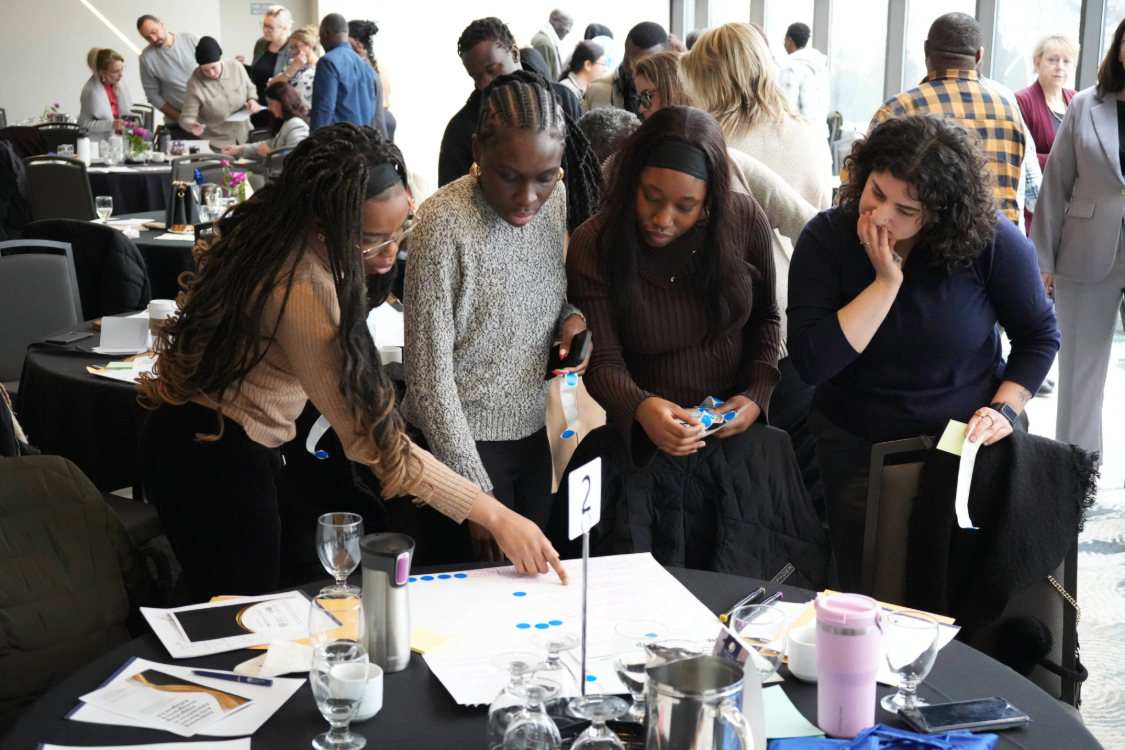
Along with the marble exercise, attendees took part in problem-solving discussions focused on barriers facing certain immigrant groups, including internationally educated nurses, and a “calling in and calling out” activity.
“It is a well-known exercise for identifying microaggressions and aggressions. Even calling out the term ‘micro,’ noting that sometimes it’s not really micro and that it can belittle the experience,” she said.
The forum concluded with messages to social work alumni. Al-Saadi asked participants what they would tell someone new to the profession about working with immigrants and refugees through an intersectional framework.
Al-Saadi hopes to continue this community-based work, with the next phase focusing on the needs of specific communities.
“I’m reaching out to different groups and have proposed an official partnership with the Francophone community through the Centre communautaire francophone Windsor-Essex-Kent (CCFWEK), and I’ve reached out to the South Asian Centre of Windsor to help conduct needs assessments for that community, which I’m really looking forward to,” she said.
“I will focus on more action-based work on how to approach cultural humility when working with different populations.”