
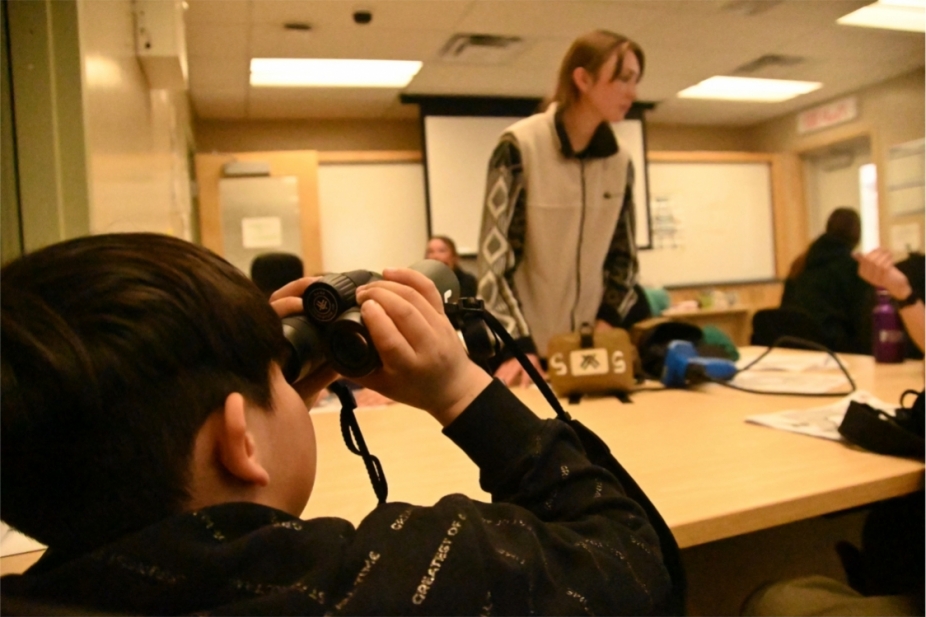
 Graduate student Angelina Kemp delivering place-based environmental science materials to Iqaluimmiut youth. (Courtesy of Patricia Rokitnicki/University of Windsor)
By Sara Elliott
In Iqaluit, Nunavut, University of Windsor researchers are helping young people turn the birds around their homes into a gateway to Arctic science, conservation training and community-based wildlife monitoring.
The team received a $172,200 three-year grant for the project through the Natural Sciences and Engineering Research Council of Canada’s (NSERC) PromoScience program.
Led by biologists Dr. Oliver Love and Dr. Christina Semeniuk, along with adjunct professor Dr. Emily McKinnon, the project focuses on an Arctic songbird, the snow bunting, to introduce students as young as six to hands-on biodiversity monitoring.
“This is about using local birds as a means to engage Iqaluimmiut youth in gaining skills in scientific monitoring and research in STEM that can contribute to the stewardship of wildlife on their lands into the future,” says Love.
McKinnon adds “Nunavummiut youth currently have few opportunities to engage in local biodiversity conservation learning and training.
“And yet you walk out the door, and all those birds are right there in the community and for everyone to learn about,” she says.
Nunavut has no official Arctic songbird monitoring program, despite dramatic declines among these understudied species. That gap has helped to shape the team’s focus on educational activities for elementary and high school classes, as well as summer camps.
Semeniuk says teachers have welcomed the classroom activities, which range from learning about bird ecology to using math to understand population dynamics.
“We're starting to engage high school students in gaining some of those skills where they can think about how their training could be something they wish to continue, either at at college or university, or in the jobs they seek” she says.
As the program progresses, the team will add more intensive hands-on engagement and migration-monitoring training for youth delivered by Inuit knowledge holders and avian scholars.
The team also aims to mentor students from Nunavut Arctic College through a field-based internship training program. All of the training takes place within Iqaluit.
“Typically, Inuit youth in the north would have to leave their community for weeks or months at a time to work with scientists and learn these types of wildlife monitoring skills,” says Love.
“Yet family connections in the north are really vital and it can be tough to leave your community.”
In the spring and summer months, the biologists and UWindsor student researchers spend extended time in Nunavut’s capital city helping to support these evolving programs.
“We want to showcase birds as a positive conduit to allow kids in the North to feel empowered by their local wildlife and get engaged and realize too that there are jobs in this field” says McKinnon.
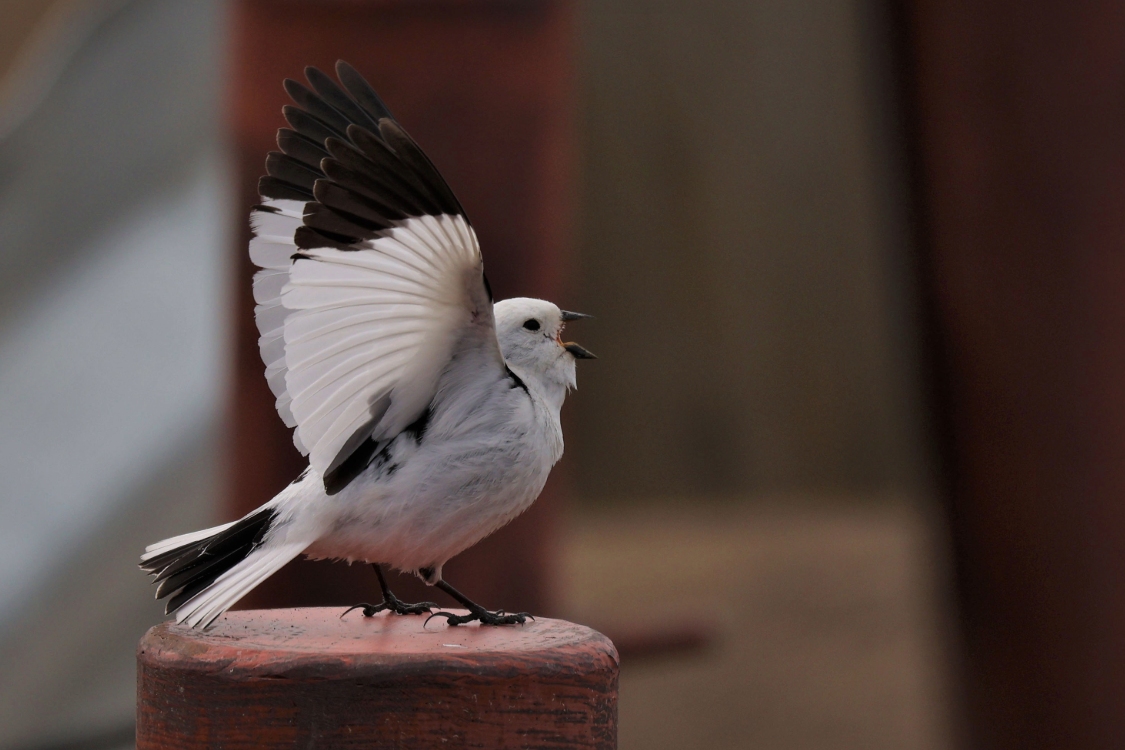
Male Snow bunting singing from his city perch in Nunavut’s capital, Iqaluit. (Courtesy of Elena Tranze-Drabinia/University of Windsor)
Next year the team will work with Iqaluimmiut to begin a community-based migration monitoring program which aims to train local residents in bird banding techniques. These community scientists that include local high school and college students will help track bunting migration numbers and bird health, as well as monitor breeding populations in the area.
The long-term plan is to transition the banding program into a wider songbird monitoring program led the community.
“Lots of kids have never taken a close look at a small songbird, never seen one up close, let alone held one in their hands,” says Semeniuk.
“This is a chance to have that interaction with not only kids, but their families too, and other members in their community.”
With snow buntings as the primary focus, the team will also study Lapland longspurs, horned larks and northern wheatears — migratory species that winter in the south and breed in the north.
“It's the songbirds that are sentinels of change,” says Love. “They're short-lived and they can tell you whether something's going wrong far quicker than a long-lived bird that can just weather that storm for decades. Yet it’s these songbirds that we know the least about.”
This current NSERC PromoScience program is further supported by a Mobile Arctic lab to deliver the educational programs. The lab was funded by a 2025 NSERC Research Tools and Instruments grant.
“We are excited to be here engaging with community members in a good way”, says the team.