
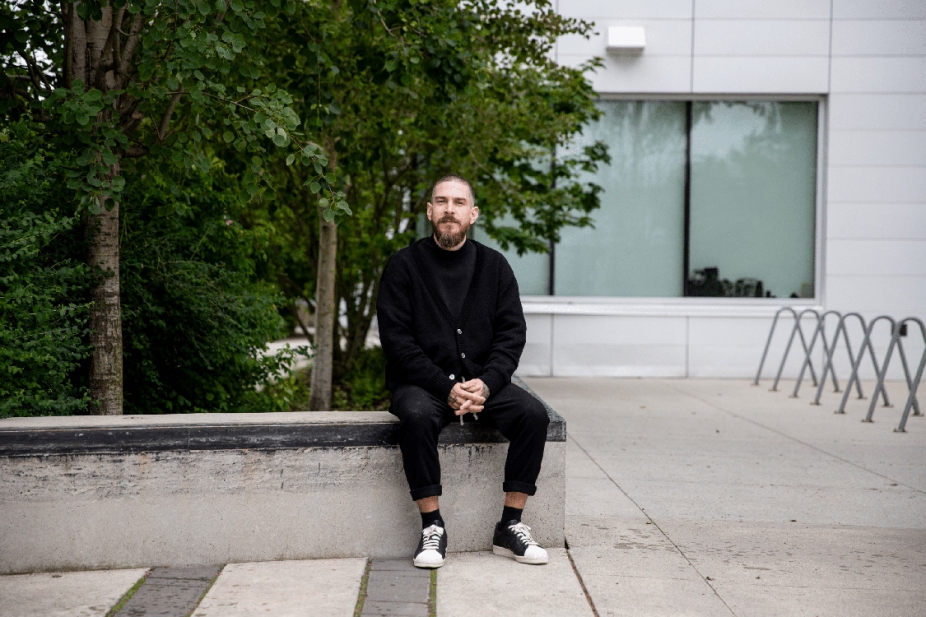
 University of Windsor alumnus Justin Langlois builds connections across art, research and community through a collaborative and socially engaged practice. (PERRIN GRAUER/University of Windsor)
By Victor Romao
Long before stepping into a senior academic leadership role on Canada’s West Coast, Justin Langlois developed the foundations of a multidisciplinary practice at the University of Windsor.
Langlois (MFA ’09, BA Hons. ’07), now associate vice-president, research and dean of graduate studies at Emily Carr University for Art+Design, has built a career that blends art, research and community engagement, an approach rooted in his time as a student in Windsor.
“It’s about connecting people and ideas,” said Langlois. “That was something I really started to understand during my time in Windsor.”
As a student, Langlois worked across media including music, visual art and video, exploring forms of socially engaged practice that emphasized collaboration and community participation.
That interdisciplinary mindset, developed through the MFA program and the broader campus environment, continues to shape his work today.
“A lot of what I do now still comes back to those early experiences,” he said. “Learning how to work across disciplines and bring people together has been central to my art practice.”
Over the years, Langlois has carried those ideas into a career that spans teaching, artistic production and academic leadership. While his current role focuses heavily on research strategy and graduate studies, he said the principles of his artistic practice remain closely connected to his day-to-day responsibilities.
“A big part of the work is creating the conditions for collaboration,” he said. “It’s about helping different perspectives come together in a productive way.”
That approach reflects a broader commitment to socially engaged creativity, a practice that examines how creative work can contribute to communities and address real-world challenges.
One of his most influential projects, Neighbourhood Time Exchange, explored alternative models of artistic residency by pairing studio access with skill-sharing in local communities.
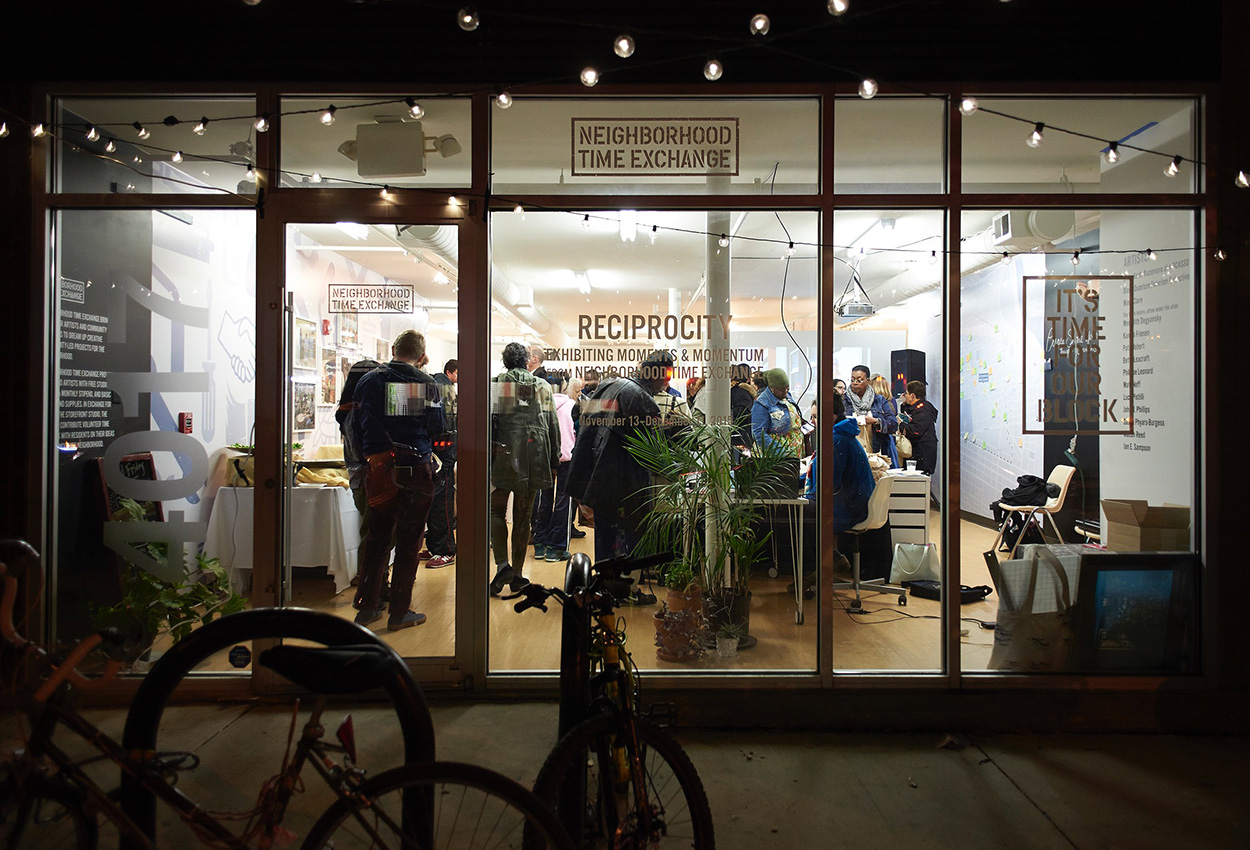
“It really shaped how I think about building frameworks for participation,” said Langlois. “You’re not just making work. You’re creating opportunities for exchange.”
Langlois said Windsor played a key role in developing that thinking, particularly because of the city’s scale and accessibility.
The close-knit nature of the arts community made it easier to form connections and bring projects to life through direct collaboration.
“In Windsor, you’re often only one or two degrees removed from the people you need to work with,” he said. “That makes it easier to experiment and build something together.”
After moving to Vancouver, Langlois encountered a different context, with a larger population, more dispersed networks and greater competition for space and resources.
Those conditions, he said, changed how projects are developed and sustained.
“Scale changes how things happen,” he said. “It affects timelines, relationships and what’s possible in a given moment.”
Despite those differences, Langlois continues to draw on the lessons he developed in Windsor, particularly as he works to support interdisciplinary research and creative practice at an institutional level.
His work often involves connecting artists, designers and researchers with community partners to explore complex issues that cross traditional boundaries.
“The challenges people are working on now don’t fit neatly into one field,” he said. “Issues such as food security, health systems and community infrastructure require artists, designers and researchers to work together across disciplines to develop meaningful solutions.”
Langlois also sees this shift reflected in the next generation of artists.
Increasingly, students are interested in working collaboratively and engaging directly with communities, whether through place-based projects, sustainability initiatives or interdisciplinary research.
For those starting out, he emphasizes clarity, adaptability and openness to collaboration.
“Being able to identify what’s essential in your work is really important,” he said. “At the same time, you need to be open to trying different approaches and learning from them.”
He said that collaboration is no longer optional, but foundational.
“It’s not just a skill you pick up along the way. It’s a mindset,” he said. “The work people are doing now requires that ability to work with others.”
To learn more about how Justin Langlois continues to connect art, research and community, visit his website.