
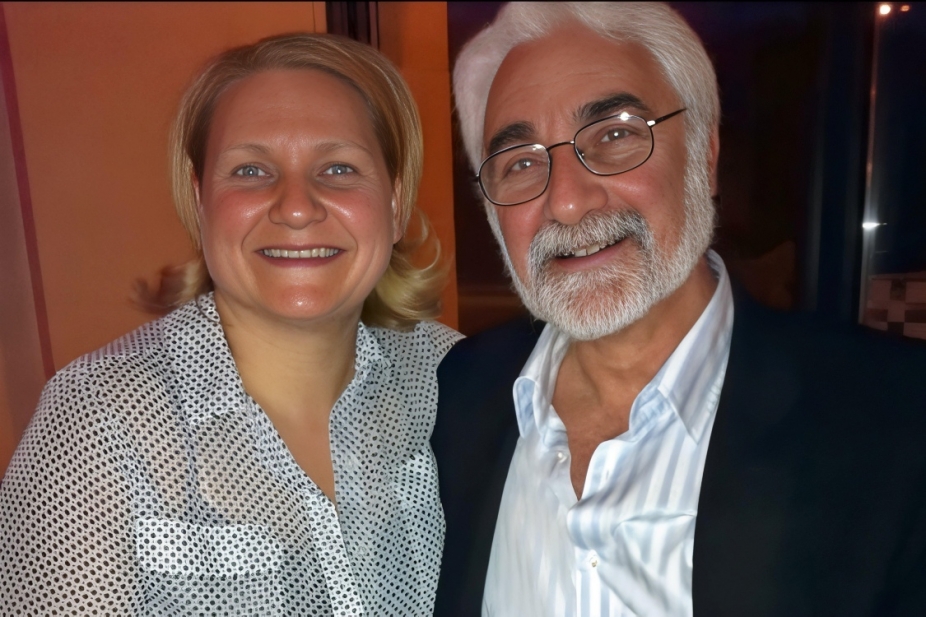
 Dr. Natalie Giannotti, pictured with her father, says her work has taken on new meaning through her personal experience supporting him through his cancer journey. Her research examines gaps in the Canadian healthcare system and the need for reliable, patient-centred care. (SUBMITTED BY NATALIE GIANNOTTI/University of Windsor)
By Sara Meikle
Dr. Natalie Giannotti’s research has always focused on improving patient safety and healthcare systems.
But it wasn’t until she found herself navigating the system as a daughter, supporting her father through his cancer diagnosis and treatment, that the gaps she had long studied became personal.
Her recently published paper, “Tears, Suffering, and System Failure: What My Father’s Pain Revealed About the Canadian Healthcare System,” is not just an academic reflection. It is a story many families will recognize.
“This isn’t just my story. It’s the story of so many Canadians navigating the healthcare system,” said Prof. Giannotti.
She has spent her career both working in and studying healthcare systems — how they function, where they fail and how they can be improved.
Yet despite her clinical expertise, she found herself struggling to advocate for her father.
That experience now anchors her research in lived reality.
“I’ve always known the issues exist. The evidence is there,” she said. “But this experience put a face to those numbers. It made it human.”
Her decision to write a paper as a narrative was intentional, using storytelling to bridge evidence and experience. The result is both a critique and call to action — to rethink how care is structured and delivered.
Central to Giannotti’s research is a critical question — what does patient-centred care actually look like in practice?
“We say patient-centred care is the benchmark,” she said. “But we don’t walk the talk.”
Patients and their families hold critical knowledge about their conditions, recognizing subtle changes before they become clinically visible. Yet that insight is not always centered in care decisions.
“There seems to be a persistent paternalistic mindset in healthcare, one that assumes providers know best,” Giannotti said. “That’s not how we should design the system. It should be intentionally designed for reliability and centred on patients’ needs.”
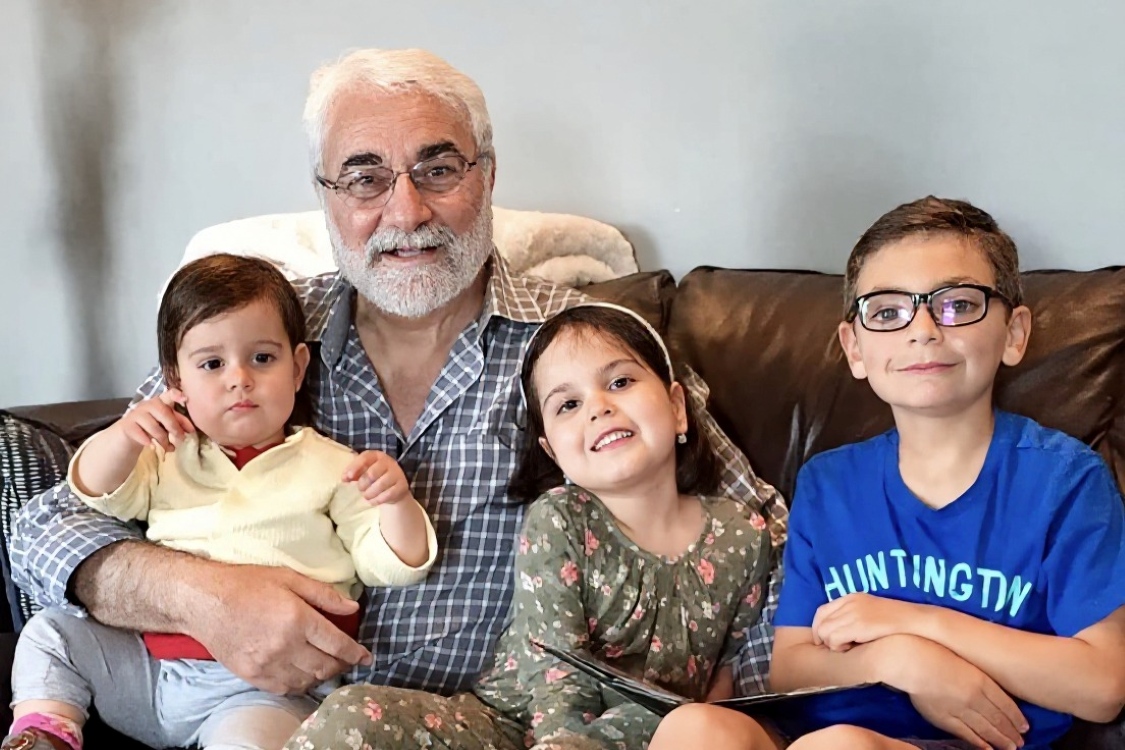
She described her father’s suffering as “predictable by design”, a phrase she uses carefully. Her critique is not directed at individual providers, but at a strained system designed around processes, policies and efficiencies that can eclipse patient needs.
One moment in particular stands out and continues to shape her work.
Recognizing her father was in a pain crisis, Giannotti alerted his care team expecting urgent intervention. Instead, they were sent away and told an MRI was required before any pain management could begin.
The delay led to worsening pain, cross-border hospitalization and unnecessary suffering. But it was what came next that stayed with her most.
“I looked at my dad and just broke down,” she said. “We sat together and cried. I told him, ‘I’m so sorry. I failed you.’”
That moment became her professional reckoning where her roles as nurse, researcher and daughter collided.
It has since reshaped her research trajectory, fuelling a renewed focus on policy-level change and system redesign. She envisions care intentionally designed for standardization, reliability and continuous improvement, where small purposeful changes translate into meaningful outcomes.
“We already know so much about how to make care safer and more effective,” she said.
“The question is how we translate that into practice.”
While proud of Canada’s publicly funded healthcare system, Giannotti stressed that pride must not prevent reflection. Her work highlights gaps in communication and missing feedback loops, which are issues she believes can be intentionally redesigned.
At the Faculty of Nursing, that mindset is already embedded. Curriculum is continuously reassessed and updated to reflect new knowledge, technologies and student needs.
“We are constantly asking ourselves if we are meeting the needs of the next generation,” she said. “Everything we do is intentional and forward-looking.”
Giannotti believes healthcare must adopt that same approach.
“We have to be willing to reassess, to adapt, to learn,” she said. “Healthcare should be just as dynamic as the environments we are preparing students in.”
Through her teaching at UWindsor, she focuses on empowering the next generation of nurses to move beyond individual advocacy toward broader system transformation. She encourages students to think critically, to speak up and to see themselves as active contributors to improving care.
“I want them to see that they can make meaningful change simply by adapting and improving the systems they work within,” she said.
Just as importantly, she emphasizes the value of learning from failure, creating a culture of safety where mistakes and near misses are seen as opportunities to improve not reasons to assign blame.
Giannotti’s work reflects the Faculty’s commitment to bridging research and practice through scholarship that is both rigorous and deeply human. Her paper is not just an academic contribution — it is also a tool for change, designed to spark conversation, challenge assumptions and inspire action at every level of the system.
“When you tell a story, people connect to it on an emotional level. That’s where the impact happens, where understanding deepens and change begins,” she said.
For Giannotti, the work is no longer just professional, it is deeply personal.
“It has fueled the fire,” she said. “My experience with my dad drives my research, my teaching, everything.”
She believes a truly compassionate cancer care system is not an abstract ideal, but an achievable model that mobilizes patients in decision making.
“My father became a statistic. That can’t keep happening,” she said. “If we continue to let it happen, that’s on us. We need to change the system.”
Her research, shaped by lived experience, aims to do exactly that.