
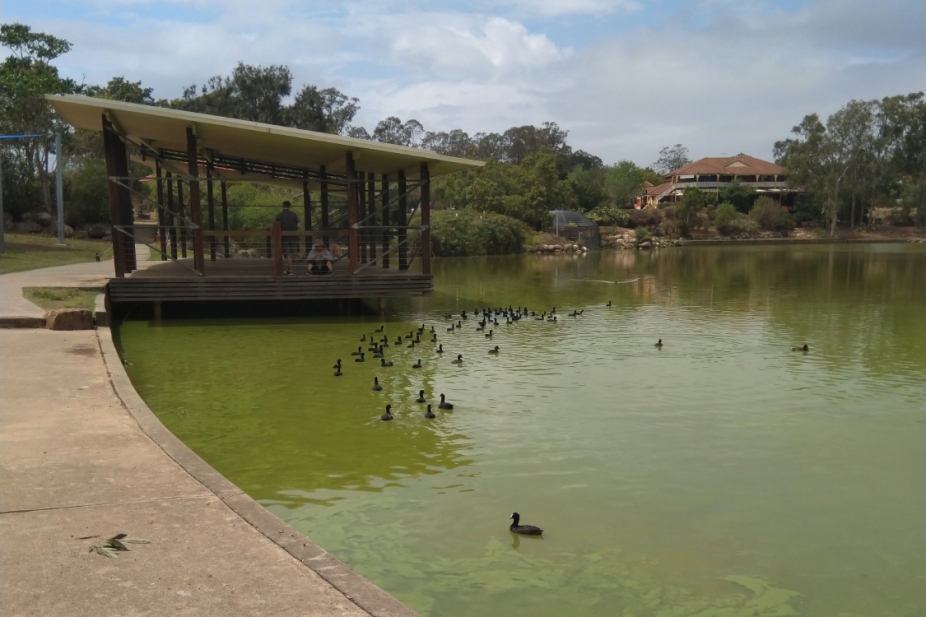
 University of Windsor researchers have partnered with global experts to write a five-year action plan aimed at understanding the risk of highly toxic blue-green algae blooms. (Photo: David Hamilton, Griffith University/University of Windsor)
By Sara Elliott
University of Windsor researchers have partnered with global experts to write a five-year action plan aimed at understanding the risk of highly toxic blue-green algae blooms.
The five-year research plan outlines priorities to address the threats these blooms pose to freshwater resources worldwide, including the Great Lakes.
As part of the initiative, scientists from 12 countries gathered in Kunming, China, for an in-person workshop supported by Kunming University, Yunnan University and the University of Windsor.
Dr. Xuexiu Chang, a professor at Kunming University and an adjunct professor with the University of Windsor’s Great Lakes Institute for Environmental Research (GLIER), co-led the event with UWindsor professor emeritus Dr. Hugh MacIsaac and Dr. Runbing Xu from Yunnan University in China.
Participants included Dr. Mike McKay, GLIER director, and GLIER adjunct professors George Bullerjahn, Steven Wilhelm and Lewis Sitoki.
“At the heart of the agenda is a question with urgent real-world consequences,” she says.
“Why do certain genetic strains of cyanobacteria come to dominate a bloom, and what drives the bloom to shift rapidly from harmless to highly toxic?”
Blue-green algae blooms — formed by accumulations of cyanobacteria — can produce deadly toxins which threaten aquatic ecosystems and public health. In 2014, an offshore bloom in Lake Erie forced the city of Toledo, Ohio to issue an emergency order advising hundreds of thousands of residents against using tap water.
“Cyanobacterial blooms are expanding almost everywhere in the world — driven by a combination of nutrient enrichment, climate warming and more extreme wet-dry cycles,” she says.
To combat this risk to health, Chang organized 23 scientists from around the world to develop the ambitious five-year research agenda addressing critical knowledge gaps surrounding the cyanobacterial blooms.
“Five years is good for scientists to make real progress on hard problems like cellular toxin regulation or microbiome-cyanobacteria mechanisms — and also will help that funders and policymakers can actually plan around it,” says Chang.
The “horizon scan” identifies four key research priorities essential for predicting, preventing and managing the blooms. Chang says up until now, the field has been fragmented, and she and her colleagues saw a critical need to build a consensus roadmap.
“We pulled together a panel of researchers from different countries, disciplines and career stages,” says Chang.
“We nominated the issues and debated face-to-face until a consensus emerged.”
The researchers first flagged the importance of understanding which genetic strains of cyanobacteria dominate a bloom as a top priority. Toxic and non-toxic strains often live side-by-side, and it is unclear why these ratios can flip quickly.
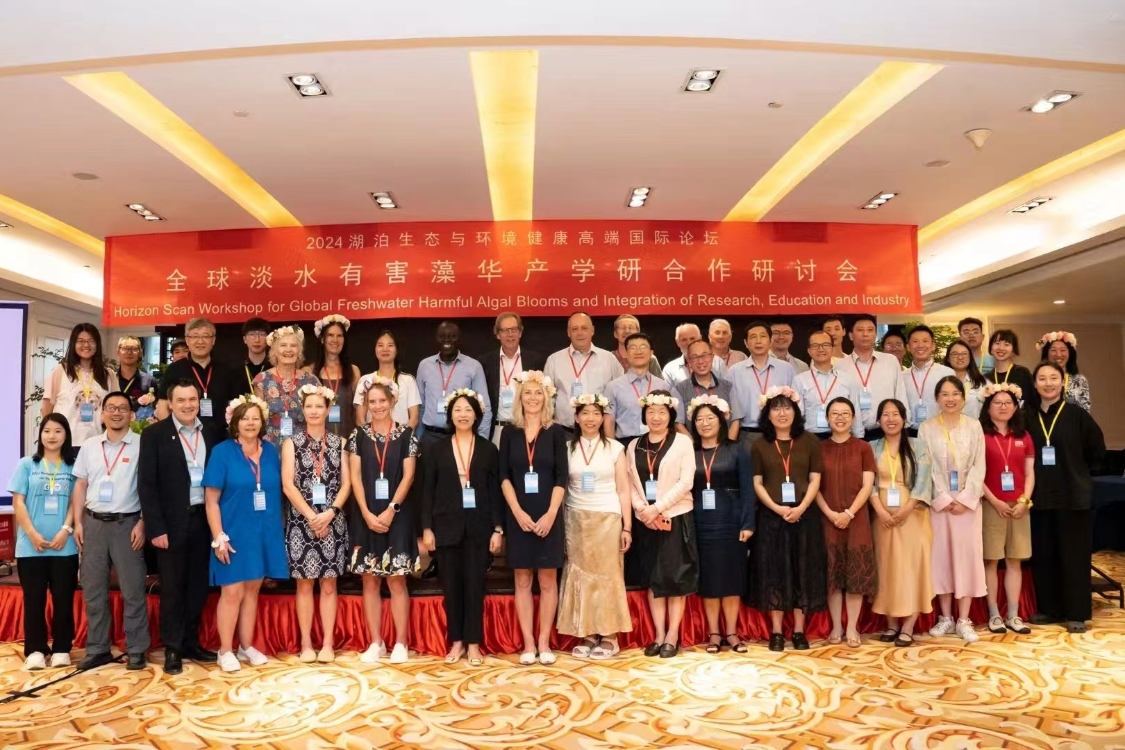
Scientists from 12 countries gathered in Kunming, China, for an in-person workshop. (Photo courtesy of Xuexiu Chang/University of Windsor)
Just because a toxic strain exists in the area does not mean it will produce toxins. Next up in the plan is understanding what triggers toxin production in a given strain.
The next priority centres around the microbial community within the lakes.
“A bloom is never just cyanobacteria,” she says.
“Some bacteria, viruses and pathogens will help cyanobacteria grow, some carry antimicrobial resistance genes and some human pathogens may be responsible for illness, which people blame on the toxin.”
Finally, the team examined how environmental and ecological factors such as nutrients, and zooplankton predation, shape bloom abundance and species composition.
“Prediction leads to prevention and that is what protects communities.”
The 23 scientists co-authored an academic article which was recently published in the journal Trends in Ecology and Evolution.
In parallel with the roadmap, Chang, McKay and Bullerjahn are helping to build international collaborations that apply the priorities identified in the paper to freshwater lakes across different climate zones, including Lake Dianchi in China, Lake Erie in North America and Lake Victoria in East Africa.