Mahshid Soleimani, lab manager and doctoral student in applied social psychology (left), and Dr. Catherine Kwantes, professor of industrial organizational psychology in the Department of Psychology (right) in the University of Windsor's Centre for Culture and Organizational Research (CCOR). (ANGELA KHARBOUTLI/ University of Windsor).
By Lindsay Charlton
What happens when leaders’ ideal impact on their employees doesn't align with employees’ experiences?
University of Windsor researchers are examining how that gap in self-awareness influences workplace dynamics.
The Centre for Culture and Organizational Research (CCOR), led by Dr. Catherine Kwantes, a professor of industrial organizational psychology in the Department of Psychology, is examining the consequences of leadership when actions have their ideal impact — and when they don’t — using a dataset from Romania focused on organizational culture, leadership and employee effectiveness.
“It’s one of several sub-projects we’re working on within that data,” explained undergraduate psychology student Josiah Smicklas.
“We’re still working through the preliminary findings, but results suggest one of the core components may be when leaders motivate more avoidance than they ideally want to and what happens at the organizational level,” he said. “If employees feel they need to avoid certain issues or can’t raise particular topics, how does that shape their behaviour in the workplace? It’s still very early, but it’s an interesting avenue of research we’re working on.”
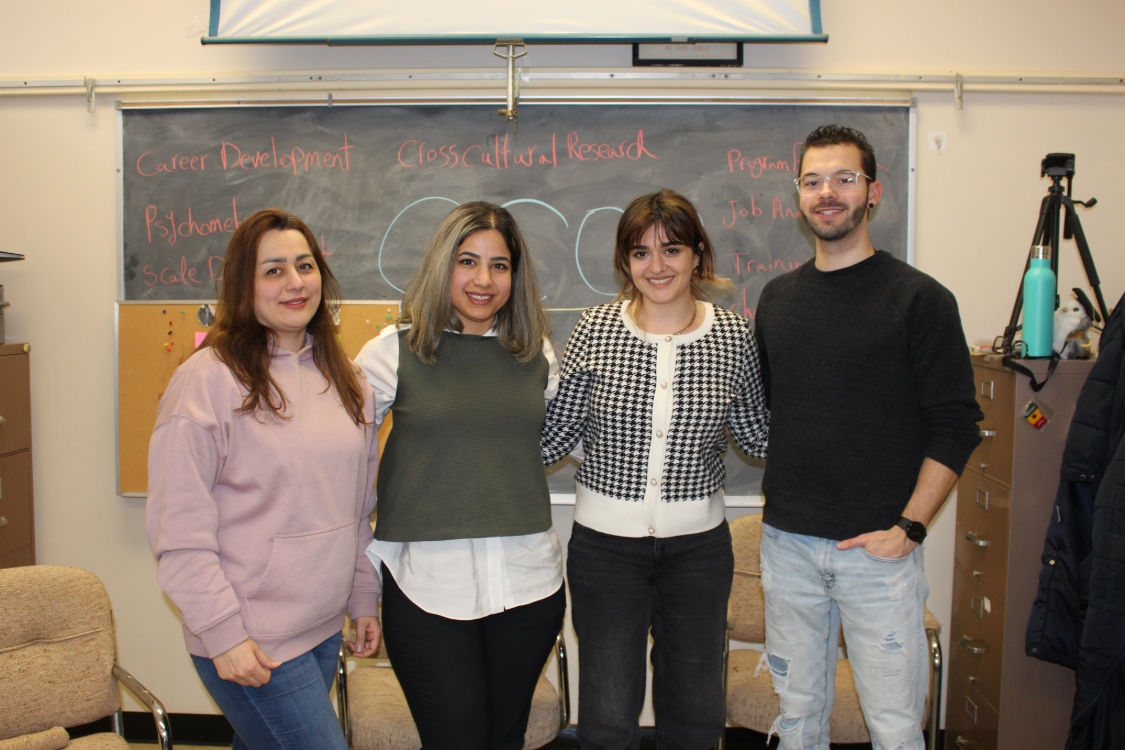
This project reflects the broader work underway at CCOR, where undergraduate and graduate students pursue individual and collaborative research examining workplace issues and the influence of social culture on individual and group behaviour, often through a cross-cultural lens.
“That means we collect data in different countries, and then we analyze that data and produce articles. Along with that, especially the graduate students, we are trained to do a lot of things that fall under organizational development,” said Mahshid Soleimani, lab manager and doctoral student in applied social psychology.
“That may include program evaluation, job analysis and scale development — any type of assessment an organization might need. Really, it covers anything where workplace issues and psychology intersect, both in research and in practice.”
Soleimani said the lab’s work is intended to have real-world application beyond academia.
“We want people at the University to know what we’re trained to do, anything that falls under organizational development, cultural assessment, we can help in many ways.”
The lab, along with Russell Nahdee, was involved in research for an Indigenous workplace project that has since been developed into a pressbook hosted by the Office of Open Learning, Building Trust with Indigenous Employees: The Indigenous Workways Toolkit.
The toolkit aims to guide Canadian organizations in building greater inclusivity for Indigenous employees by offering insights into their worldviews and workplace experiences.
“We do a lot of work on trustworthiness, and how culture and organizational roles impact perceptions of trustworthiness, and what’s important in being trustworthy in those roles,” Kwantes said.
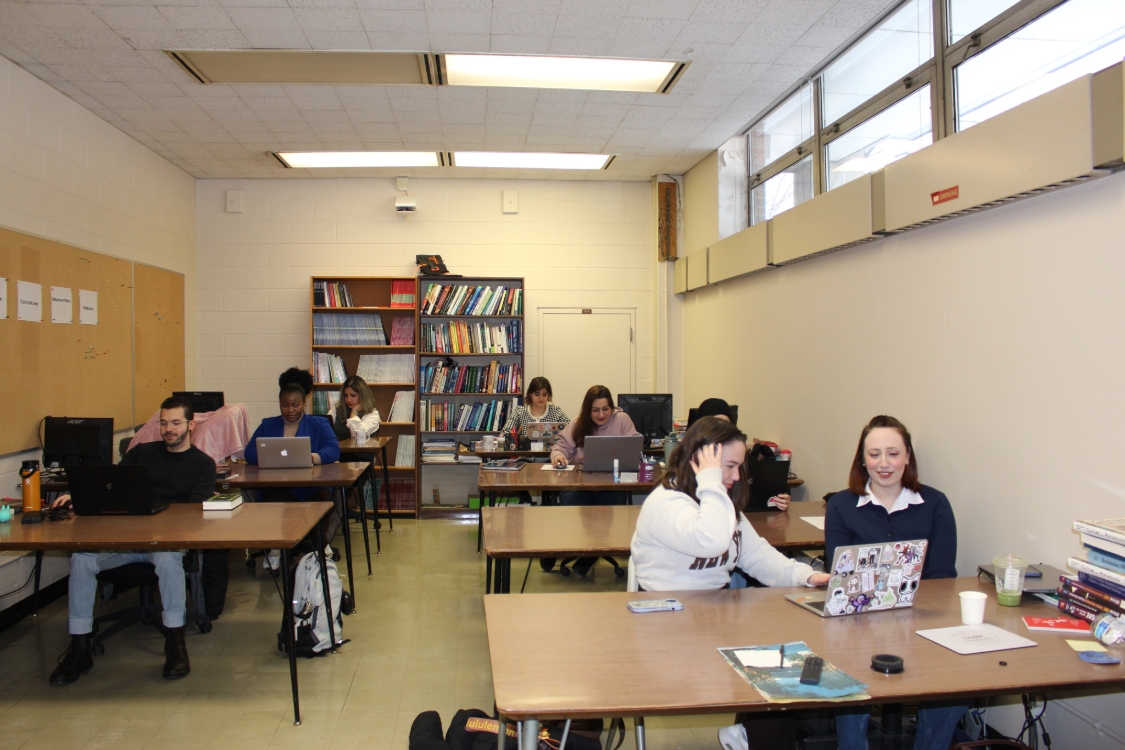
Collaboration and cooperation are central to the lab’s work. Soleimani described a dataset on microaggressions that the group collaborated on and is now preparing for publication.
“We spoke with people about their experiences of microaggressions and gathered about 350 examples, which we then coded as qualitative data,” she explained. “We also examined the relationship between the microaggressor and the target, as well as bystander reactions. It’s a large dataset, and we’re excited to get it out there.”
Building on that, the lab also developed a psychological and cultural safety measure, where all members, from undergraduates to PhD students, had a role.
“It was a five-stage study that took more than two years,” said Saba Ghadiri, doctoral student in psychology. “It’s a 25 to 30 item scale that measures psychological safety and cultural safety in the workplace for employees. Publication is also underway for that.”
Along with their active research projects, the group, which currently has nine members, meets once a week and takes turns choosing a journal article to discuss and offer insights. They also have opportunities to attend international conferences and present their work at workshops and talks.
“The cross-cultural approach of this lab is what really interested me,” Ghadiri shared. “Many of the members in CCOR are from different countries, so we have so many different perspectives.”
The walls of the lab space located on the lower floor of Chrysler Hall South are covered with postcards from countries around the world showcasing the travels of members past and present, either for a conference or a summer vacation — a tradition that has been ongoing for about 10 years, Kwantes noted.
“What brings us together is a common interest,” said Kwantes. “One of the things that I love about this group is that we've got people at different stages of study and from a wide variety of backgrounds.”