
As Great Lakes lose ice, a UWindsor researcher makes the consequences visible — and wins an international prize for it
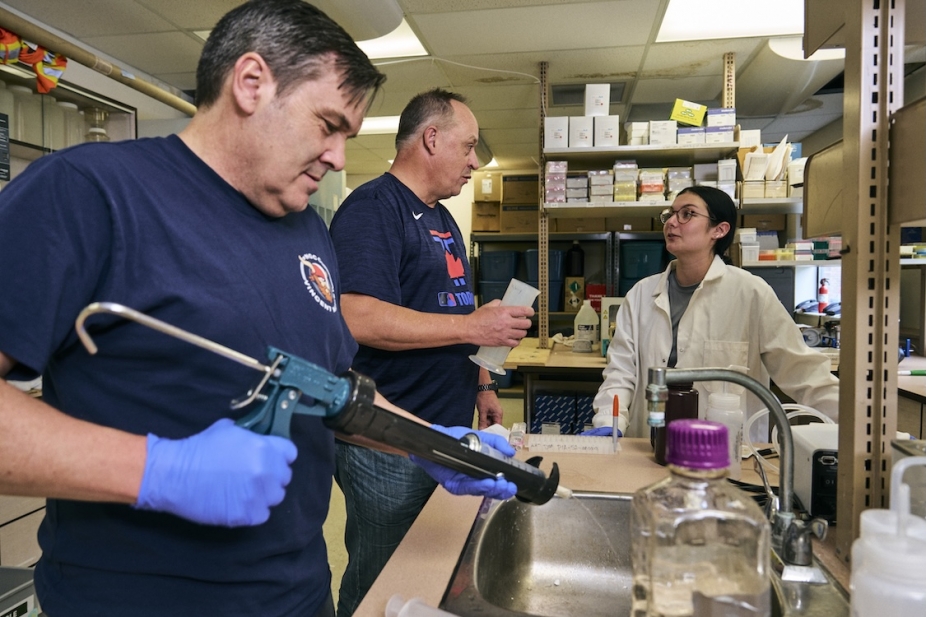 From left, Dr. Michael McKay, Steven W. Wilhelm and Brittany N. Zepernick conducting research in the lab. (Photo by the Daylight Award/University of Windsor)
By Sara Elliott
As climate change strips ice from the Great Lakes, something less visible is also changing: the underwater world of light that microscopic life depends on.
When ice recedes, wind and water stir sediment, clouding the water and blocking the sunlight that drives photosynthesis at the base of the food web. What looks like a simple seasonal shift is, in scientific terms, a restructuring of habitat.