
 From left, Dr. Michael McKay, Steven W. Wilhelm and Brittany N. Zepernick conducting research in the lab. (Photo by the Daylight Award/University of Windsor)
By Sara Elliott
As climate change strips ice from the Great Lakes, something less visible is also changing: the underwater world of light that microscopic life depends on.
When ice recedes, wind and water stir sediment, clouding the water and blocking the sunlight that drives photosynthesis at the base of the food web. What looks like a simple seasonal shift is, in scientific terms, a restructuring of habitat.
Dr. Michael McKay has spent his career making that invisible change legible — and an international jury has taken notice. The University of Windsor researcher has been named a 2026 laureate of the Daylight Award for Research, presented by the Swiss-based Daylight Academy on May 16, UNESCO’s International Day of Light.
McKay is recognized alongside collaborators Brittany N. Zepernick and Steven W. Wilhelm, an adjunct professor at the University, for their work advancing understanding of how daylight is captured by photosynthetic algae amid climate-driven ice loss in the Great Lakes.
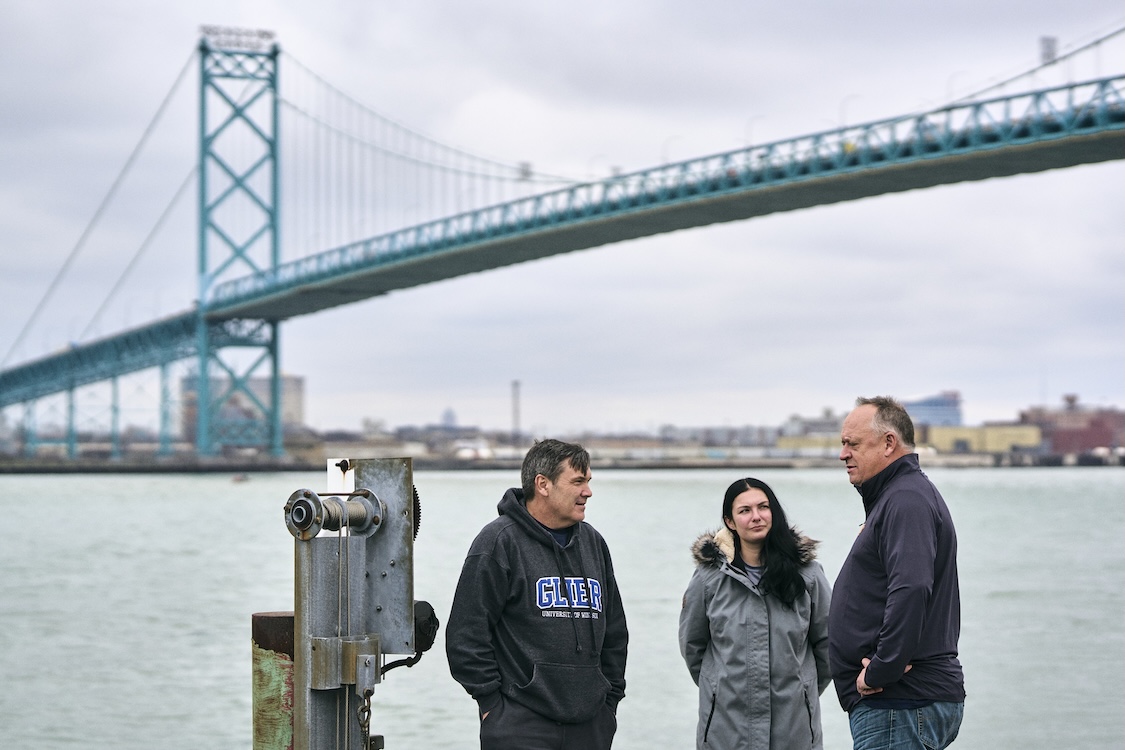
Dr. Michael McKay, pictured with Brittany N. Zepernick and Steven W. Wilhelm, has been named a 2026 laureate of the Daylight Award for Research, presented by the Swiss-based Daylight Academy on May 16, UNESCO’s International Day of Light. (Photo by the Daylight Award/University of Windsor)
“Without daylight we wouldn’t have life on Earth as we know it,” said McKay, director of the Great Lakes Institute for Environmental Research (GLIER) and a professor in the School of the Environment.
“These are the organisms upon which all other life on Earth depends. They are small but they are mighty.”
The microbiologist’s work integrates lab experiments, field studies and monitoring systems to connect microbial ecology with water quality, public health and environmental management.
Woven throughout his research, light plays a multilayered role, influencing everything from diatom growth and parasite interactions to optical and remote sensing approaches used in toxic algal bloom monitoring.
His work includes challenging assumptions that winter systems are inactive and instead showing how winter ice conditions affect light penetration and microbial activity.
The nominated research makes visible a changing underwater light world. As climate change reduces ice cover across northern temperate lakes, wind and water movement can stir sediment and increase turbidity, limiting the daylight that reaches microscopic life within the water. What may appear to be a simple loss of winter ice is therefore also a loss of habitat.
Using complementary skills, McKay and his colleagues address how different communities of light-harvesting algae adapt to exploit spectra of light that penetrate deeper in cold, turbid waters — a consequence of declining ice cover under current climate conditions. While this highlights ecosystem resilience in response to human-driven change, it may also hold unexpected implications for food webs reliant on winter productivity.
His research carries implications for biodiversity, water quality, climate change and planetary health — particularly in the Great Lakes.
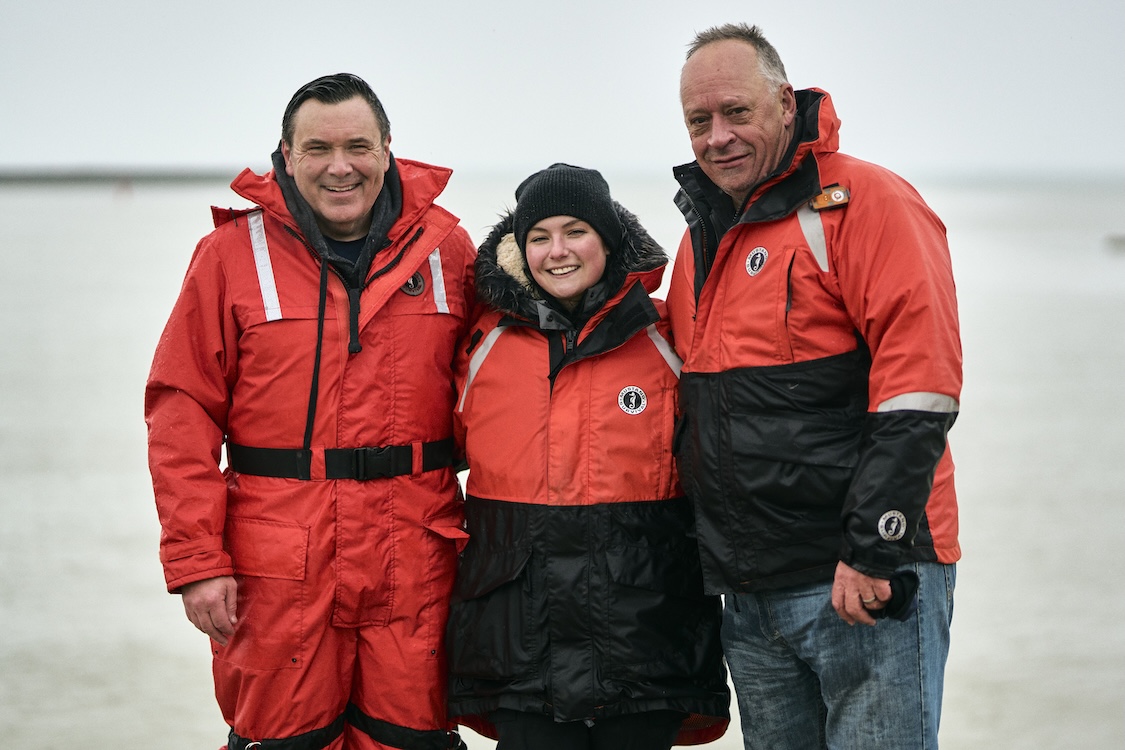
Dr. Michael McKay is recognized alongside collaborators Brittany N. Zepernick and Steven W. Wilhelm for their work advancing understanding of how daylight is captured by photosynthetic algae amid climate-driven ice loss in the Great Lakes. (Photo by the Daylight Award/University of Windsor)
“Receiving the Daylight Award 2026 came as a wonderful and unexpected surprise for our team. This recognition underscores the global importance of the Great Lakes, both as a vital ecosystem supporting nearly 40 million people and as a proxy for north temperate lakes and ice-covered coastal ecosystems worldwide,” said McKay.
The Daylight Award seeks to deepen understanding of daylight’s role in human life and the wider ecosystem. It is presented in two categories, with McKay receiving recognition in the Daylight Research category, which honors individuals or groups whose internationally recognized work has made outstanding contributions in any relevant field of daylight research.
“Dr. McKay is conducting globally leading, internationally recognized research with profound implications for biodiversity, water quality and climate resilience, advancing solutions to critical environmental challenges,” said Dr. Shanthi Johnson, vice-president of research and innovation.
“This international recognition of research excellence and global impact underscores the importance of discovery-driven science in addressing pressing global environmental challenges and delivering solutions,” said Johnson.
Each category laureate, whether an individual or a team, receives a prize of $160,000.
The award ceremony will take place May 27, 2026, in Copenhagen.